







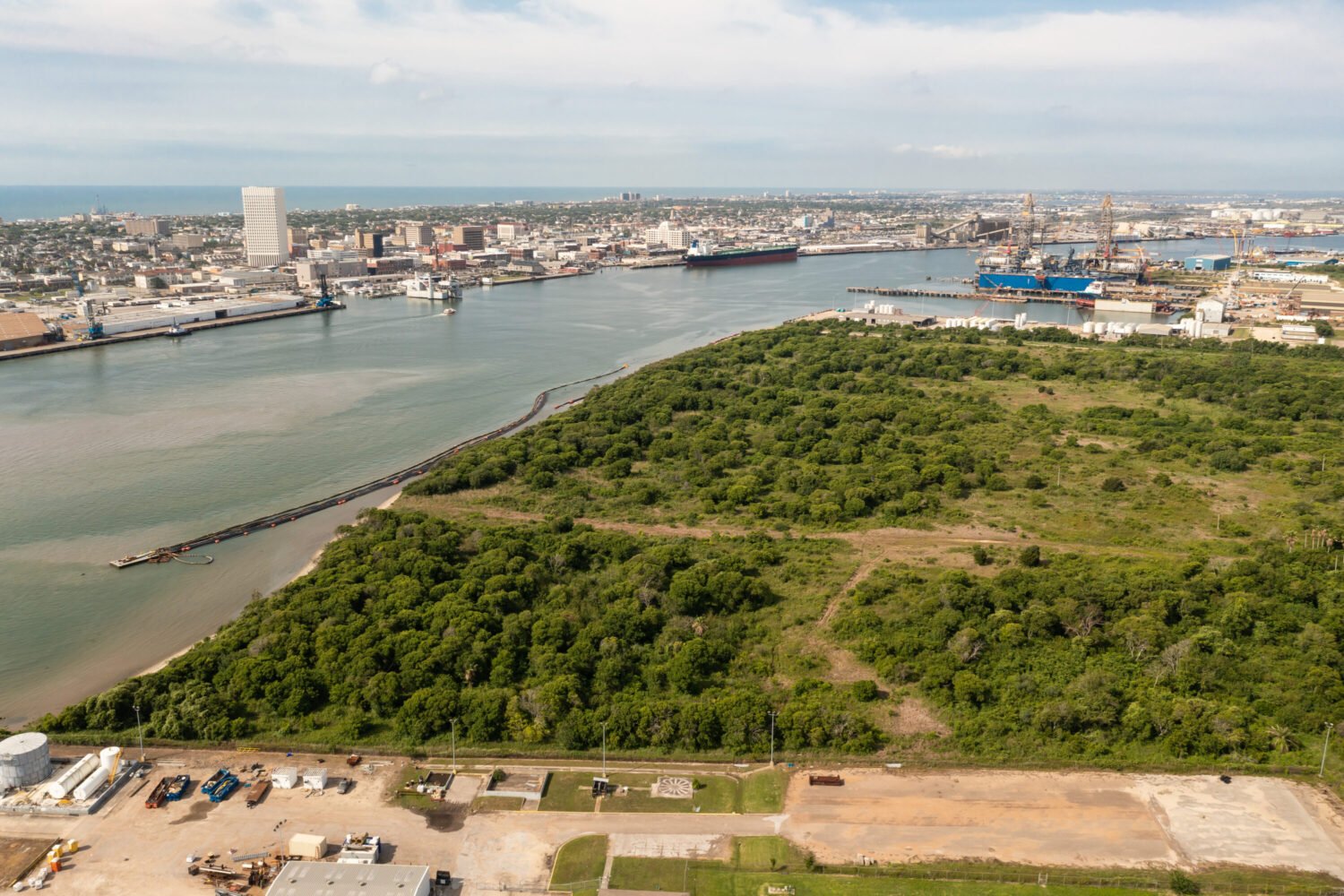
Environmental concerns are mounting following the recent approval of a $250 million liquefied natural gas (LNG) facility on Pelican Island. On October 8, the Galveston Wharves Board of Trustees authorized a lease and development agreement with Power LNG to construct a plant capable of producing 400,000 gallons of LNG daily, primarily intended to fuel cruise ships operating in the region.
While port officials frame the project as an environmental advancement, the proposal has drawn sharp criticism from local activists. Joanie Steinhaus, the ocean program director for the Turtle Island Restoration Network, argues that the facility represents a significant step backward for local air quality and safety.
“This is a fossil methane-producing project, and there are going to be impacts,” Steinhaus said. She pointed specifically to the risks of “methane slip”—the unintended release of unburned methane during both the production process and engine combustion. Methane is a potent greenhouse gas, and Steinhaus contends that its prevalence undermines the industry’s claims of providing a “cleaner” alternative to traditional marine fuels.
Beyond long-term climate concerns, Steinhaus highlighted the potential for industrial accidents. She cited the 2022 vapor cloud explosion at a Freeport LNG facility as a cautionary tale of the risks inherent in such infrastructure. That incident, which resulted in the release of various hazardous pollutants including carbon monoxide, nitrogen oxides, and sulfur dioxide, was linked to methane leaking into compromised electrical circuitry. Given the proximity of the proposed Pelican Island site to both a local community and Texas A&M University at Galveston, Steinhaus is questioning the adequacy of the project’s risk-based safety protocols.
In contrast, the Port of Galveston has defended the project as a necessary evolution for the region’s maritime sector. Rodger Rees, port director and CEO of the Galveston Wharves, has stated that the facility will allow the port to play a “leading role” in providing cleaner marine fuels. According to Rees, LNG can reduce sulfur oxide, nitrogen oxide, and particulate matter emissions by more than 90% compared to traditional fuels. He further noted that the port is simultaneously pursuing electrification for docked ships to minimize the need for idling engines.
“This agreement paves the way for the Port of Galveston to play a leading role in providing cleaner marine fuels to the region,” Rees said in an official statement. “The project will create jobs, bring more LNG-powered ships and contribute to improved air quality.”
However, critics remain unconvinced by the trade-off. Steinhaus argues that even if LNG produces fewer localized pollutants than heavy fuel oil, it is still a source of emissions that poses health risks to the surrounding population. She maintains that the project’s presence is fundamentally at odds with broader goals of environmental sustainability.
The debate over the facility’s environmental footprint is expected to continue at the upcoming Galveston Wharves board meeting on October 27, where the project remains on the agenda. Representatives from Power LNG and the port did not immediately respond to requests for comment regarding the specific safety and pollution mitigation measures at the site.
As the port prepares for the development, which is slated to break ground with the goal of beginning production by the end of 2028, the tension between economic growth and environmental stewardship in the Galveston Harbor remains a focal point of local discourse. For activists like Steinhaus, the approval of the site is not the end of the conversation, but rather a catalyst for further scrutiny of industrial activity in the delicate coastal ecosystem.
Disclaimer: This content is auto-generated for informational purposes only.
Source: Read Original News