




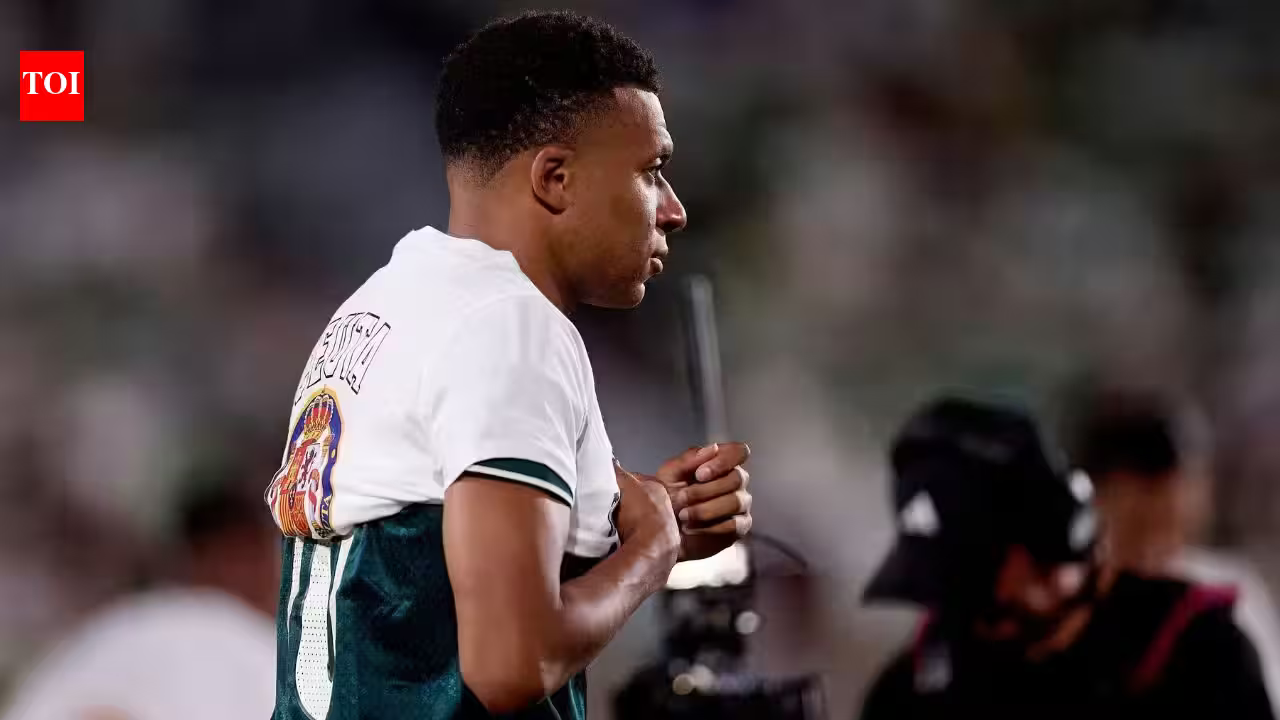
Tensions boiled over at the Estadio Manuel Martinez Valero on Tuesday, not merely because of the high-stakes LaLiga clash between Real Madrid and Elche, but because of a sartorial protest that has sent shockwaves through the Spanish political landscape. As players emerged from the tunnel, the focus shifted from the grass to the chests of three of the world’s most recognizable athletes: Kylian Mbappé, Vinícius Júnior, and Ibrahima Konaté.
The trio, participating in a pre-match show of solidarity for the residents of Ceuta—the Spanish North African enclave currently grappling with a severe migration crisis—made a choice that has ignited a firestorm of controversy. Rather than wearing the mandated “Todos somos caballas” (We are all mackerels) shirts as intended, the players opted to roll them up, effectively obscuring the message. What was meant to be a gesture of unity has instead become a lightning rod for ideological warfare, drawing condemnation from political factions and polarizing the passionate fanbase of Real Madrid.
The “Caballas” Controversy: A City in Crisis
The backdrop of this incident is the desperate humanitarian situation in Ceuta. On July 30 and 31, the border city witnessed a staggering influx of over 70,000 migrants crossing from Morocco. The event, which resulted in a tragic loss of life and pushed the city’s resources to the brink, has left thousands of individuals in makeshift camps and temporary shelters.
As local residents in Ceuta face mounting pressure and instability, the city has become a flashpoint for Spain’s national debate on immigration—a topic that is increasingly dominating the political discourse ahead of next year’s parliamentary elections. By attempting to use the sport as a platform for solidarity, league officials hoped to humanize the plight of the “Caballas,” the affectionate nickname for Ceuta’s citizens. Instead, the players’ decision to modify the display has been interpreted by many as a calculated act of dissent or indifference.
Political Backlash and the “Millionaire” Critique
The reaction from Spain’s conservative and far-right spheres was swift and vitriolic. Representatives from the Popular Party (PP) expressed “deep shame” regarding the players’ behavior, while the far-right Vox party took a sharper, more populist tone. A Vox lawmaker characterized the incident as an insult, telling reporters that citizens were “perfectly free to feel outraged by three millionaires who live in Spain and then do not support Spaniards.”
The vitriol extended into the stands as well. The Ultras Sur, a hardcore supporters’ group long banned from the Santiago Bernabéu due to their documented ties to far-right ideologies, labeled the behavior of the trio “unacceptable.” The group went on to demand formal public apologies, framing the act as a disrespect to the club’s identity and the nation’s values. In an era where athletes are increasingly expected to leverage their platforms for social change, the backlash against Mbappé, Vinícius, and Konaté highlights the thin, treacherous line stars must walk when navigating local political volatility.
Mbappé Breaks Silence on Human Cost
In the aftermath of the match, Kylian Mbappé did not shy away from the scrutiny. Speaking with the sports daily AS, the French superstar sought to clarify his position, explaining that his actions were not intended as a slight against the people of Ceuta, but rather as an acknowledgment of the complexity of the crisis.
“I was in complete solidarity with Ceuta and all the victims,” Mbappé stated. “But I also wanted to make a gesture and express my thoughts for all the immigrants who have lost their lives and who are also living in difficult conditions.”
By contextualizing his dissent, Mbappé attempted to frame his actions as a call for broader compassion. Rather than choosing between the residents of a border city and the desperate souls attempting to reach it, the forward maintained that both groups deserved visibility and empathy. For Mbappé, the “Caballas” message felt incomplete; by rolling up the shirt, he effectively signaled his refusal to participate in what he perceived as a one-sided narrative that excluded the migrants themselves.
Real Madrid Stands Firm on Player Autonomy
Real Madrid, the titan of European football, found itself in the uncomfortable position of managing a PR crisis while maintaining its stance on internal policy. Club officials confirmed that while they had agreed to Elche’s request to honor the residents of Ceuta, the organization maintains a policy of respecting the individual conscience of its squad members.
“The club agreed to the request, but we respect the different opinions within the squad,” a club official told Reuters. “Each player was permitted to decide whether or not to wear the shirt.”
This policy of neutrality—or perhaps, forced indifference—has done little to quell the outrage from external critics, but it underscores a growing trend in elite football: the tension between corporate social responsibility initiatives and the personal beliefs of the players who serve as their ambassadors.
As the dust settles on the pitch, the incident remains a potent reminder that in the high-stakes environment of LaLiga, the game is never just about ninety minutes. As Spain heads toward a contentious election cycle, the “Caballas” controversy proves that when politics and sports collide, there are rarely easy answers, and even less chance of an amicable agreement. For Mbappé and his teammates, the message was clear: they are willing to play the game, but they will dictate the terms of their own participation in the political arena.
Disclaimer: This content is auto-generated for informational purposes only.
Source: Read Original News