









From Drought to Deluge: Ireland’s Battle for Water Resilience
By [Your Name/Staff Reporter]
In the heat of early August 2026, Bagenalstown, County Carlow, is defined by a brittle, unsettling sound: the “crepitation” of bone-dry grass crunching underfoot. For dairy farmer Malcolm Kidd, the crisis is personal and immediate. His family well, a 60-foot-deep structure that has served the farm since the 1950s, now runs dry by late afternoon.
For Kidd, rationing is a daily reality. Domestic appliances like dishwashers and washing machines have been relegated to “off-limits” status to ensure his 135 cows receive the 15,000 litres of water they require daily. “The well was dry by five o’clock,” he says plainly. Across Ireland, particularly in the south and southeast, the landscape is gasping for moisture.
The Paradox of Water Management
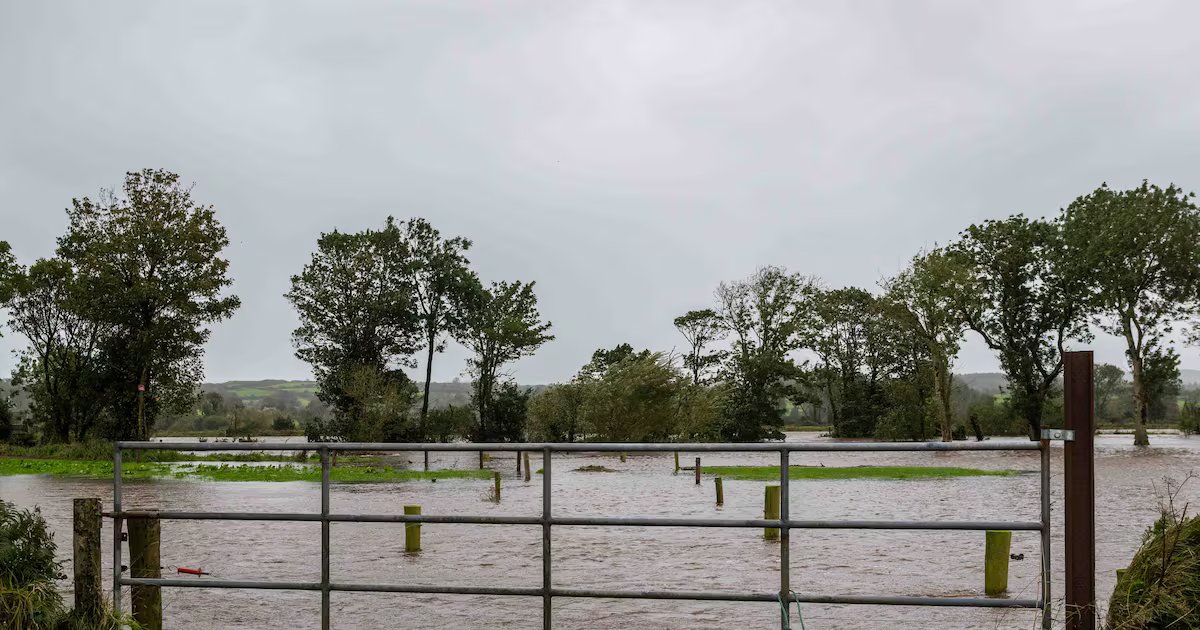
This summer’s parched earth offers a grim preview of the volatility ahead. As the September 1st storm-naming season approaches, the anxiety shifts from drought to the inevitable winter deluges. This oscillation—a violent swing between water scarcity and destructive flooding—is not merely a product of a changing climate; it is, experts argue, a consequence of how Ireland has physically altered its landscape.
Since the Arterial Drainage Act of 1945, the State has systematically re-engineered over 11,000km of rivers. By straightening meanders, dredging beds, and clearing banks, the focus has been on moving freshwater to the sea as rapidly as possible. While intended to prevent floods, this approach has created a systemic flaw: flood peaks now arrive twice as fast as they once did. In times of drought, the water is already gone; in times of rain, it arrives as a sudden, uncontrollable surge.
Nature-Based Solutions: A Change in Strategy
In the Inishowen Peninsula of County Donegal, the devastating floods of 2017—which caused approximately €20 million in damage and saw entire surfaces of the land shift—prompted a local rethink. The Inishowen Rivers Trust, under the leadership of Trish Murphy, began a pilot programme to embrace the land’s natural memory.
The name “Clonmany” is derived from the Irish cluain, meaning a meadow that naturally floods. The trust recognized that modern engineering had forgotten what the landscape already knew. By installing “leaky dams”—simple wooden structures placed in streams to hold back and slow the flow of water—they have successfully allowed water to seep into the land rather than cascading downstream.
Recent research supports this transition. A major study led by geographer Mary Bourke of Trinity College Dublin, and published by the Environmental Protection Agency, modeled these nature-based measures against historical storm data. The results were compelling: at sites in Cork and Wexford, these natural buffers cut peak flood flows by up to 38 percent, significantly softening the impact of heavy rainfall.
A Call for National Leadership
Despite the success of these trials, Ireland’s 2025-2030 flood strategy remains largely “infrastructure-centric” and cautious. While nations like Germany, the Netherlands, and the UK have aggressively funded catchment-scale natural water-retention projects, Ireland’s current policy relies on a slow cycle of feasibility studies rather than boots-on-the-ground action.
“We will continue to firefight, spending public money to mop up the damage of floods and droughts, instead of using that same money to help avoid the damage in the first place,” experts warn. The path to security requires a shift in funding, potentially involving private sectors—such as insurance and agri-business—that stand to benefit directly from improved water resilience.
For farmers like Malcolm Kidd, the future looks daunting. Drilling deeper wells—perhaps 400 feet down—is a stopgap measure that ignores the underlying issue: the land’s inability to absorb water. Without a shift toward balancing traditional engineering with nature-based solutions, Ireland remains tethered to a cycle of crisis.
As the weather intensifies, the message from the fields is clear: the country cannot afford to wait for absolute certainty. It requires leadership, a willingness to take calculated risks, and immediate action to ensure the floods will overwhelm Irish land if the current trajectory continues. The goal is no longer just to drain the land, but to learn how to keep it hydrated and resilient.