








India’s Energy Resilience: How the Nation Navigated the 2026 Crude Oil Shock
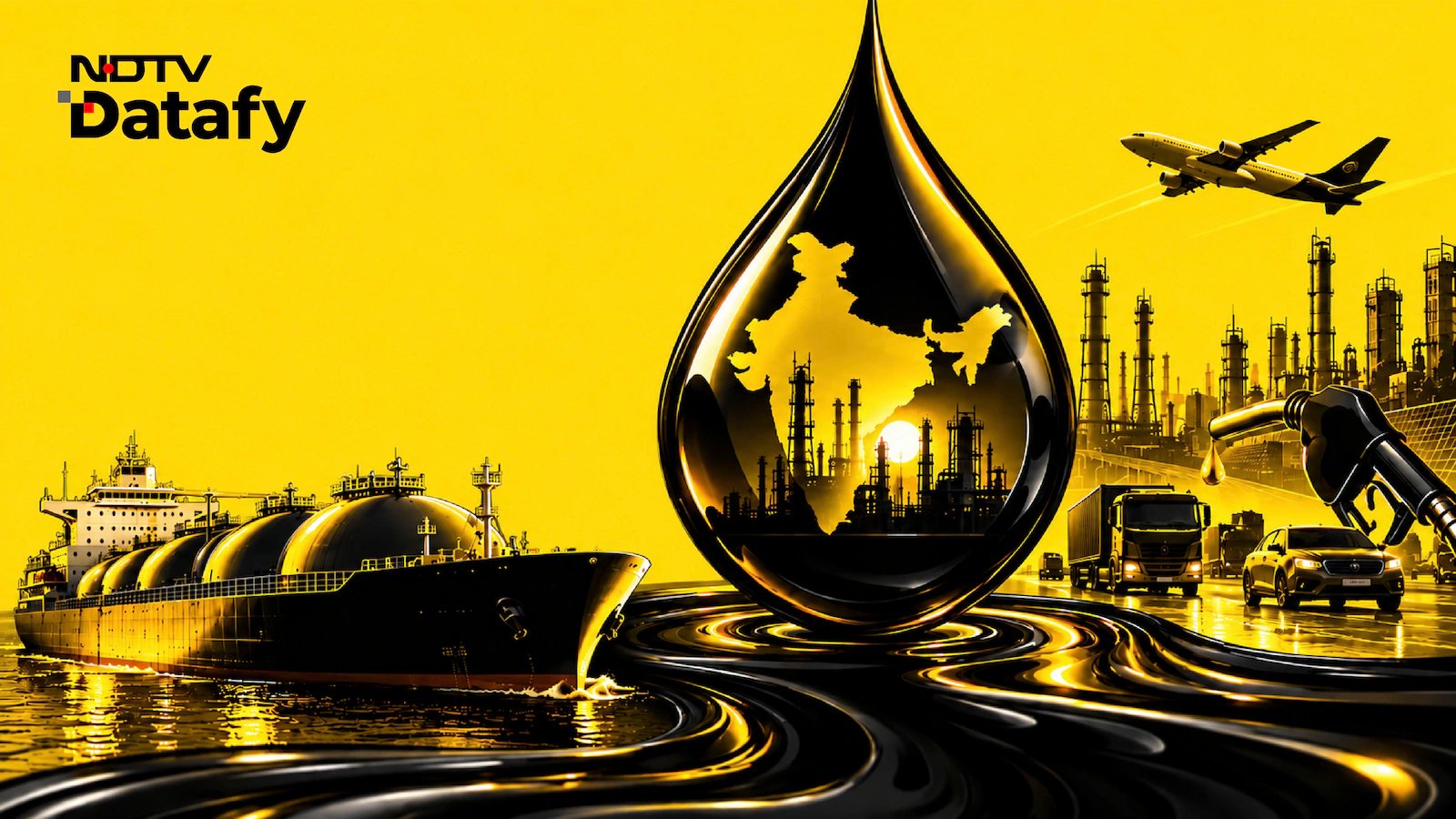
New Delhi: As geopolitical instability in the Middle East continues to roil international energy markets, India’s strategic resilience has been put to the ultimate test. After hovering in the $60–$70 per barrel range throughout 2025, the Indian basket crude price began a steep ascent in 2026. By March and April, it had breached the $110 mark, eventually surging past $130 per barrel by mid-September. Typically, such an aggressive price spike would signal an impending domestic energy crisis for a country that relies heavily on imports; however, recent data suggests that India has effectively shielded its economy through a combination of diversified procurement and targeted demand management.
Strategic Realignment of Oil Sources
The primary pillar of India’s defense against the current oil shock has been the tactical restructuring of its import basket. Recognizing the fragility of traditional supply lines, New Delhi has successfully pivoted toward a broader spectrum of energy partners.
Russia has consolidated its position as India’s leading crude supplier, with its market share expanding from 33.7 per cent in early 2025 to 40.9 per cent a year later. Simultaneously, India has significantly ramped up intake from the UAE, Venezuela, Oman, and Brazil to create a more robust supply buffer. This diversification has allowed India to offset substantial declines in imports from Iraq and the United States, proving the country’s agility in an increasingly volatile global landscape.
Sustaining Mobility Amidst Price Volatility
Despite the mounting costs, India has managed to keep its economic engine running without disrupting the mobility of its citizens. Petroleum Planning and Analysis Cell (PPAC) data indicates that demand for petrol and diesel has remained resilient, suggesting that the movement of essential goods and personal transit has not been significantly curtailed by the price hikes.
While demand for fuels like LPG, kerosene, and naphtha saw a decline, the overall energy consumption patterns indicate a sophisticated balancing act. The government appears to have prioritized fuel availability for transportation, ensuring that the wheels of commerce continue to turn even as global prices reach historic highs.
Shielding the Household Consumer
Perhaps the most notable aspect of India’s energy strategy has been the compartmentalized approach to natural gas consumption. To prevent the brunt of the global price surge from impacting the common citizen, the government has focused on protecting essential services.
City Gas Distribution networks, which cater to piped gas for households and compressed natural gas (CNG) for vehicles, saw an impressive 26 per cent surge in consumption during the April–June 2026 quarter. While the household sector remained buffered, industrial users were tasked with absorbing the majority of the market pressure. Petrochemical demand dropped by nearly 48 per cent, with industrial and power sector gas consumption falling by 31 per cent and 21 per cent, respectively.
As the situation in the Middle East remains tense, these data points reflect a broader national strategy: rather than reducing overall demand, India has successfully optimized its supply chain and prioritized its most critical domestic sectors. While the challenge posed by $130-per-barrel oil remains daunting, the combination of diversified procurement and surgical demand management has so far steered the nation clear of an energy catastrophe.
Disclaimer: This content is auto-generated for informational purposes only.
Source: Read Original News