






As Central Asia grapples with the accelerating loss of its glaciers—which are melting at four times the global average—the region faces a precarious future. With glacial runoff serving as a primary water source, the prospect of dry riverbeds and cities reliant solely on erratic seasonal rainfall is no longer a distant theoretical threat. In this climate-stressed environment, urban planners and residents are increasingly forced to ask: can the landscape itself act as a defense mechanism?
The concept of “sponge cities,” popularized by architect Kongjian Yu to manage flood-prone regions in China, is gaining traction as a potential framework for adaptation. A sponge city utilizes permeable pavements, green roofs, and urban wetlands to absorb, filter, and store water, rather than funneling it away through concrete sewers. While Central Asia’s climate—often arid—differs significantly from the monsoon-drenched regions of Southeast Asia, the core principles of water retention are arguably more critical for survival here than anywhere else.
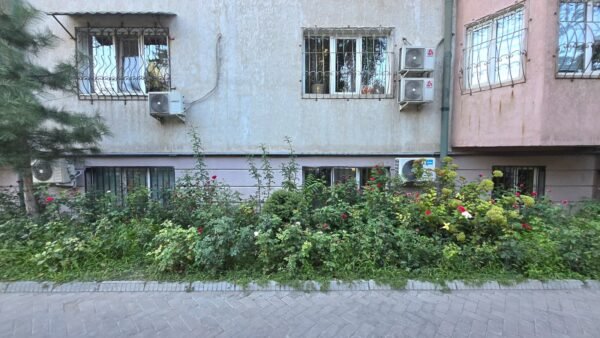
Despite this, Central Asian urban development has historically leaned toward aesthetic, water-intensive landscaping. In Bishkek, the capital of Kyrgyzstan, there has been a marked decline in green space since the Soviet era. Furthermore, much of the remaining vegetation consists of ornamental species that require significant irrigation. Residents and groundskeepers often rely on potable drinking water to nourish rose gardens and non-native conifers, a practice that highlights a critical disconnect between urban planning and environmental reality.
Nuraiym Syrgak, a Kyrgyzstani social researcher and ecologist, notes that the problem is compounded by a lack of awareness regarding local biodiversity. “We often see trees in our parks that are not adapted to our climate,” she explains. “They are beautiful, but they do not provide shade and they require excessive labor.” Syrgak advocates for a shift toward permaculture and the restoration of native flora—such as local elms and shrubs—which have deep root systems capable of holding soil in place and preventing the erosion that leads to devastating mudflows and floods.
The barrier to such transitions is not merely technical, but social and structural. In many instances, the responsibility for sustainable land management falls on individual gardeners, yet there is a profound lack of community-led, grassroots collectives to share knowledge and tools. Furthermore, marginalized groups, particularly women, remain largely excluded from land-use decision-making, despite often being the most active agents of agricultural and ecological change at the household level.
“Men tend to be skeptical of anything new,” Syrgak notes, reflecting on her work with the El-Too foundation. “Women, in contrast, are fantastic change agents. By adopting a family-based approach to agriculture, we can begin to shift these habits.”
For cities like Bishkek, the path toward a “miniature sponge city” model may begin with small, incremental changes: retrofitting buildings with rainwater catchment systems, replacing high-water-demand roses with drought-resistant perennials, and utilizing greywater for irrigation. There is also potential for local authorities to allocate unused urban land for community gardens, which would serve the dual purpose of increasing water resilience and improving local food security.
Ultimately, the transformation of Central Asia’s urban centers requires a blend of state-level regulation and individual initiative. While large-scale infrastructure projects are necessary to stave off the worst outcomes of climate-induced migration and resource scarcity, the “sponge” effect is also built one garden at a time. By prioritizing native vegetation, adopting efficient irrigation, and integrating water-retention systems into new developments, the region can move toward a model where cities no longer just consume water, but actively store it for the drier days ahead.
Disclaimer: This content is auto-generated for informational purposes only.
Source: Read Original News