







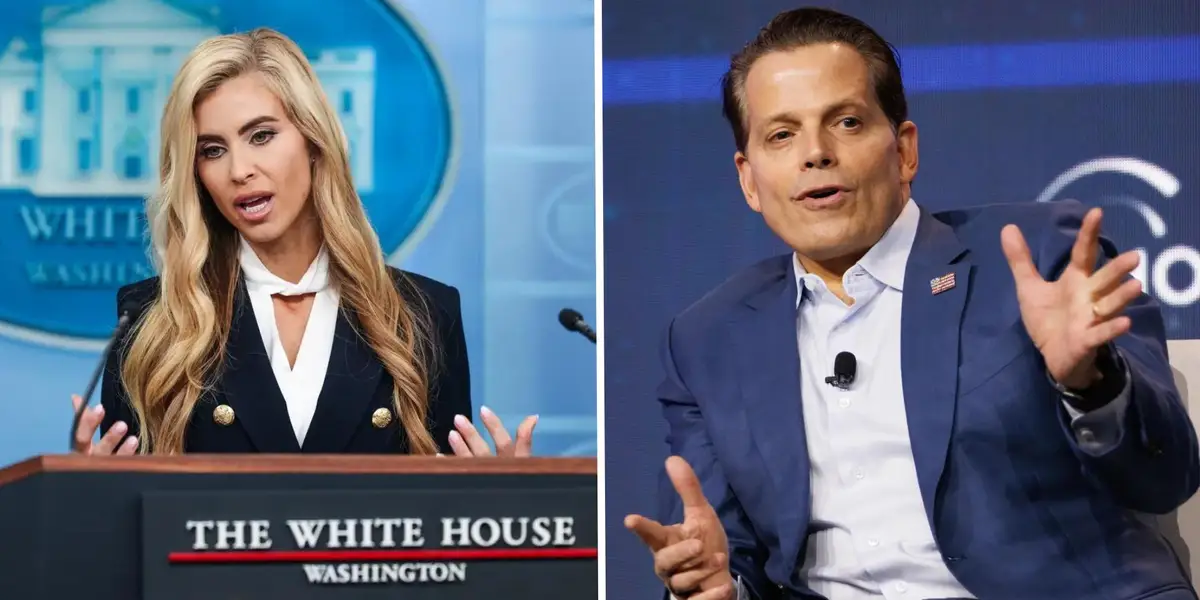
Katie Zacharia’s five-day tenure as White House press secretary has ignited a firestorm of online commentary, effectively turning the rapid turnover of political appointments into a new digital benchmark. As memes circulate regarding her departure, the internet has naturally gravitated toward the man who practically invented the genre of short-lived executive exits: Anthony Scaramucci.
Scaramucci, whose own 10-day stint as White House communications director in 2017 coined the term “a Scaramucci,” has been closely monitoring the situation. After initially betting that Zacharia would stabilize in the role, he transitioned to offering professional guidance once her exit was confirmed, advising her to disconnect from the news cycle and focus on her personal life.
## The “Scaramucci” Index and Digital Benchmarking
The viral reaction to Zacharia’s exit has moved beyond standard social media snark, evolving into a tongue-in-cheek unit of measurement. Observers are now calculating political tenures in “Scaramuccis,” with some users even proposing that a “Zacharia” be defined as half of a Scaramucci.
This trend reflects how quickly modern digital culture codifies political instability into measurable metrics. Similar to how tech companies track employee churn via HR analytics software or AI-driven workforce management tools, the public has created a real-time tracking system for executive volatility. This “crowdsourced analytics” demonstrates how quickly internet discourse can quantify abstract concepts like career longevity, turning a political setback into a lasting pop-culture shorthand.
## Navigating the “#OpenToWork” Controversy
Adding to the public discourse is the digital footprint Zacharia left behind, specifically an image featuring the LinkedIn “#OpenToWork” profile frame. The inclusion of this green banner, originally highlighted by the Democratic Party’s official account, has sparked a fresh debate regarding professional networking etiquette in the age of algorithm-driven recruitment.
While the badge is designed by LinkedIn to signal availability to recruiters, it remains a polarizing feature. Traditional career wisdom—often amplified by professional advice columns—frequently labels the badge as a “red flag” that signals desperation to hiring managers. Conversely, data trends suggest the opposite: candidates who utilize the public-facing feature receive approximately 40% more outreach from recruiters compared to those who keep their job-seeking status private. This discrepancy highlights a classic disconnect between older, rigid hiring mentalities and the data-backed reality of modern, algorithm-heavy talent acquisition platforms.
## Resumes, Perception, and the New Professional Standard
The debate over Zacharia’s brief tenure touches on broader anxieties regarding the modern job market. For decades, workers were encouraged to remain in positions for at least a year to ensure a favorable impression on future employers. However, the rapidly changing landscape of the modern workplace—influenced by the proliferation of AI and the “gig” economy—is reshaping these norms.
Leadership consultants have increasingly pushed back against the stigma of short-term roles, arguing that quick moves can actually be an asset. When framed correctly, short stints can demonstrate a candidate’s high demand, adaptability, and desire for growth. In the context of high-pressure environments like the White House, the focus is less on duration and more on the specific skill sets acquired and the nature of the departure. As career-tracking software and automated resume-scanning tools continue to evolve, the emphasis is shifting away from simple tenure and toward the strategic narrative a professional builds throughout their career. For Zacharia and others in high-profile, short-lived roles, the key to success is moving beyond the “short-term” label and focusing on the tangible value they bring to their next professional chapter.
Disclaimer: This content is auto-generated for informational purposes only.
Source: Read Original News