








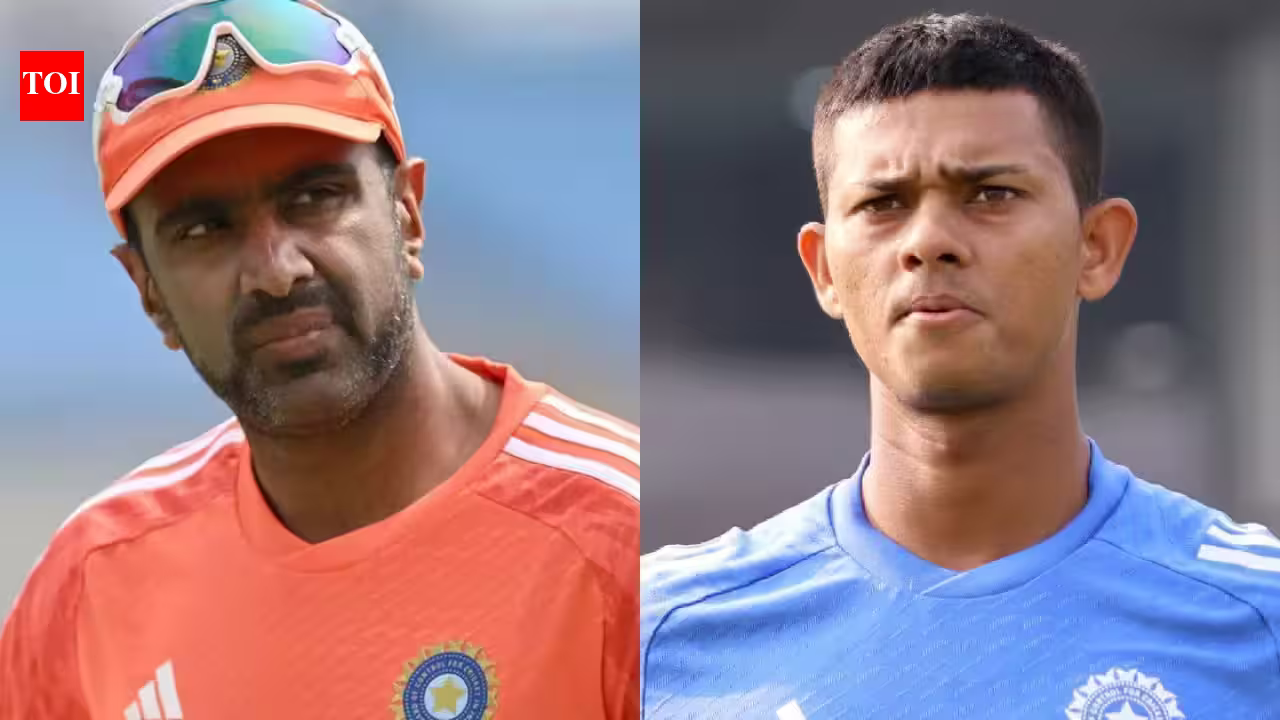
CRITICISM of the national selection committee reached a fever pitch this week as veteran spinner Ravichandran Ashwin publicly voiced his frustration over the exclusion of young batting sensation Yashasvi Jaiswal from India’s ODI squad for the upcoming series against New Zealand.
The decision, which has sparked a broader debate regarding the management of India’s brightest emerging stars, centers on the team’s failure to utilize a high-impact player during a period where regular starters, such as Shubman Gill, are being rested. For Ashwin, who has long been an advocate for nurturing talent through consistent game time, the omission is not merely a strategic oversight—it is a potential threat to a young player’s career trajectory.
The “Unfair” Omission and the Confidence Factor
Speaking candidly on his personal YouTube channel, Ashwin dismantled the logic behind leaving Jaiswal out of the final two matches of the ODI series. With the team management opting to rest Shubman Gill, the natural progression would have been to slot the explosive Jaiswal into the lineup. Instead, the selection committee opted to move in a different direction, a choice that Ashwin labeled as both “unfair and unfortunate.”
The veteran off-spinner emphasized that the repercussions of such decisions extend far beyond the stat sheet. “If Shubman Gill is not playing the last two ODIs, then Yashasvi Jaiswal should definitely get that spot,” Ashwin argued. “It is very unfortunate because all of this can ruin his confidence. Now, with the way he was scoring runs… to then be sidelined for this long is a difficult pill to swallow.”
Ashwin pointed to a glaring void in the youngster’s recent schedule, noting that Jaiswal has essentially been absent from international cricket for nearly four months. In an era where rhythm and match practice are deemed essential for maintaining peak performance, the decision to leave a “run machine” in the wings for such an extended duration is, in his view, a failure to protect a vital asset.
A Call for Proactive Management
The core of Ashwin’s argument lies in the responsibility of the team management and the selection committee to facilitate growth rather than stifle it through inaction. According to the veteran, the transition between formats should not be used as an excuse to keep a player entirely out of the international fold.
“He was a run machine,” Ashwin noted. “If his confidence is getting ruined, it is the job of the team management and selectors to give him an opportunity wherever possible. But he has not been getting those opportunities at all. It has not gone to him. And it is very unfair.”
Ashwin proposed a more collaborative approach between the selectors and the players. He suggested that the management should have engaged in a direct dialogue with Jaiswal regarding his readiness for the final two ODIs, rather than unilaterally deciding to sideline him for “Test match preparation.” While Ashwin acknowledges the necessity of red-ball training, he questions why that objective should come at the absolute expense of white-ball rhythm.
“I agree that he needs to prepare for Test cricket,” Ashwin stated. “But tell me, when did Yashasvi Jaiswal last play an ODI? When did he last play a T20? When did he last play a Test match? The gap is becoming concerning.”
Looking Toward the World Cup Horizon
The exclusion of Jaiswal also raises significant questions about India’s long-term planning, particularly as the team looks ahead to the next ODI World Cup in South Africa. Developing a reliable core of backup players is a hallmark of championship-winning squads, yet the current handling of Jaiswal suggests a lack of clarity in how the selectors view his role in the 50-over format.
By keeping a talent as “precious” as Jaiswal on the fringes, the BCCI risks cooling off one of the hottest prospects in world cricket. Ashwin’s plea is a stark reminder that talent alone is insufficient; players require the backing of their board and the reassurance that they are integral to the future of the side.
“It is definitely the responsibility of the selectors and team management to look after Yashasvi Jaiswal,” Ashwin concluded. “He is a precious talent. You cannot afford to let that kind of ability go to waste through lack of communication or missed opportunities.”
As the series against New Zealand approaches, the spotlight remains firmly on the management. Whether they choose to heed Ashwin’s advice and reintegrate Jaiswal into the fold remains to be seen, but the message from one of India’s most respected cricketing minds is clear: the time to invest in the next generation is now, and that investment starts with game time.
Disclaimer: This content is auto-generated for informational purposes only.
Source: Read Original News