







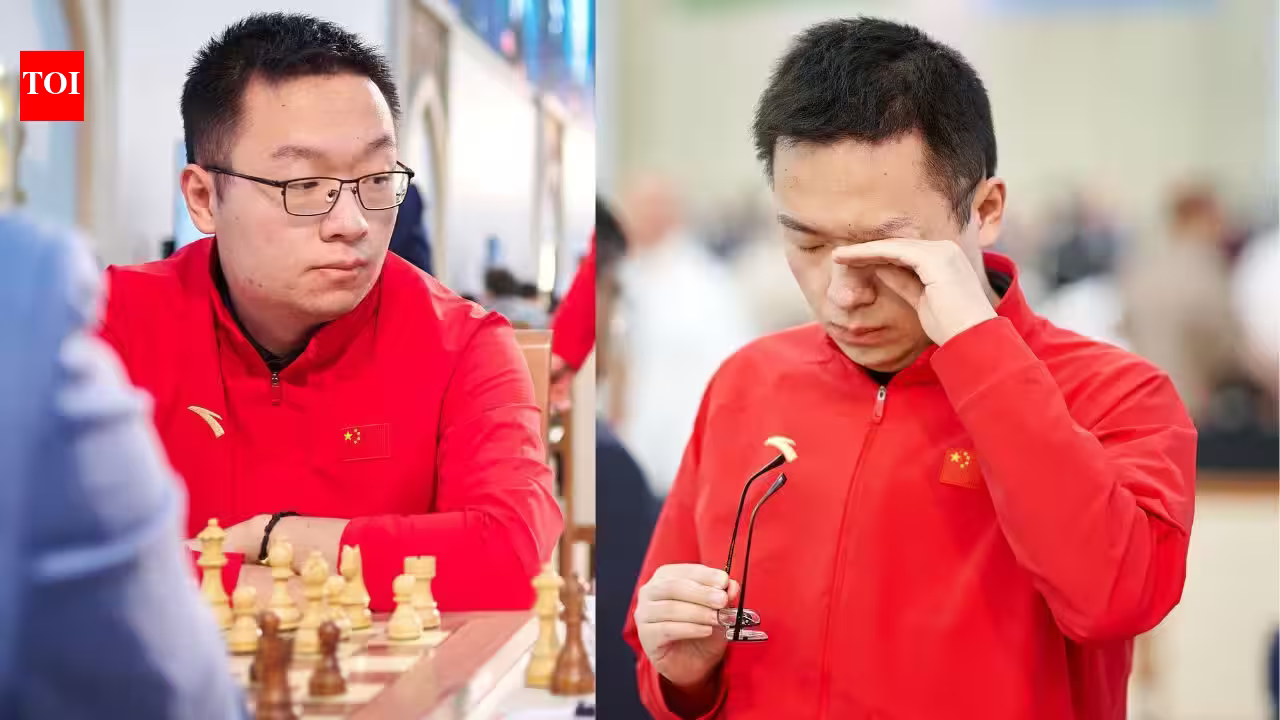
“EXTREMELY TIRED” was the only way China’s number-one chess star, Wei Yi, could describe the aftermath of his maiden Candidates Tournament appearance. There were no flowery metaphors, no grand proclamations about the spirit of the game, and certainly no sugar-coating the brutal reality of the sport’s most demanding stage.
The 2758-rated Grandmaster, fresh off a triumphant individual gold-medal performance on Board 2 at the Chess Olympiad in Samarkand, Uzbekistan, looked back at his time in Cyprus with a candid perspective that strips away the romanticized veneer often applied to elite chess. Following the final round of the Candidates, where the winner was already determined and his own podium finish was mathematically set, Wei Yi agreed to a draw in a cursory 32-move affair. It was the end of a long road.
“My first feeling was that I was extremely tired,” Wei told TimesofIndia.com during an exclusive interview. “I remember taking a long rest after the final round. It was a relief that the tournament was finally over.”
The Invisible Toll of 64 Squares
For the casual observer, chess is a sedentary pursuit—a test of intellect played within the confines of a quiet, climate-controlled room. But at the 2700+ ELO level, the physiological and psychological toll is punishing. Wei Yi’s admission reveals the reality that elite players face: a marathon of cognitive endurance that pushes the human brain to its absolute limits.
“It was my first Candidates Tournament, and playing 14 classical games in such an intense atmosphere, against opponents of such a high standard, was certainly not easy,” Wei explained.
On paper, Wei’s debut was a respectable, if not spectacular, outing. He secured a fourth-place finish with 7 points out of 14, comprised of two wins, ten draws, and two losses. He outpaced established titans of the game, including Hikaru Nakamura and rising star R Praggnanandhaa. However, Wei remains his own harshest critic. He points to his losses against Fabiano Caruana and eventual winner Javokhir Sindarov as moments of professional frustration.
“Looking back, I’m not particularly satisfied with my overall performance,” he admitted. “I think I could have played better in several games, especially my game against Fabiano Caruana, possibly the one from the third round.”
The nature of the elite circuit means that mental fatigue is often a shared burden. Wei conceded that in at least three of his draws—battles against Nakamura, Praggnanandhaa, and Anish Giri—he was saved only by the fact that his opponents were suffering from the same exhaustion that plagued him. “My opponents were probably tired as well, and they made some mistakes during the second time control,” he noted.
The Necessity of the ‘Long Break’
The conversation surrounding mental burnout in chess has reached a fever pitch, particularly concerning China’s former world champion, Ding Liren. After becoming China’s first undisputed world champion in 2023, Ding struggled with his form and mental health, stepping away from the board for significant periods.
Wei Yi, who has balanced his own elite career with university studies, expressed deep empathy for his countryman’s situation. While he noted that his own hiatus—taken during the COVID-19 pandemic—was fueled by the lack of tournament opportunities and a desire to focus on his education, he understands the existential weight of the professional circuit.
“Regardless of who it is, I understand why a player might want to take some time off to rest and regain their form,” Wei said. “As a professional chess player myself, I know the pressure players face during tournaments. The pressure can be enormous, especially when you reach the highest level.”
A Vision for the Future
Beyond the fatigue and the grueling nature of the Candidates, Wei remains a passionate ambassador for the game. A frequent visitor to India since his first trip to the World Youth Championship in Pune in 2014, Wei has developed a deep appreciation for the nation’s burgeoning chess culture.
“I’ve visited India many times, so many that I’ve probably lost count,” he said with a smile. “I think all the cities I’ve visited have been very nice, and the organizers of the tournaments I’ve attended have generally done an excellent job.”
As the landscape of world chess shifts, with India emerging as a global powerhouse, Wei has one specific ambition for his home country. Having witnessed the surge in popularity and institutional support within India, he hopes to see a similar transformation in China.
“I think Indian chess has developed rapidly over the past few years, and that is something people around the world can see,” Wei concluded. “I would like to see chess receive more support in China so that it can become as popular there as it is in India.”
For now, the Chinese No. 1 remains a player in his prime—a competitor who has tasted the fires of the Candidates and emerged with a sharper understanding of both his opponents and himself. While he acknowledges the relief of the finish line, he remains a force to be reckoned with, ready to bring that experience to the next challenge on the world stage.
Disclaimer: This content is auto-generated for informational purposes only.
Source: Read Original News