








The documentary landscape has seen its fair share of boundary-pushing projects, but few have arrived with the meta-textual audacity of You Can See Everything. Directed by Lance Oppenheim and executive produced by the master of cringe-inducing reality, Nathan Fielder, this three-hour odyssey into the life of the disgraced Theranos founder Elizabeth Holmes is less a standard biography and more a hall of mirrors. By the time the credits roll, the audience is left questioning not just the morality of Holmes, but the ethics of the very camera crews that documented her final days of freedom.
The Liminal Space of Pre-Prison Life
For 34 days, Fielder and his crew were granted a level of proximity to Elizabeth Holmes that felt, at times, invasive to the point of discomfort. Stationed at her beachfront California estate, the film captures a surreal “before” period—a quiet, domestic purgatory where a woman who once commanded the attention of Silicon Valley’s titans was now waiting for the metaphorical clock to run out.
The documentary masterfully highlights the mundanity of her life before her 2023 surrender. We see the mundane rituals of a family preparing for an 11-year absence, a stark contrast to the global headlines that painted her as a corporate villain of historic proportions. Yet, as the documentary progresses, the traditional narrative structure dissolves. When Holmes is ultimately incarcerated, the film faces an existential crisis: how do you complete a character study when your subject is behind bars? The answer, as it turns out, is to blur the lines between reality and artifice completely.
The Meta-Reconstruction: Seyfried’s Return
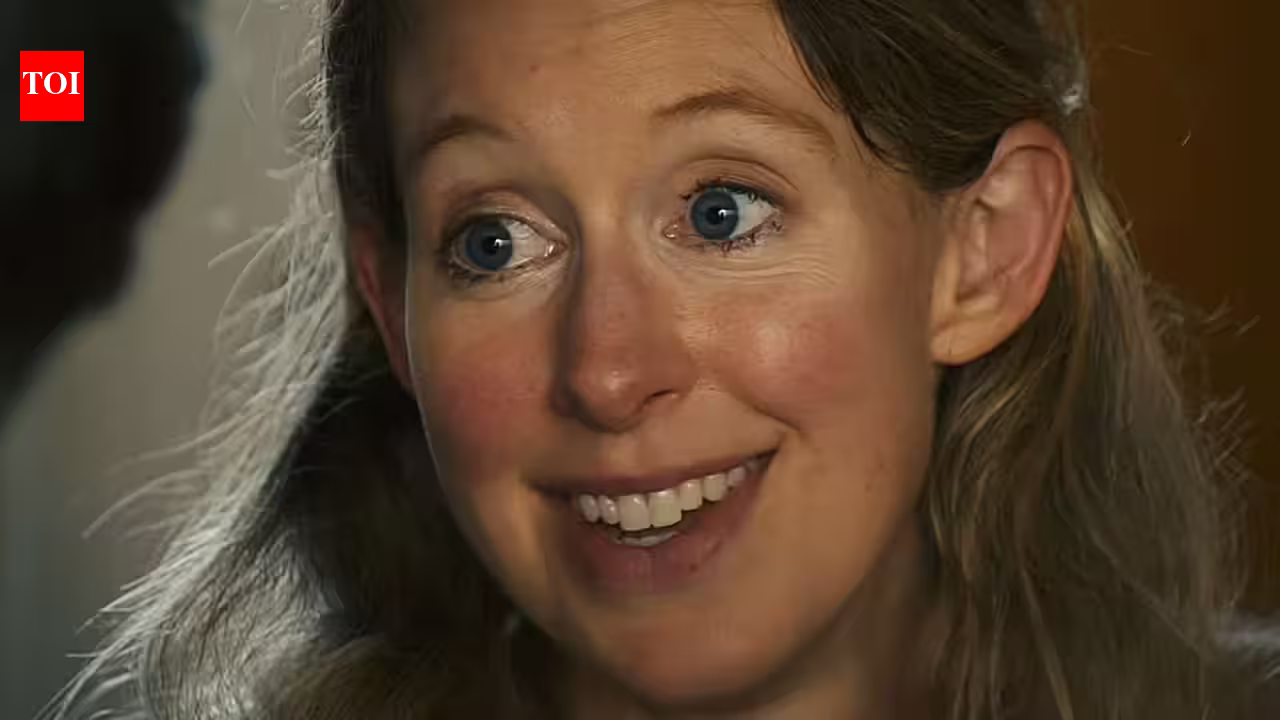
When the prison walls cut off Fielder’s access, the production didn’t just pivot—it folded. By bringing in Amanda Seyfried, who famously portrayed Holmes in the Hulu limited series The Dropout, the filmmakers created a surreal layer of “re-enactment” to fill the gaps in their narrative. Watching Seyfried and Christopher Abbott (as Billy Evans) recreate private moments that occurred while the cameras were banned provides an eerie, uncanny valley experience.
It forces the viewer to confront the subjectivity of documentary filmmaking. By using a Hollywood actress to play the “real” person, Fielder effectively admits that the truth is inaccessible. The film stops trying to be a fly-on-the-wall observation and starts acknowledging that it is a construct—a performance of a performance.
The Betrayal: Billy Evans’ Secret Deal
The emotional anchor of the film’s finale is the revelation of a clandestine financial agreement. Fielder uncovers that Billy Evans, Holmes’ partner, had struck a deal to profit from the documentary—a move executed entirely without Holmes’ knowledge. The revelation shifts the film’s tone from a study of corporate fraud to a tense domestic thriller.
When confronted by Fielder, Evans makes a chilling admission: he kept the deal a secret from the woman he was building a life with on purpose. The ambiguity of his motives—was it a calculated financial safeguard, or a deeper betrayal?—hangs over the final act. While the film eventually notes that Evans backed down from the deal and will no longer profit, the damage to the narrative arc is done. We are left wondering if Holmes, even in her isolated state, ever learned of the financial games played in her name.
The Ethics of the Lens: Fielder and Holmes
Perhaps the most uncomfortable aspect of You Can See Everything is the implication of the director’s own relationship with his subject. The film explicitly questions whether Fielder, under the guise of objective reporting, grew emotionally attached to Holmes. This is the hallmark of a Nathan Fielder project: the creator becomes the most interesting character in the frame.
The final scene is a haunting, idyllic image of Fielder and Holmes swimming in the ocean, a moment captured during those last 34 days of freedom. It serves as a stark reminder of the film’s central conceit: we are watching someone who has lost everything, yet we are doing so through the curated, perhaps manipulative lens of a filmmaker who has his own agenda.
Legacy of a Disgraced Titan
For those still trying to piece together the rise and fall of Theranos, the documentary provides little in the way of “new” facts about the blood-testing fraud. We know the story: the $10 billion valuation, the pinprick lies, the Wall Street Journal exposé that brought the house of cards crashing down. Holmes is currently serving her 11-year sentence, with a transfer to a halfway house expected in the coming year.
However, You Can See Everything isn’t interested in the logistics of the fraud. It is interested in the vacuum left behind. By the time the film ends, the audience realizes that Elizabeth Holmes remains an enigma, perfectly camouflaged by the very people filming her. Whether she was a puppet master or a pawn in her own downfall, the documentary leaves us with the unsettling realization that, despite the three-hour runtime, we didn’t actually see “everything.” We only saw what the cameras allowed us to believe.
Disclaimer: This content is auto-generated for informational purposes only.
Source: Read Original News