









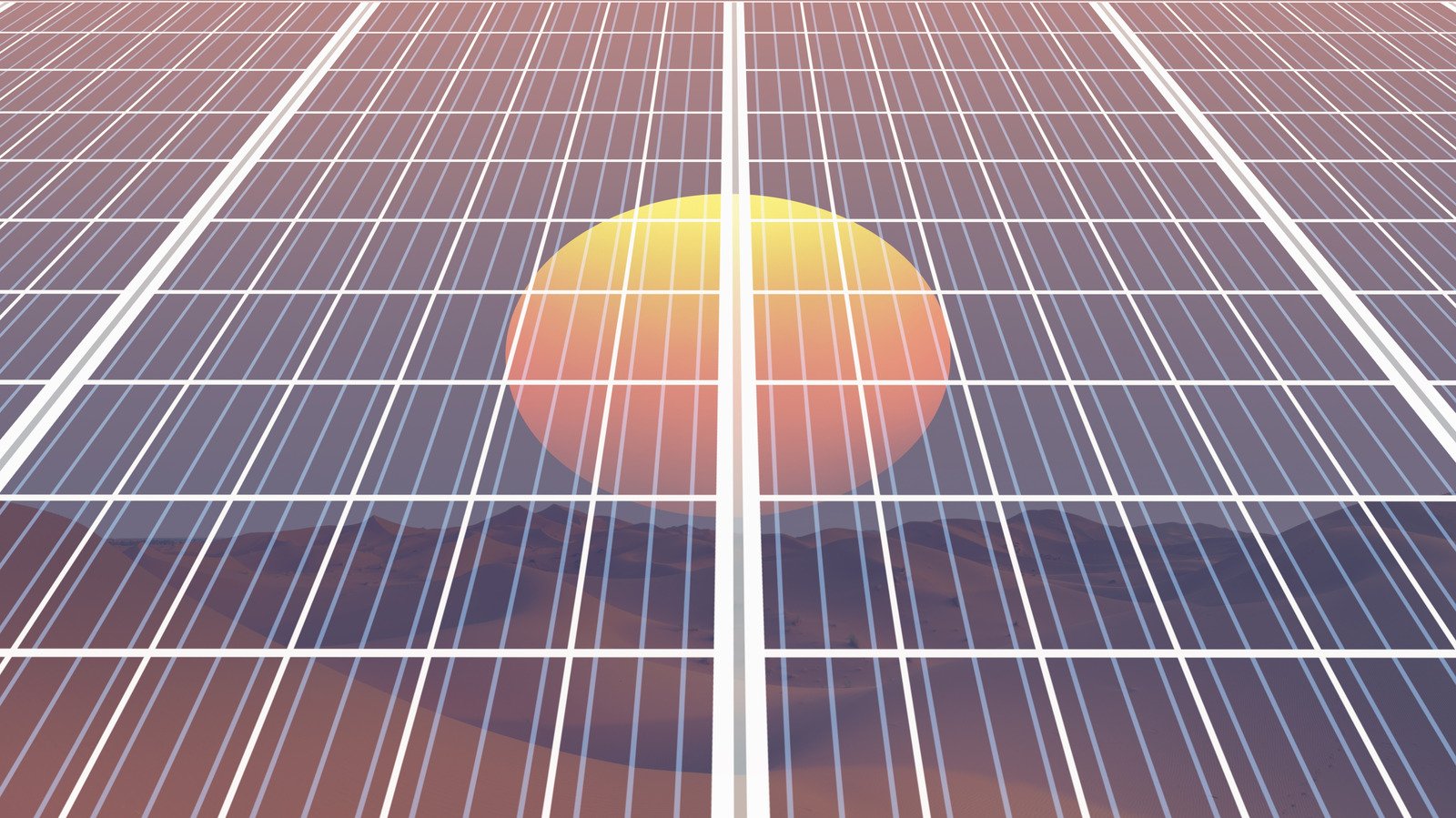
The Sahara Desert, with its vast expanse of sun-drenched, arid terrain, is often cited as the ultimate frontier for large-scale renewable energy infrastructure. The concept is straightforward: deploy massive arrays of solar panels to capture the immense solar radiation and distribute it to power-hungry regions. However, advanced climatological modeling suggests that such a massive transformation of the desert landscape could trigger a cascade of meteorological consequences, reaching far beyond the North African borders to alter global climate patterns.
The Albedo Effect and Surface Heat Exchange
The core of the potential climate disruption lies in the concept of surface albedo—a measure of how much sunlight a surface reflects. The pale, sandy surface of the Sahara is highly reflective. By covering vast stretches of this terrain with dark solar panels, the regional albedo is significantly lowered. Consequently, the panels absorb a much higher percentage of solar radiation than the sand they cover.
This increase in heat absorption triggers a thermal feedback loop. As the surface warms, it alters the temperature gradient between the land and the surrounding atmosphere. In climate simulations, this creates a localized warming effect that forces a shift in atmospheric circulation. The rise in surface temperatures draws in more moist air, potentially leading to increased cloud cover and rainfall in a region historically characterized by extreme aridity. While this could theoretically transform parts of the desert into greener, more hospitable ecosystems, the broader atmospheric mechanics remain deeply complex.
Atmospheric Shifting and Global Rainfall Patterns
The implications of altering the Sahara’s climate extend into the mechanics of the Intertropical Convergence Zone (ITCZ). The ITCZ is a broad, low-pressure belt near the equator where trade winds converge, driving the formation of tropical rain clouds. Modeling suggests that a significantly altered Sahara could disrupt this belt, pushing it northward.
Such a displacement of the ITCZ is not localized to the Sahara. It possesses the potential to fundamentally shift rainfall distribution across the planet. If the ITCZ moves, regions that currently rely on specific, seasonal precipitation patterns could experience prolonged droughts, while others might suffer from unpredictable flooding. The environmental impact is most pronounced in sensitive tropical zones, such as the Amazon rainforest, where shifts in moisture delivery could lead to severe forest degradation and ecosystem collapse, undermining the very carbon-sequestration goals that renewable energy projects aim to support.
Potential Disruptions to Global Climate Oscillations
Beyond rainfall, large-scale Sahara solar arrays could influence complex climate oscillations, such as the El Niño Southern Oscillation (ENSO) and the Atlantic Niño. These phenomena are critical drivers of weather variations across the Pacific and Atlantic basins. The 2020 study using climate models indicates that the thermal changes induced by massive solar deployment could weaken these natural fluctuations.
The result would be a shift in the standard behavior of ocean-atmosphere interaction, which regulates temperatures and weather events worldwide. Furthermore, the model highlights a concerning trend toward Arctic warming. As thermal energy is redistributed across the globe, the accelerated melting of Arctic sea ice becomes a distinct possibility. This creates an additional feedback loop, as the loss of reflective sea ice lowers the Earth’s total albedo further, trapping more heat and exacerbating the warming trend that the solar farms were initially intended to mitigate.
The Scale of Deployment and Strategic Planning
It is vital to interpret these findings within the context of the study parameters. The researchers based their analysis on a hypothetical installation of solar panels covering 20% of the Sahara Desert. This represents an unprecedented, massive-scale industrial operation. The study does not suggest that smaller, localized solar projects would have an identical, catastrophic impact on the global climate. Instead, it serves as a warning regarding the necessity of scale-conscious planning.
The findings advocate for a strategy of decentralized renewable energy. By focusing on smaller, more efficient installations rather than singular, gargantuan farms, stakeholders can potentially harness the power of the sun without triggering the extreme environmental trade-offs identified in the climate models.
Advancing Toward Sustainable Energy Infrastructure
As the world transitions away from fossil fuels, the deployment of large-scale renewable projects must be treated with rigorous environmental scrutiny. The Sahara solar debate illustrates that no major human intervention in the Earth’s landscape is without physical consequences. The interaction between land surfaces and the atmosphere is a primary driver of the global climate system, and changing those interactions at scale requires an exhaustive understanding of potential systemic impacts.
Moving forward, the goal for energy planners is to refine the technology—improving solar cell efficiency to require less land per gigawatt of output—and to conduct comprehensive environmental impact assessments that look beyond the immediate borders of the installation site. By integrating climate science into the feasibility studies for renewable energy, humanity can achieve the necessary shift to clean energy while protecting the delicate balance of the global climate. The ambition to power the world with the Sahara’s sun is technologically sound, provided that the physical footprint of that ambition is managed with extreme care and scientific foresight.
Disclaimer: This content is auto-generated for informational purposes only.
Source: Read Original News