









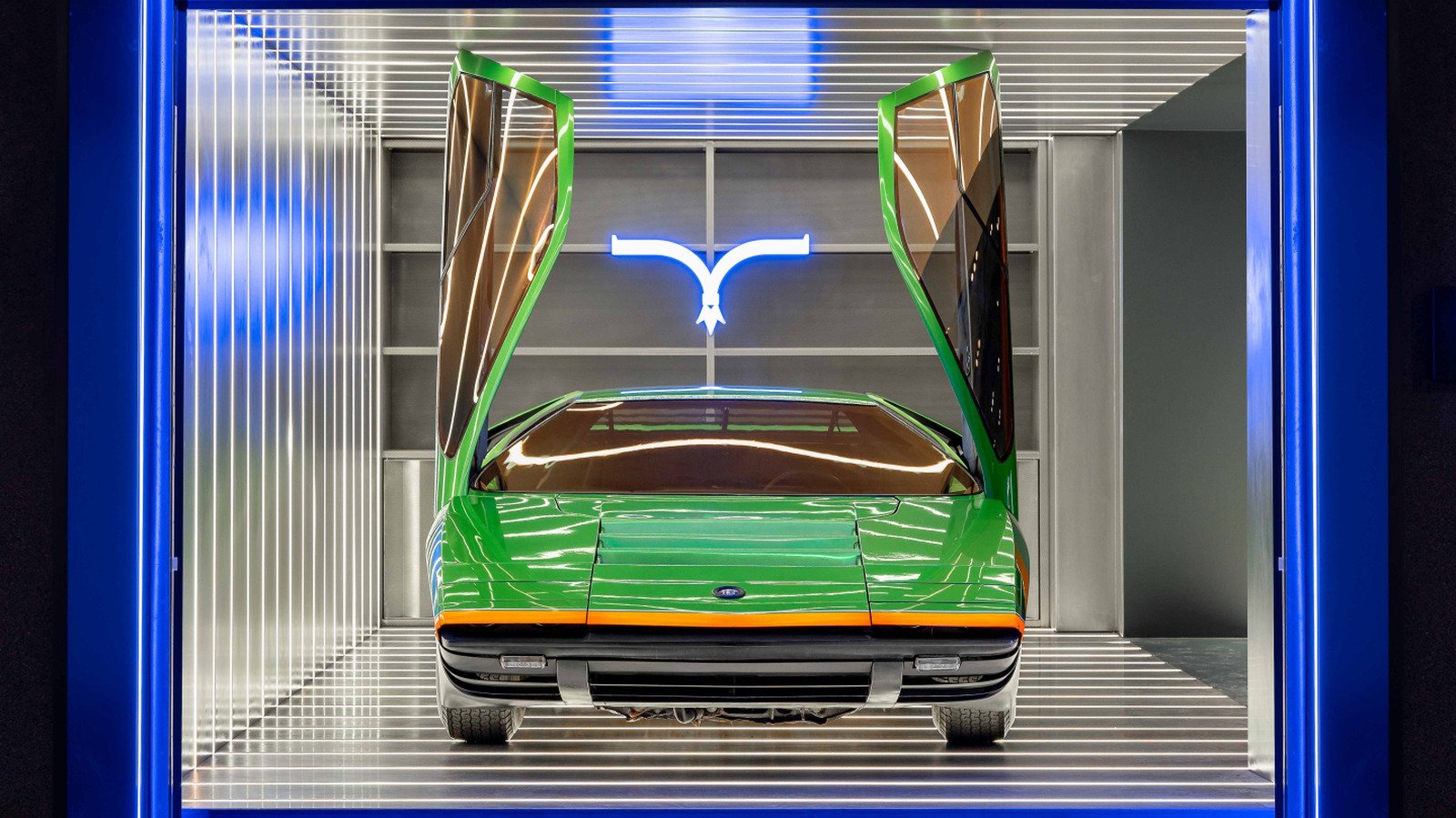
Concept cars serve a dual purpose in the automotive industry: they function as experimental laboratories for engineers and as aesthetic manifestos for designers. While many modern concepts are primarily marketing tools, history is filled with models that introduced technologies or architectures that eventually became industry standards. From pioneering retractable roofs to the development of the modern electric vehicle platform, these vehicles have fundamentally altered the trajectory of transportation.
1938 Buick Y-Job: The Genesis of the Concept
Before 1938, automakers typically relied on custom coachbuilders to design unique vehicles for elite clients. General Motors, led by legendary designer Harley Earl, shifted this dynamic with the Buick Y-Job. It was the first vehicle explicitly built as a “Car of the Future” rather than a vehicle intended for sale. The Y-Job demonstrated a new design language, utilizing a longer, wider stance that emphasized elegance and horizontal lines—a stylistic hallmark that remains relevant in modern sedans and coupes.
Beyond its aesthetic influence, the Y-Job featured technical innovations that were years ahead of the mass market. It included retractable hidden headlights, electric windows, and flush door handles. Most impressively, it featured a fully functioning retractable roof that concealed itself beneath a rear metal deck, a precursor to the modern convertible mechanisms we see today. Harley Earl famously used the Y-Job as his daily driver, proving that concept vehicles could be practical, high-performance machines.
Aerodynamic Evolution: The B.A.T. Series and Ford Probe III
Aerodynamics were once considered secondary to style, but the Alfa Romeo B.A.T. (Berlinetta Aerodinamica Tecnica) series in the 1950s proved that air resistance could be mastered through design. Designed by Franco Scaglione, these vehicles featured extreme curves, enclosed wheel arches, and iconic tail fins that guided airflow to a single convergence point. The B.A.T. 7 reached a drag coefficient of 0.19, a figure that remains competitive even by modern standards. These designs introduced concepts like floating buttresses and dorsal fins, which are now standard in high-performance vehicles like the Mercedes-AMG One.
Decades later, the 1981 Ford Probe III took these lessons and applied them to mass-market passenger cars. By utilizing a fluid body shape, semi-covered rear wheels, and a smooth underbody, the Probe III achieved a drag coefficient of 0.22. This shift prompted a broader industry movement toward aerodynamic efficiency in the 1980s, influencing the designs of the Ford Sierra, Ford Taurus, and the third-generation Audi 100.
The Rise of the Monovolume and Unibody SUVs
The 1978 Italdesign Lancia Megagamma introduced the world to the “monovolume” architecture. By opting for a tall roof and a flat floor that integrated the cabin with mechanical components, designer Giorgetto Giugiaro created a vehicle that was significantly shorter than traditional sedans yet offered superior interior space. This architecture became the blueprint for the minivan and MPV segment, directly inspiring vehicles like the Nissan Prairie, the Chrysler Dodge Caravan, and the Renault Espace.
Similarly, the 1989 Toyota RAV-FOUR concept revolutionized the utility segment by replacing traditional body-on-frame truck construction with a unibody chassis. By applying passenger-car construction techniques to an adventure-focused vehicle, Toyota laid the foundation for the modern crossover SUV. Today, almost every best-selling SUV on the market utilizes this unibody approach to balance ride comfort with off-road utility.
Electronic and Structural Milestones: C111 and E25
Mercedes-Benz used its C111 concept series, running from 1969 to 1979, as a test bed for mechanical and engineering breakthroughs. While the car is famous for its rotary and diesel engine experiments, its most lasting contribution was the development of the multi-link rear suspension. This design, intended to maximize both ride comfort and handling, was eventually adopted by almost every major manufacturer for its passenger vehicles starting with the 1982 Mercedes-Benz 190.
In 1972, the BMW E25 Turbo introduced the concept of active safety. The car featured a radar-based distance monitor, anti-lock braking, and shock-absorbing bumpers designed to reset after low-speed impacts. These features served as early prototypes for the driver-assistance systems now mandatory or standard in contemporary automobiles.
The Blueprint for Modern Electrification
The 1990 GM Impact served as a critical turning point for electric vehicles, proving that an EV could be more than a low-speed golf cart. The Impact’s sleek, aerodynamic coupe profile and lead-acid battery technology enabled a 120-mile range and acceleration that could compete with internal combustion sports cars. This concept directly led to the production of the EV1, which pioneered features such as regenerative braking.
Finally, the 2002 GM AUTOnomy Concept introduced the “skateboard chassis,” a platform that houses the battery, drivetrain, and electronics in a low-profile, flat base. This architecture has become the gold standard for modern electric vehicles, as it allows for scalable manufacturing, provides a low center of gravity for stability, and maximizes cabin space by removing the need for a traditional engine bay. Every major automaker today relies on some variation of this skateboard design, solidifying the AUTOnomy’s place as one of the most influential concept cars in history.
Disclaimer: This content is auto-generated for informational purposes only.
Source: Read Original News