









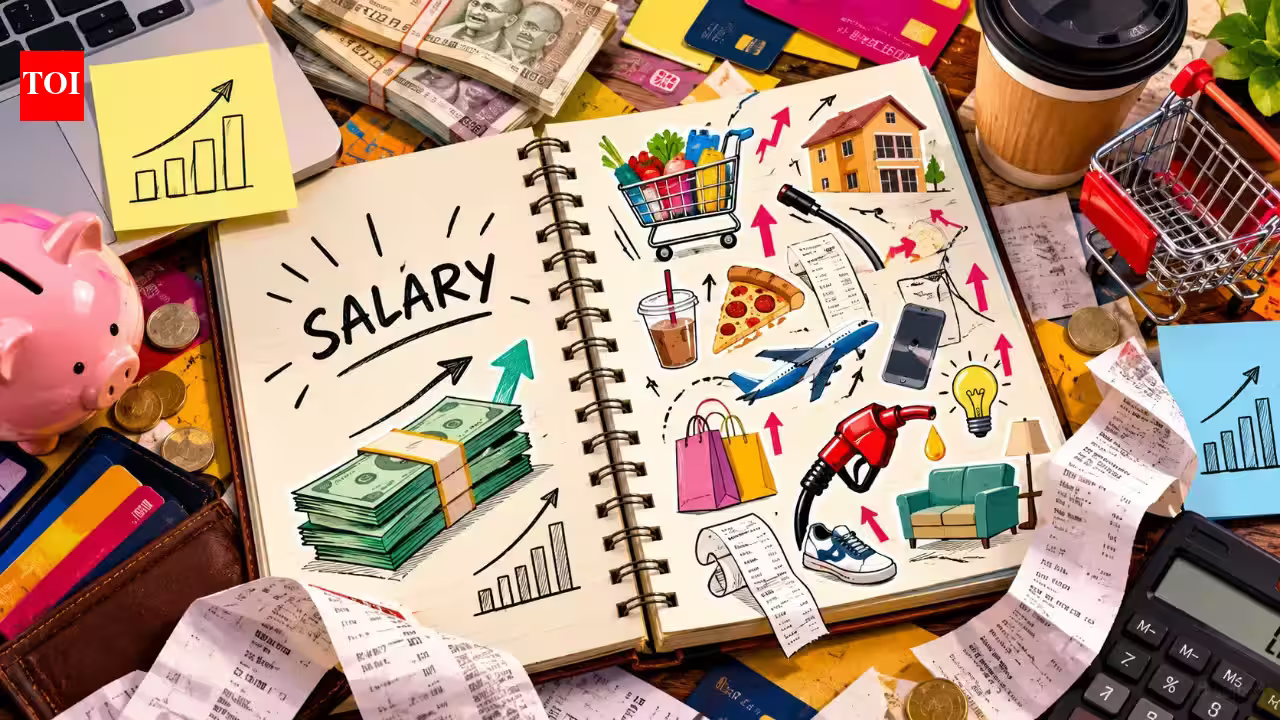
The aspirational climb of India’s middle class has long been defined by the pursuit of higher earnings. For the average professional, a salary increment is viewed as a gateway to improved living standards, the freedom for discretionary spending, and a faster path to long-term financial security. However, the current economic landscape reveals a paradox: while annual salary hikes remain in the healthy range of 9% to 9.1%, the actual purchasing power of households is failing to keep pace with the aggressive climb of the cost of living. This phenomenon, often described as the budget squeeze, has turned the annual appraisal from a moment of celebration into a tactical struggle for survival.
The Mirage of Nominal Salary Growth
On paper, the data suggests a prosperous trajectory for the workforce. Surveys conducted by industry leaders such as Aon and Deloitte indicate that corporate India has been consistently offering increments around the 9% mark. For the salaried class, these figures appear sufficient to outpace standard inflationary expectations. Yet, this metric is increasingly divorced from the lived reality of the Indian consumer.
When adjusted for retail inflation—which has recently trended above the 5% threshold—the effective gain for an employee is significantly diluted. After accounting for statutory tax deductions, rising insurance premiums, and the specific composition of household spending, the perceived “raise” often vanishes within months. Government labor data further highlights the uneven nature of this growth. While regular salaried employees have seen modest increases, the casual labor force has experienced near-stagnation in daily wages. For those at the lower end of the income spectrum, any movement in salary is immediately absorbed by the rising costs of basic subsistence, leaving no margin for wealth accumulation or resilience against economic shocks.
The Escalation of Essential Expenditure
The primary architect of the current financial squeeze is the disproportionate rise in food and fuel prices. Retail inflation, particularly in the food basket, has repeatedly breached the Reserve Bank of India’s 4% target. Items such as onions, ginger, and garlic have seen triple-digit or high double-digit price spikes year-on-year, placing immense pressure on the monthly grocery budget.
This issue is exacerbated by the structure of the Consumer Price Index (CPI). As official inflation data reduces the weighting of food to reflect broader consumption shifts, the headline number often underrepresents the severity of the burden on the common household, where food and utilities command a significant portion of total monthly spending. Furthermore, rural inflation has consistently outpaced urban inflation, creating a precarious situation for agrarian and rural-dependent families. With the agricultural sector facing uncertainty due to erratic monsoon patterns and geopolitical tensions impacting global oil prices, the manufacturing and transport costs are increasingly being passed down the supply chain, inevitably reaching the retail consumer.
Structural Debt and the Erosion of Savings
As monthly expenses outpace income growth, the Indian household has increasingly turned to credit to maintain its standard of living. Data from the Reserve Bank of India indicates a troubling rise in household debt, with personal loans, credit card usage, and gold loans comprising a substantial portion of the liability mix. While debt can provide a short-term buffer, it introduces rigid, recurring financial obligations in the form of Equated Monthly Installments (EMIs).
This trend has led to a decline in net financial savings as a percentage of GDP. When families utilize high-interest credit to bridge the gap between their income and their consumption needs, they create a cycle of dependency that is difficult to break. This is particularly dangerous when interest rates remain volatile. A marginal increase in borrowing costs can lead to a significant rise in monthly EMI burdens, further constraining the disposable income of families already struggling to manage education, healthcare, and housing costs. The reliance on credit to cover consumption rather than productive investment is a critical vulnerability in the current Indian economic framework.
Shifting Consumption Patterns and Economic Sentiment
The cumulative effect of these pressures is a profound change in consumer sentiment. RBI surveys reveal that the urban and rural current situation indices have trended downward, signaling that a significant majority of households feel their financial position is worsening. This shift is clearly visible in the distinction between essential and discretionary spending.
Families are becoming highly selective, cutting back on travel, entertainment, and non-essential lifestyle purchases. The strategy has shifted from wealth building to budget preservation. Households are increasingly gravitating toward bargain shopping, delaying planned capital expenditures, and deferring major milestones. This retrenchment in discretionary spending, while logical for individual financial health, carries broader implications for market growth, as domestic consumption is a primary driver of the Indian economy. When the middle class ceases to spend on non-essentials, the ripple effect is felt across retail, tourism, and services sectors, creating a feedback loop of cautious market activity.
Navigating the Financial Squeeze
For the individual, surviving this period of high inflation requires a transition from reactive budgeting to a proactive, systematic financial management strategy. Professional guidance emphasizes that a salary hike should not be treated as an invitation to increase lifestyle costs but as an opportunity to fortify the family balance sheet.
The fundamental pillars for financial stability in this climate include the establishment of a robust emergency fund. Ideally, this fund should cover at least six months of living expenses, providing a buffer against sudden job loss or medical emergencies. Second, individuals must prioritize the liquidation of high-interest debt, such as credit card balances, which act as a silent drain on long-term wealth. Finally, aligning investments with realistic financial goals and maintaining disciplined insurance coverage are essential to mitigating future risks.
Ultimately, the goal is to shift the focus from the nominal salary figure to the net disposable surplus. In an environment where the cost of living—particularly in areas like healthcare and education—continues to outpace salary growth, the most effective tool is not just earning more, but managing the “leakages” in the household budget. Achieving true financial independence in modern India requires a disciplined approach, separating essential needs from lifestyle wants, and ensuring that savings are prioritized before expenses are incurred. By adopting a more rigorous assessment of liabilities and maintaining liquidity, households can better navigate the volatility and preserve their purchasing power against the persistent pressure of rising prices.
Disclaimer: This content is auto-generated for informational purposes only.
Source: Read Original News