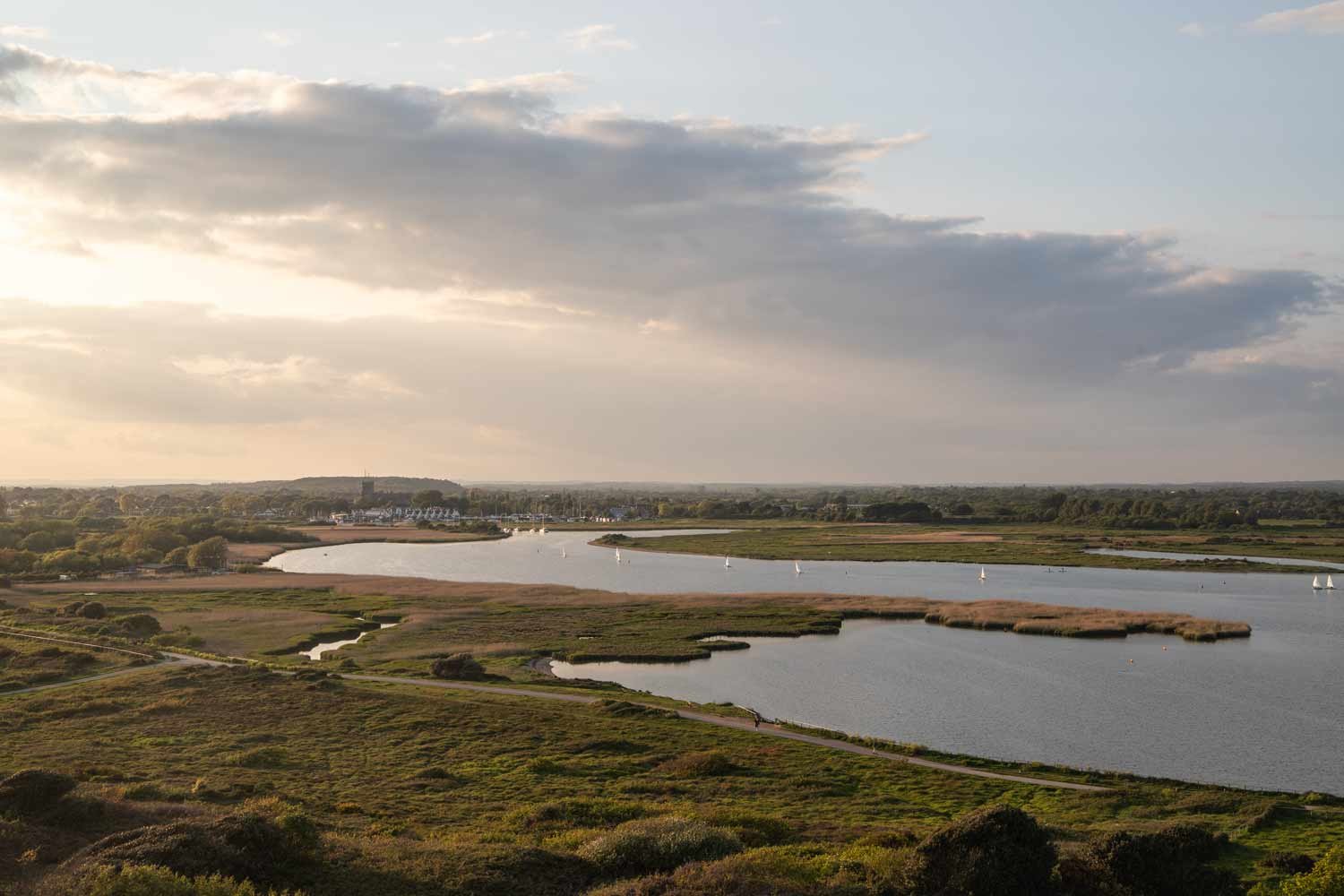








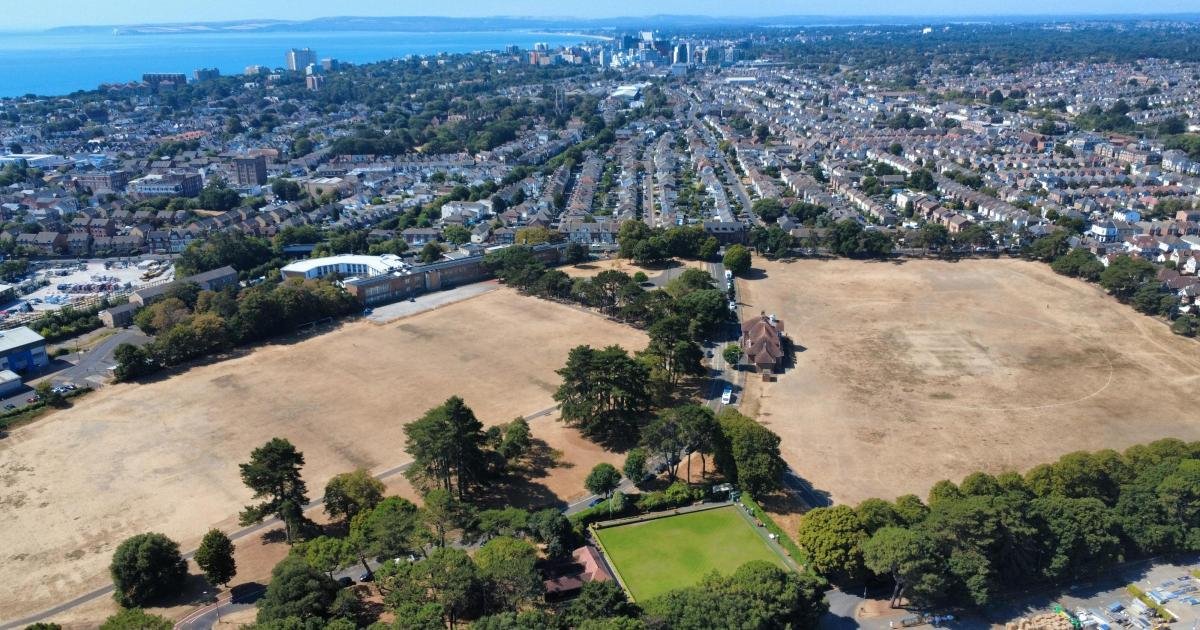
Dorset is grappling with an unprecedented drought, declared by the Environment Agency following the driest July on record. The relentless heat and lack of rainfall have visibly transformed the county’s landscape, with Bournemouth’s once vibrant parks and recreational areas now appearing parched and desolate.
Giles Watts, chair of the Dorset Climate Action Network, emphasizes that while hot, dry periods are not entirely new—he recalls a similar summer in 1976—the crucial distinction now lies in the sustained nature and increasing frequency of such events. He notes a clear trend over recent years towards hotter weather and prolonged droughts, leading to the inescapable conclusion that these current conditions are a direct consequence of climate change. The average rainfall in Dorset for August has been shockingly low, registering less than 1mm so far, exacerbating the already dire situation.
Watts expresses concern over the politicization of climate change discussions, observing that vital debates about transitioning to renewable energy and electrifying transport are often overshadowed by political agendas. He warns that without significant changes, the region can expect more extreme weather patterns, characterized by increasingly hot and dry summers and wetter winters.
The visual evidence of the drought’s impact is striking, as captured in photographs of various Bournemouth green spaces, including Kings Park, West Cliff Gardens, Lower Gardens, Branksome Recreation Ground, Meyrick Park, and Corfe Mullen Recreation Ground. These images, taken on August 13th and 14th, starkly illustrate the widespread desiccation. Notably, Lower Gardens appears somewhat greener than other areas due to limited watering, part of a reseeding agreement related to a past Christmas market ice rink. Kate Langdown, BCP Council’s Director of Environment, confirms that some parks receive targeted watering for formal planting, young trees, and new plants, and explains that sections of Bournemouth Gardens near the Bourne Stream naturally retain more water due to their floodplain location. The council continues to monitor the situation and adapt its approach as conditions evolve.
Councillor Chris Rigby of the Bournemouth, Christchurch and Poole Green Party unequivocally links the high temperatures to climate change, urging national government action. He highlights the alarming contrast of Dorset experiencing its wettest January on record (since 1891 for the Middle Stour catchment) just six months prior to the driest July for southern England since 1836. This rapid oscillation between extreme flooding and severe drought serves as a potent warning of the escalating weather extremes driven by climate change.
Jim Flory, environment manager for the Environment Agency’s Wessex area, underscores the severity of the situation, noting that Dorset, alongside Bristol, Somerset, Wiltshire, Devon, and Cornwall, is officially in drought. Every hydrological area in Dorset recorded its driest July ever. He stresses the precious nature of water, not only for human consumption but also for the environment, particularly protected areas like the Somerset Levels and Moors. The Environment Agency is committed to promoting water-wise practices and investigating any instances of illegal water abstraction.
Jennifer Morisetti, chair of Sustainable Dorset, emphasizes the need for adaptation, acknowledging the future reality of wet winters and dry summers. She points out BCP’s particular vulnerability due to its higher-than-average elderly population, who are more susceptible to heatwaves. Morisetti advocates for reducing carbon emissions and air pollution, suggesting that halting the expansion of incineration facilities and focusing on recycling and waste reduction are crucial steps. She also criticizes the proposed expansion of Bournemouth Airport and new building developments on the edge of BCP, arguing that these actions contribute to carbon emissions, traffic, and air pollution, while reducing natural flood absorption and ecosystem health. Morisetti concludes by asserting that BCP’s current Climate Action Report falls short of addressing these critical issues, making it unlikely that the region will meet its 2030 climate goals.
Local stakeholders will convene at Dorset COP 2026 on Saturday, November 14th, at Kingston Maurward Campus, Coastland College, in Dorchester, to accelerate leadership and action on climate change. Pay-what-you-can tickets are available, and all are welcome to attend this vital discussion.