







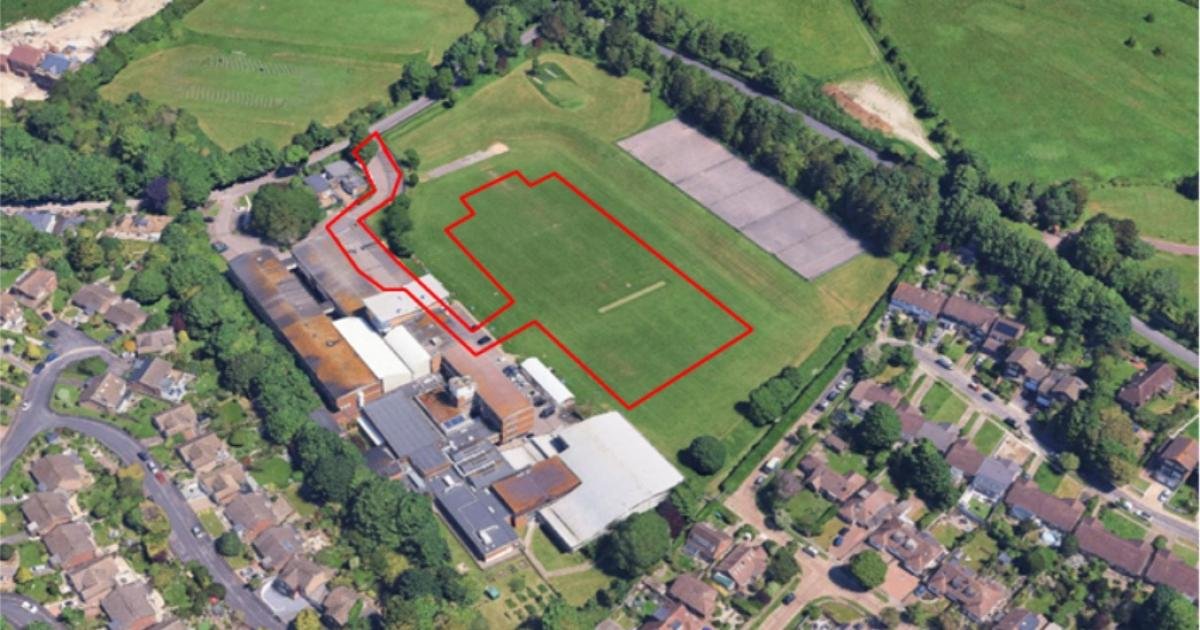
Residents of Rottingdean have launched a fresh wave of opposition against plans for a 3G sports pitch at a school in Falmer Road, raising significant environmental concerns regarding the potential contamination of local water supplies.
While the project received initial planning permission in February, a subsequent application submitted to Brighton and Hove City Council to finalize technical details—including material specifications, noise management, and maintenance protocols—has reignited local debate. Opponents are particularly focused on the environmental impact of the pitch’s construction directly above Brighton’s chalk aquifer, a critical source of drinking water for the area.
Local resident Abi Jacks has led calls for more rigorous scrutiny, arguing that the currently proposed drainage assessments are insufficient. “We have repeatedly raised concerns because the pitch will use rubber crumb and sits above Brighton’s chalk aquifer,” Jacks said. “We have asked how the current assessment demonstrates protection against potential pollutants associated with synthetic pitches, including PFAS, 6PPD-quinone, benzothiazoles, and microplastics.”
These concerns are shared by fellow resident Dirk Mitchell, who has engaged with local officials and Chris Ward, MP for Brighton Kemptown and Peacehaven, to voice his opposition. Mitchell drew a stark analogy regarding the vulnerability of the site, noting, “Imagine having a sieve filled with crumb rubber over a mug and pouring water into the mug and drinking it. The chemical contaminants found to be leaching from 3G pitches are migrating as dissolved leachate into our source protection zones untreated.”
The controversy has reached the council chambers, where in March, Independent councillors for Rottingdean and West Saltdean, Mark Earthey and Bridget Fishleigh, secured agreement for a formal report into the health and environmental risks posed by the material. The report is intended to evaluate current government and Sport England policies, explore the availability of alternative, non-toxic materials, and determine how local planning policy can better regulate the use of synthetic surfaces. Councillor Fishleigh has previously cited visible evidence of material degradation, noting that she had retrieved remnants of rubber crumb shed from her son’s football boots after training sessions.
In response to the growing scrutiny, proponents of the project—supported by Sport England—maintain that the materials are “FIFA and World Rugby compliant.” The proposed construction includes a stone sub-base, a double layer of porous asphalt, and a 3G synthetic turf system that utilizes sand and a prefabricated rubber-mix shockpad.
In an effort to address community concerns regarding noise and site management, the latest application, submitted in October, includes a detailed noise management plan. The proposal restricts the use of whistles to between 9am and 7pm, with operating hours for the facility set from 9am to 9pm on weekdays and 9am to 8pm on weekends and public holidays. Staff will be required to conduct regular perimeter patrols to ensure compliance, and hiring groups will be discouraged from engaging in excessive noise or foul language.
Design and access statements submitted with the application emphasize the community benefits of the development, stating that the pitch aims to provide local groups with vital access to sport and physical activity to improve health and social development.
The planning application, identified as BH2026/01574, remains open for public review on the Brighton and Hove City Council planning portal.
Disclaimer: This content is auto-generated for informational purposes only.
Source: Read Original News