







Delimitation Debate Heats Up: Southern States Voice Concerns Over Representation
Sivaganga, Tamil Nadu – August 10, 2026 – A contentious debate surrounding the proposed delimitation exercise is intensifying across India, with southern states, particularly Tamil Nadu, raising significant concerns about potential disadvantages in parliamentary representation. Congress MP Karti Chidambaram has vocally asserted that a delimitation based solely on population would be fundamentally unfair to the southern regions, predicting a substantial increase in Lok Sabha seats for states like Uttar Pradesh and Bihar at their expense.
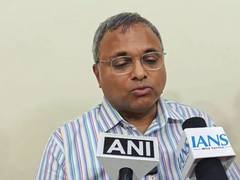
Speaking to reporters in Sivaganga, Mr. Chidambaram articulated his apprehension: "Delimitation, if it is purely done on the basis of population, will be very unfair to the southern states, especially to Tamil Nadu. If they are going to do delimitation on the basis of the latest population census, which should be the census which is currently occurring, whose report will come in 2027?"
The Congress MP highlighted that any redistribution of the current 543 Lok Sabha seats, or an increase to the permissible 550, based on new census data, would place southern states at a distinct disadvantage. He explained, "If the 543 seats—Parliament is allowed to have 550 seats—are redistributed according to the new census, the southern states, including Tamil Nadu, will be disadvantaged. The southern states which have implemented family planning will have only a marginal increase in some states, and states like Kerala will, in fact, have a decrease."
In stark contrast, Mr. Chidambaram warned, "Whereas the states in the Hindi heartland, particularly Uttar Pradesh and Bihar, will see a quantum jump. That will be patently unfair, and the delimitation based purely on population in the present strength of the Lok Sabha will be unacceptable." This sentiment underscores a long-standing point of contention, where states that have successfully implemented population control measures fear penalization through reduced political clout.
However, the Centre’s proposal has found a defender in Rashtriya Lok Morcha (RLM) national president Upendra Kushwaha. Speaking in Patna, Kushwaha dismissed the fears of southern states regarding a decrease in Lok Sabha seats. "The work that the Government of India is doing regarding delimitation is evident to everyone. People in the South are trying to create a misconception among themselves. They fear that if delimitation takes place, the number of seats there will decrease. However, that is not the case at all," Kushwaha stated. He further clarified, "The number of seats will not decrease anywhere; in fact, under the current proposal, the number of seats across the country will increase to one and a half times the current count."
The present debate around delimitation is intricately linked to the implementation of the Women’s Reservation Bill, a landmark legislation passed by Parliament in 2023. The bill’s provisions for reserving one-third of seats for women in the Lok Sabha and state assemblies are contingent upon a subsequent delimitation exercise following the next census.
Adding another layer to the complexity is the Constitution (131st Amendment) Bill, 2026, which was introduced in the Lok Sabha on April 16. This bill aimed to increase the strength of the Lower House to a substantial 850 seats and expedite the implementation of women’s reservation. However, it failed to garner the necessary special two-thirds majority of members present and voting in Parliament during the extended Budget Session, consequently not being passed.
The political landscape remains charged, with Congress President Mallikarjun Kharge reiterating the opposition’s stance on the matter. On Sunday, Kharge stated that any governmental move to reintroduce the delimitation Bill, particularly if linked to women’s reservation, would necessitate discussion among opposition parties to formulate a collective response. He emphasized that the Congress’s position on the issue is clear and advocated for the government to convene an all-party meeting before proceeding with any proposed legislation.
While the Congress and other opposition parties have expressed their support for women’s reservation, they have consistently opposed its linkage with the delimitation exercise and the proposed increase in Lok Sabha seats. Their continuous demand has been for the delinking of women’s reservation from the delimitation process, highlighting the need for separate and distinct legislative approaches to these critical issues.
The unfolding debate underscores a significant constitutional and political challenge, with implications for regional representation, demographic shifts, and the future of parliamentary democracy in India. The coming months are likely to see intensified discussions and strategic maneuvers as stakeholders grapple with these complex issues.