








Trump Touts India’s Election System for Stricter US Voter ID Laws, Sparking Controversy
Washington D.C. – United States President Donald Trump is leveraging India’s election system as a blueprint for implementing more stringent voter identification rules in the US, a move that has reignited a fierce political debate over voting rights and election integrity. In a recent Truth Social post, Trump claimed India’s Chief Election Commissioner questioned how the US could conduct elections without valid photo identification.
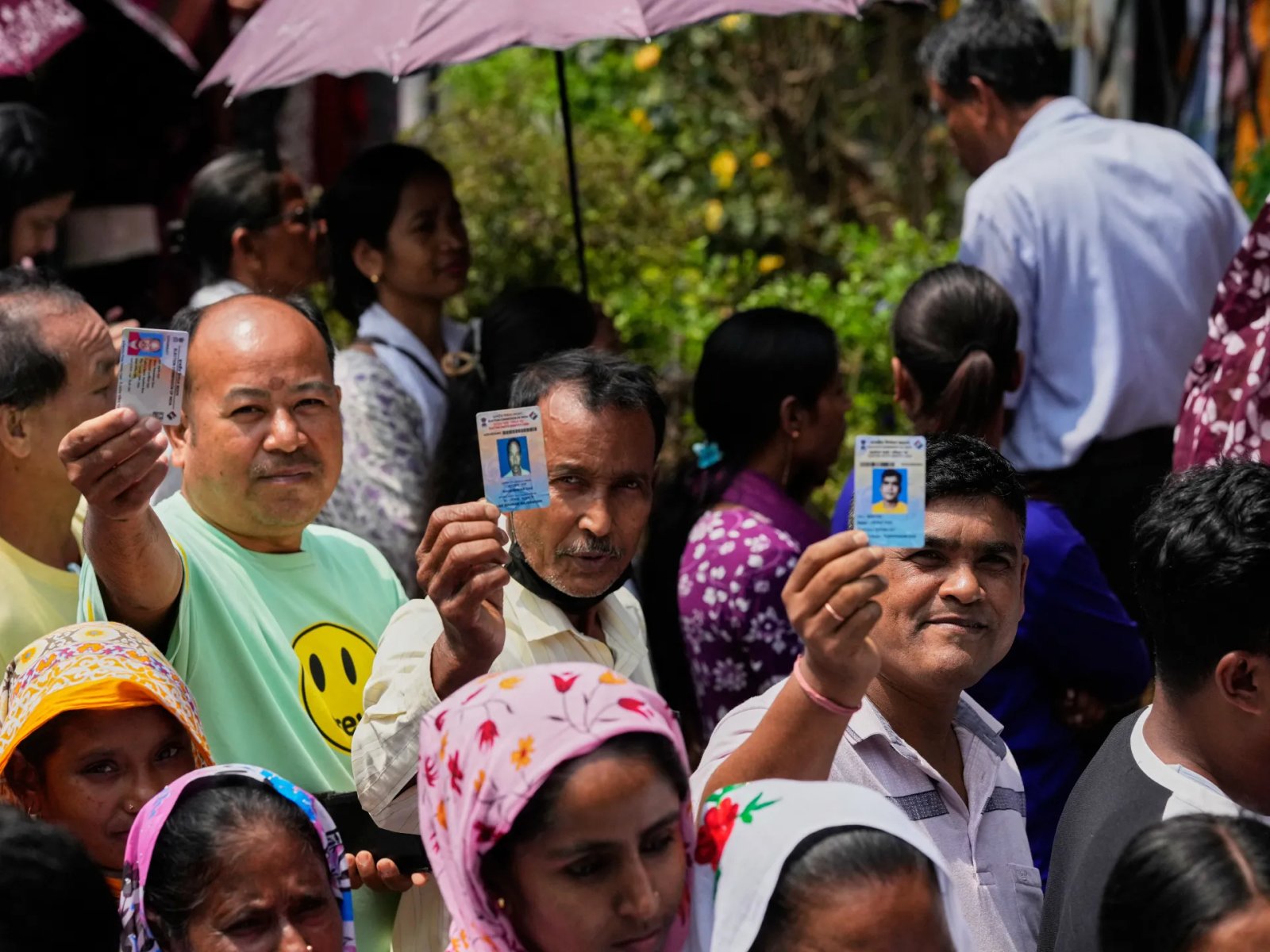
"India’s last election had 646,000,000 voters! Less than 1 percent voted by mail, and every single voter had to have a valid photo identity document," Trump stated, drawing a direct comparison to advocate for his proposed "SAVE America Act." This legislation aims to require documentary proof of US citizenship for voter registration in federal elections and enforce stricter voter ID requirements.
While India’s elections, the world’s largest democratic exercise, are widely lauded for their sheer scale, complexity, and logistical efficiency, they have not been without their share of scrutiny. Concerns have been raised regarding electoral rolls, campaign malpractices, and increasingly, the independence of electoral institutions under Prime Minister Narendra Modi’s administration. This has prompted questions about the true efficacy of India’s voter ID system in preventing fraud and the broader implications for democratic participation.
The "SAVE America Act": A Battle Over Election Integrity
The Safeguard American Voter Eligibility (SAVE) America Act, a cornerstone of Trump’s agenda, passed the Republican-controlled House of Representatives in February. It mandates that individuals registering to vote in federal elections provide proof of US citizenship, such as a birth certificate or passport. Furthermore, it seeks to impose more rigorous identification requirements for both in-person and mail-in ballots. Proponents argue these measures are essential to safeguard the integrity of US elections.
However, critics quickly point out that non-citizens are already legally prohibited from voting in US federal and state elections. Moreover, Trump’s persistent claims of widespread voter fraud have consistently lacked meaningful evidentiary support. Research from the New York-based Brennan Center for Justice indicates that most reported instances of voter fraud are attributable to clerical errors or faulty data matching, with incident rates ranging from a minuscule 0.0003 percent to 0.0025 percent in meticulously studied elections.
Opponents warn that the SAVE America Act could lead to widespread voter disenfranchisement, particularly impacting marginalized communities, and significantly depress voter turnout. Democratic politicians contend that the Trump administration is employing this bill as a strategic tool to influence the outcome of upcoming midterm elections, where Republicans are defending a narrow majority in the House of Representatives.
India’s Electoral System: A Closer Look
The Election Commission of India (ECI), the constitutional body overseeing elections, facilitated the participation of nearly 970 million registered voters in the 2024 general election, with over 640 million casting their ballots in what was the largest electoral event in history. Given its vast population, India conducts elections over several weeks, with the most recent general election spanning seven phases to elect members of the Lok Sabha, India’s lower house of parliament.
Voter photo identification was introduced by the ECI in 1993 with the explicit goal of "preventing impersonation" and strengthening election administration. India also maintains comprehensive electoral rolls, which dictate voter eligibility within specific constituencies. Prior to election day, the ECI advises voters to verify their names on these rolls.
While India does utilize postal ballots, their availability is restricted to specific categories of voters. These include service personnel (police, armed forces), individuals on election duty, and those awaiting conviction, all of whom may be unable to vote in their assigned constituency due to extenuating circumstances. Eligible voters can submit their ballots from their preferred location outside their constituency and return them via post.
The Unanswered Questions: Do Voter IDs Eliminate Fraud in India?
Despite the implementation of voter IDs, India’s opposition parties have consistently raised concerns about alleged electoral malpractices. In August 2025, Congress Party leader Rahul Gandhi alleged widespread fraud in the 2024 general election, accusing the ECI of adding fraudulent voters to electoral rolls in Karnataka’s Mahadevapura constituency. Gandhi presented evidence of instances where the same voter appeared to possess multiple voter IDs, potentially allowing individuals to cast more than one vote. He challenged the commission to release electronic voter rolls and CCTV footage to disprove his claims, which were based on six months of research. The government dismissed the allegations and declined to release the requested details.
Later that year, in November, the Congress Party further alleged that over 2.5 million votes were "stolen" during the 2024 Haryana state election, citing irregularities such as identical photographs appearing on multiple voter IDs.
Modi’s Policies: Cleaning Up Elections or Disenfranchising Opposition?
While concrete evidence of widespread voter fraud in India remains limited, analysts and human rights groups argue that the focus on voter ID overlooks a more fundamental issue: who is included and excluded from the electoral process.
In October, the ECI launched the controversial Special Intensive Revision (SIR) exercise, supported by the Modi government but opposed by nearly all opposition parties. This nationwide initiative aims to identify deceased, duplicate, and otherwise ineligible voters on the electoral rolls.
For instance, in Bihar last year, nearly 80 million registered voters were given only weeks to verify their eligibility, often requiring them to produce documents such as birth certificates, passports, or school records. Following this exercise, in September, the ECI released a revised list of 74.2 million voters, having removed 4.7 million names.
"The present government and the ECI are choosing who among the population should remain as voters," political economist and author Parakala Prabhakar told Al Jazeera. "This amounts to government choosing the voters rather than the voters choosing the government."
In April 2026, approximately nine million people in West Bengal – nearly 12 percent of the state’s 76 million registered voters – lost their voting rights after the completion of the SIR process. Of these, six million were classified as absent or deceased, while another three million were unable to vote due to insufficient time for special tribunals to hear their cases before the election.
Rights activists and election observers claim this exercise disproportionately disenfranchises marginalized groups. According to media outlet The Hindu, 34 percent of the deleted names in West Bengal were Muslim, despite Muslims comprising only 27 percent of the state’s total population. While 63 percent of the deletions were Hindu voters, this included many members of the Matua community, a marginalized Dalit sect primarily residing in areas bordering Bangladesh.
Economist Prabhakar asserted, "In India, the ongoing effort through SIR is to exclude sections that are inimical to the Hindu Majoritarian agenda." He concluded, "At the end of this exercise, India will have two classes of Indians: one with franchise, the other without franchise. While some other polities chose to physically cleanse their political systems by shedding blood, India under Modi is experimenting with a bloodless way, by depriving the ‘other’ of their franchise."
The debate surrounding voter ID laws in both the US and India highlights the complex interplay between election integrity, democratic participation, and political power, raising fundamental questions about who gets to define and protect the right to vote.