







Diplomatic Fallout: US Envoy’s Kashmir Remarks Ignite Fresh Tensions Between Pakistan and America
Islamabad, Pakistan – A diplomatic firestorm has erupted between Pakistan and the United States following remarks made by US Ambassador to India, Sergio Gor, who referred to Indian-administered Kashmir as "an important part of India" during his inaugural visit to the disputed territory. Pakistan’s Ministry of Foreign Affairs swiftly summoned the top US diplomat in Islamabad on Wednesday, lodging a "strong demarche" and vehemently rejecting Gor’s statement, reasserting Kashmir’s status as internationally recognized disputed territory.
The controversy unfolds at a delicate juncture for Washington’s intricate relationships in South Asia. As Pakistan diligently cultivates closer ties with the Trump administration than in recent years, the US simultaneously navigates its strategic partnership with India. This incident underscores the precarious balance the US attempts to maintain between these two nuclear-armed rivals.
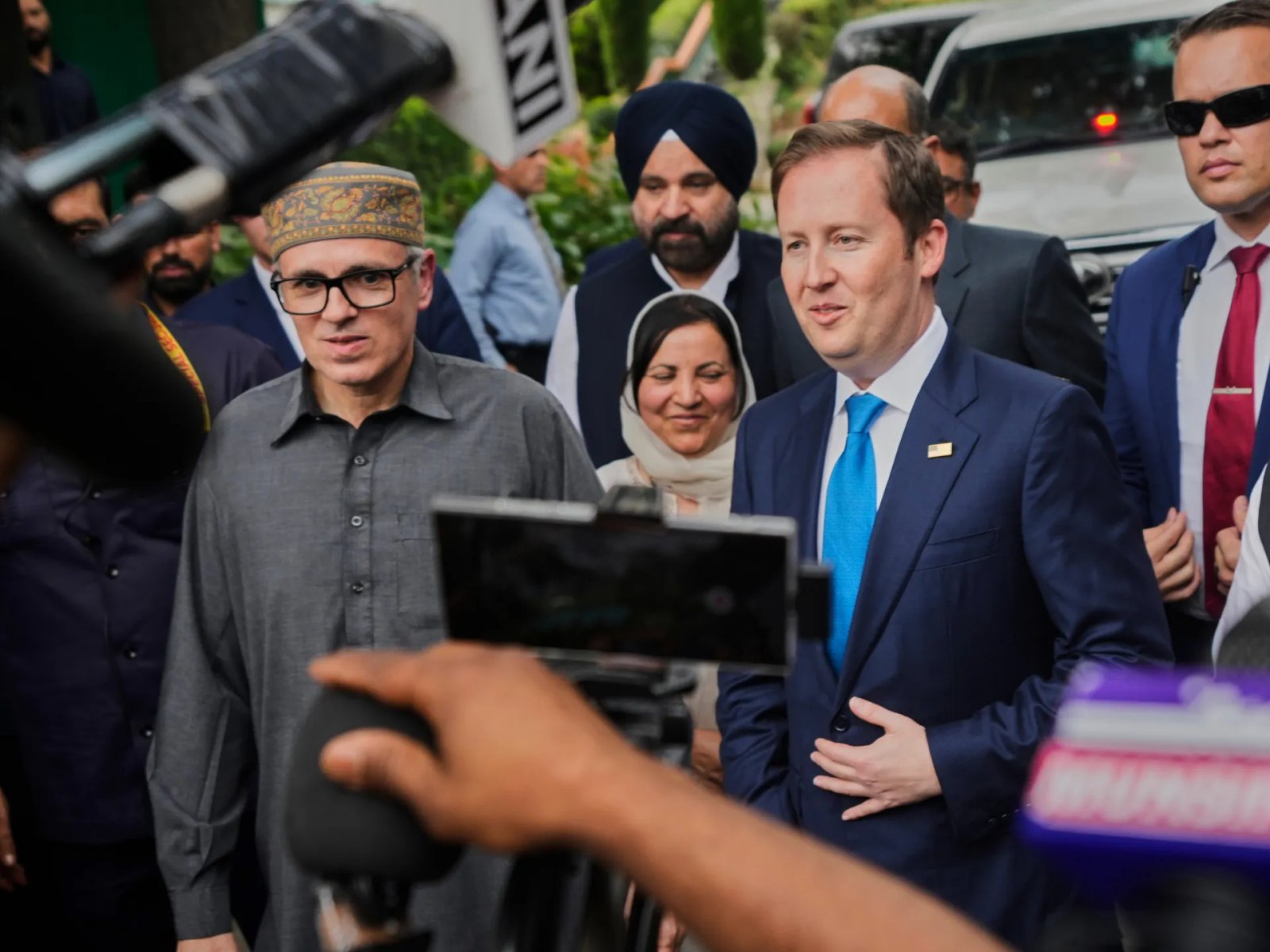
Gor, who also serves as President Donald Trump’s special envoy for South and Central Asia, made history with his standalone visit to Indian-administered Kashmir – the first by a serving US ambassador since 2019, and significantly, the first since India controversially stripped the territory of its autonomy in the same year. His public comments, made alongside Jammu and Kashmir Chief Minister Omar Abdullah, further exacerbated Islamabad’s irritation.
The Ambassador’s Controversial Statement
Sergio Gor, a 38-year-old former Trump aide confirmed as US ambassador to India in January, spent two days touring Srinagar and Ladakh this week. During a press briefing in Srinagar following a meeting with Chief Minister Abdullah, he expressed his excitement about visiting "an important part of India" for the first time. Adding to the diplomatic discomfort, Gor also indicated that Washington was reconsidering its "do not travel" advisory for the region, citing improved security under Abdullah’s administration. Currently, the US advisory maintains a "Do Not Travel" warning for Jammu and Kashmir due to concerns over terrorism and civil unrest, although it exempts Ladakh and Leh.
Islamabad’s unequivocal response came hours later. The Foreign Ministry summoned Charge d’Affaires Natalie Baker, who heads the US mission in Pakistan, to deliver a formal protest. The ministry rejected the "characterisation of Indian-administered Kashmir as a ‘part of India’," emphasizing its status as an internationally recognized disputed territory whose final disposition remains pending under United Nations Security Council resolutions. Pakistan’s statement labeled Gor’s remarks as "factually incorrect" and accused them of negating Washington’s long-standing position on the Kashmir dispute. The ministry also took the opportunity to reiterate its appreciation for President Trump’s offer to mediate the Kashmir question – an offer made after a brief four-day conflict between India and Pakistan last year – urging the US to ensure its public statements align with this stance.
The Enduring Sensitivity of Kashmir
Kashmir, a picturesque Himalayan region, has been a festering point of contention between India and Pakistan since the end of British colonial rule in August 1947. Both nations administer portions of the territory but lay claim to it in its entirety, a dispute that has led to several wars. A 1949 UN Security Council resolution called for a plebiscite to determine the territory’s final status, a vote that has never been held.
The sensitivity surrounding Kashmir is not new. In June, a joint statement between the European Union’s foreign policy chief, Kaja Kallas, and Pakistan’s foreign minister in Islamabad drew parallels between Kashmir and the war in Ukraine, advocating for its resolution through "dialogue and diplomacy." India’s Ministry of External Affairs promptly rejected this reference, asserting that those with no direct involvement should refrain from commenting. Turkish President Recep Tayyip Erdogan has also faced similar protests from Delhi on multiple occasions for expressing support for Pakistan’s position on Kashmir. Even President Trump himself ignited a diplomatic row in 2019 when he claimed Prime Minister Narendra Modi had personally requested his mediation on Kashmir, a claim swiftly denied by Modi’s government.
For Pakistan, any US acknowledgment of Kashmir’s disputed status serves as a crucial external validation of its efforts to internationalize the issue. Conversely, for India, any suggestion of external mediation undermines the very foundation of its position that Kashmir is an integral part of its sovereign territory.
Historical US Stance and Future Implications
Historically, the US has officially maintained that Kashmir is a disputed territory whose status should be resolved bilaterally between India and Pakistan, taking into account the wishes of the Kashmiri people. American officials across various administrations have consistently reiterated that "our policy has not changed," even in 2019, when a senior US diplomat confirmed to Congress that India’s actions had not altered Washington’s view of the Line of Control as a "de facto" boundary. Formally, Washington has deliberately avoided recognizing sovereignty over the territory for either nation.
A significant shift in US engagement occurred in 1999 during the Kargil War, when President Bill Clinton urged Pakistani Prime Minister Nawaz Sharif to withdraw Pakistani forces from Indian-administered Kashmir. This episode was widely interpreted by analysts as the beginning of a subtle US tilt towards Delhi. However, following the most intense India-Pakistan clash in decades last year, President Trump claimed credit for the subsequent ceasefire and offered to "work with you both" towards a Kashmir "solution." This offer was welcomed by Pakistan, which even nominated Trump for a Nobel Peace Prize, while India rejected any notion of US mediation, asserting the ceasefire was achieved through direct military talks.
Jauhar Saleem, Pakistan’s former foreign secretary and president of the Islamabad-based Institute of Regional Studies, believes Ambassador Gor’s remark should not be misconstrued as a fundamental shift in US policy. "US policy on a question as consequential as Jammu and Kashmir cannot be read from an off-the-cuff formulation during a visit by a US ambassador posted in India," Saleem told Al Jazeera. He emphasized that any genuine policy change would be reflected in formal statements from Washington, State Department language, and ultimately, at the White House level. Saleem attributed such "lapses" to ambassadors occasionally falling prey to "localitis," making comments to please their hosts that deviate from official policy. He anticipates a clarification from Washington soon, citing President Trump’s repeated mediation offers as evidence that the US position remains unsettled at the highest levels, rather than unequivocally shifting towards India.
Regarding the potential impact on Pakistan-US ties, Saleem, who previously summoned a US ambassador over what he termed a "very objectionable remark" by then-President Joe Biden, stated that a demarche is primarily a tool to press a point and seek explanation, not merely to punish. He expressed confidence that the US response would be constructive, given the broad-based nature of the Pakistan-US relationship, which encompasses cooperation in areas like peacemaking between the US and Iran, economic ties, counterterrorism, regional security, Afghanistan, and defense cooperation.
Tariq Rashid Khan, a former Pakistani military general and diplomat, characterized Islamabad’s protest as "issue-specific boundary-setting." He told Al Jazeera that Pakistan’s strong reaction signals that a close strategic partnership with Washington does not imply acceptance of any stance on Kashmir contrary to Pakistan’s established position. "Kashmir remains an unfinished agenda of the 1947 partition, which is why even one sentence can become strategically significant," Khan asserted.
Saleem further emphasized the profound significance of the issue, stating, "Jammu and Kashmir is not just a territorial dispute; it is an issue of national identity, legitimacy and security for Pakistan." He concluded that both Pakistan and India meticulously monitor international discourse on Kashmir because "language today can become precedent tomorrow."
Aizaz Chaudhry, a former Pakistani ambassador to the US, echoed these sentiments, suggesting that Gor’s remarks might be "personal comments" and that the official US position on the disputed territory is well-established. "Our demarche is only a reminder that the US envoy in Delhi must comply with the US position on the subject," Chaudhry said. "The Kashmir dispute is a longstanding issue that must be resolved for the larger peace and stability of South Asia."