








Net zero has been the defining ambition of the built environment for years – it’s driven progress in reducing operational energy use and embedding sustainability into development. But while it remains essential, it’s not enough.
This article is written by Juliana Renn, Head of Sustainability at HLM Architects

The environmental and social challenges facing the UK today extend beyond carbon alone. These issues, which are all interconnected, range from climate change and biodiversity loss to water scarcity and resource depletion.
A building can achieve net zero operational carbon and still place pressure on natural ecosystems, consume scarce resources, or fail to create lasting value for the communities it serves. Because of this, the industry must begin looking beyond the concept of simply reducing harm to, instead, championing regenerative design.
Regenerative design asks a fundamentally different question. Rather than focusing solely on how we minimise negative impacts, it challenges us to consider how buildings and places can actively contribute to environmental restoration, social wellbeing, and long-term resilience. In other words, we’re asking the following question – how can development leave a place better than it was before?
The limits of net zero
Net zero has created an important framework for action, which is now being supported by initiatives such as the UK Net Zero Carbon Buildings Standard, in whose pilot programme HLM participated. We’ve also seen tightening EPC requirements, biodiversity net gain legislation and evolving ESG expectations.
These measures are helping establish a common understanding of what good environmental performance looks like. Yet many of these measures remain focused on compliance and mitigation. Reducing carbon emissions is critical, but it is only one dimension of sustainability.
A genuinely successful building should also support healthy ecosystems, enhance wellbeing, use resources responsibly and remain adaptable to changing future needs.
Unlike traditional net zero initiatives, regenerative design acknowledges these wider responsibilities. It encourages project teams to think about nature, water, materials, and people as part of one connected system rather than as separate sustainability targets.
For decades, the built environment has extracted more resources than it returns. Materials have followed linear supply chains, ending in landfill, while development has frequently prioritised short-term efficiency over long-term resilience.
Why implementation remains a challenge
Regenerative design can be difficult to deliver at scale, perhaps because much of the construction industry is still structured around traditional project delivery models that reward short-term outcomes.
Design teams are often appointed after key decisions have already been made. Contractors may join projects late in the process, and supply chains are frequently engaged only when specifications have been fixed. As a result, opportunities for innovation can be lost before construction even begins.
Regenerative outcomes require a more integrated approach. They depend upon collaboration throughout the project team from the earliest stages of development.
Decisions about procurement, material selection, biodiversity and long-term building performance must be considered together rather than in isolation.
There is also the measurement challenge. Carbon has benefited from increasingly robust assessment methodologies, making it easier to set targets and demonstrate progress.
Regenerative design requires evaluation of ecosystem services, resource use, and other metrics alongside carbon ones. Yet the fact is that many organisations, who want to pursue regenerative principles, are still developing the tools needed to measure these factors consistently.
Cost perception can create another barrier. Although regenerative strategies frequently deliver long-term operational and social value, they are sometimes viewed as adding complexity or capital expenditure.
However, emerging evidence increasingly demonstrates that forward-thinking design can improve both environmental outcomes and asset performance over the life of a building. At HLM, our Regenerative Twin Study explored this challenge directly by comparing a conventional school design against a regenerative alternative developed with a multidisciplinary team of industry partners including Morgan Sindall Construction, The Connectives, Cundall and Atkins Réalis.
The findings showed that whole-life carbon emissions could be reduced by 84%, upfront embodied carbon by 66%, and annual energy demand by 45%, while maintaining comparable whole-life costs.
The study reinforced an important lesson – the greatest opportunities emerge when regenerative principles are embedded from the outset rather than applied retrospectively.
Regenerative thinking in urban education
An example of embedding regenerative principles from the start can be seen through our work with Wetherby Pembridge School in Kensington. This was delivered within the landmark Olympia London regeneration project and demonstrates how existing assets can be reimagined to create social and environmental value. Rather than constructing an entirely new standalone facility, this award-winning project forms part of the adaptive reuse of Emberton House, transforming a former multi-storey car park into a contemporary educational and community destination.
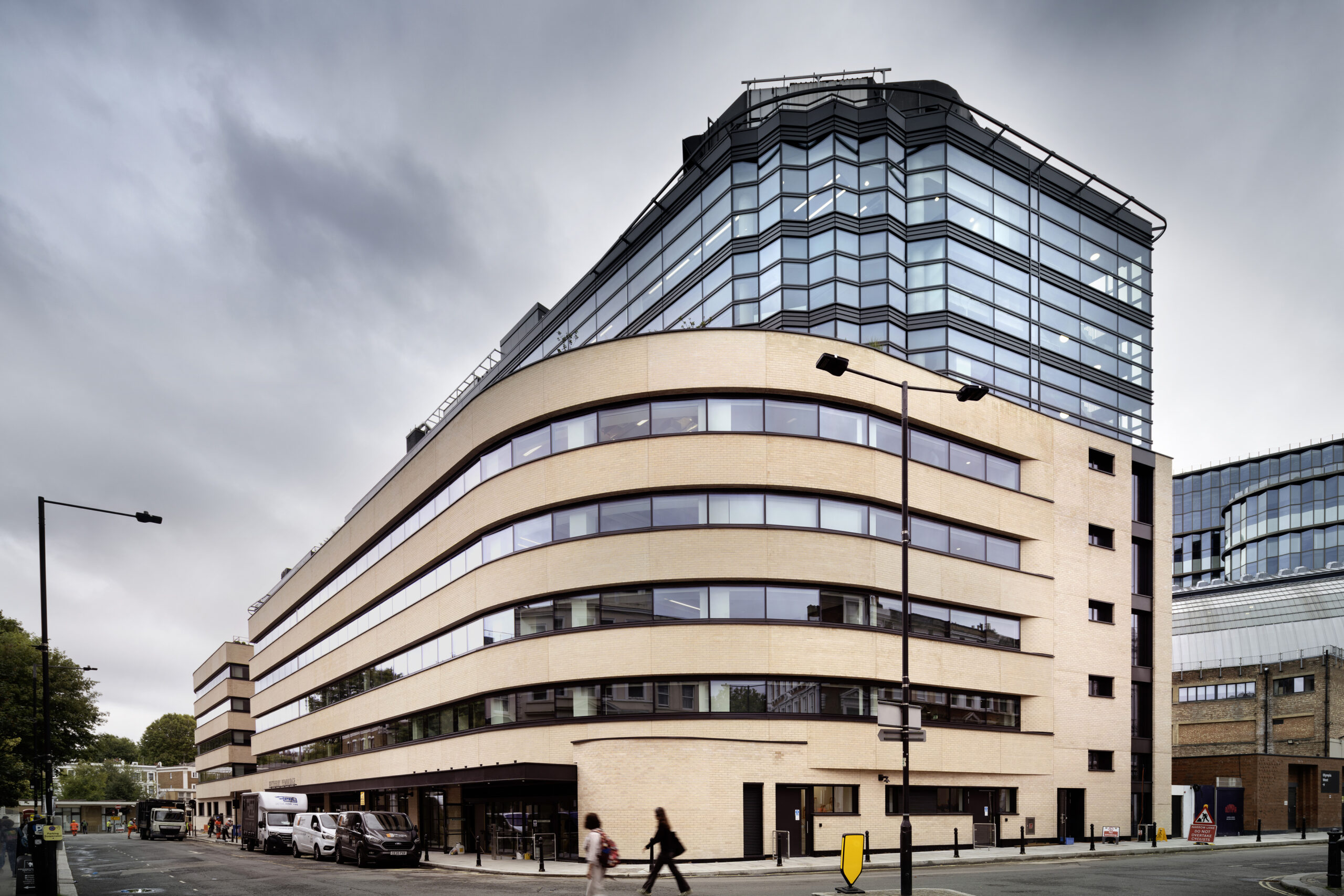
Image: former multi-storey car park turned educational hub
This approach retains embodied carbon already invested within the building while extending its useful life. This is a key principle of circular and regenerative design.
The school’s interior environment was carefully designed around wellbeing. It uses natural materials including timber, stone and terrazzo to create calm, welcoming spaces that
support learning. HLM’s approach focused not only on aesthetics but also durability, ensuring materials can withstand intensive daily use while maintaining long-term quality.
Perhaps most significantly, the project strengthens the relationship between education and community. Alongside teaching facilities for up to 450 students, the development includes a dedicated community theatre, creating opportunities for wider cultural engagement within the Olympia masterplan.
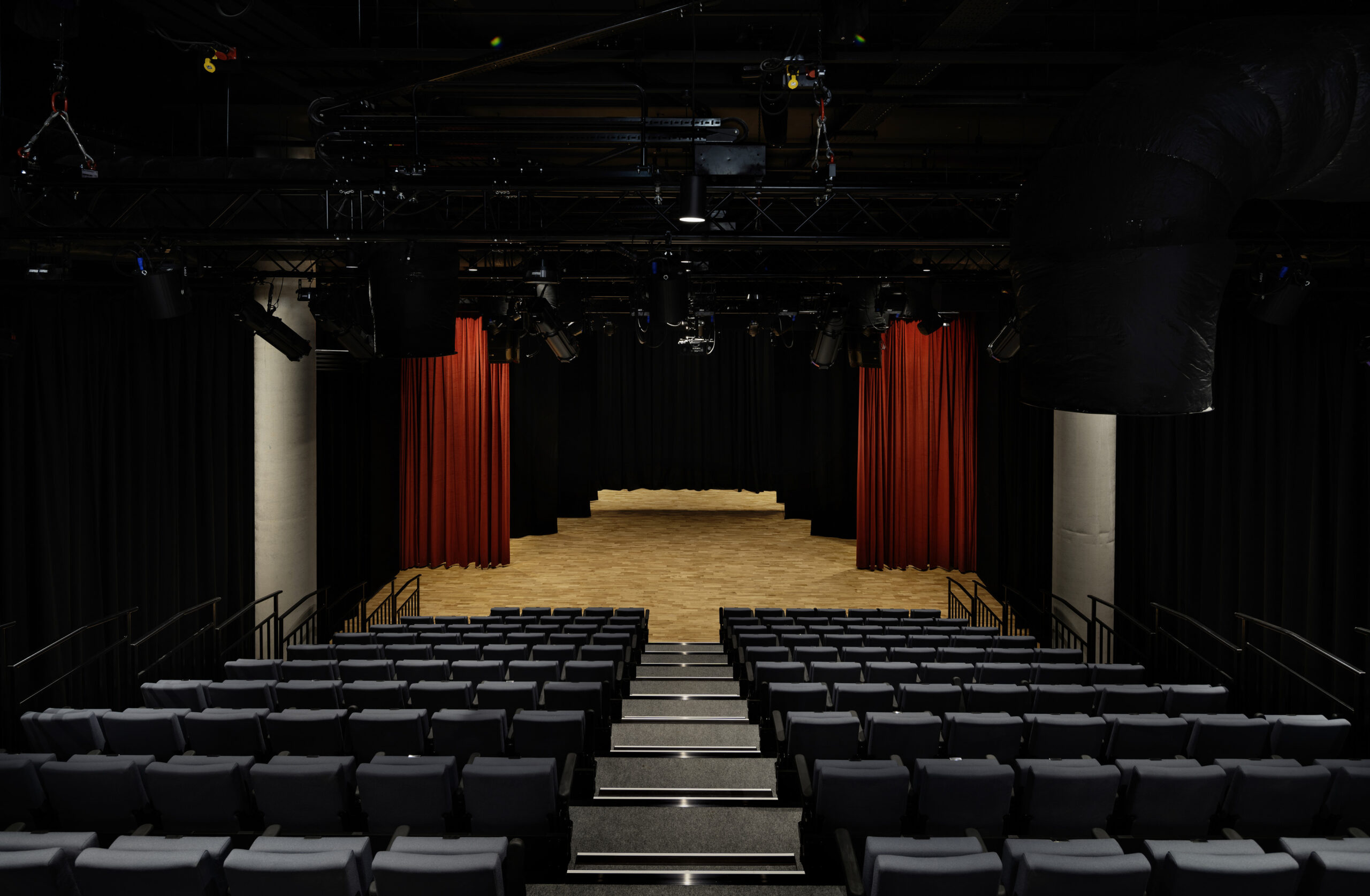
Image: the students’ theatre
This integration of educational, cultural and social functions reflects a regenerative understanding of place-making – creating environments that support human connection as well as environmental performance.
The next step for the industry
The transition from net zero to regenerative design does not mean abandoning carbon reduction. Carbon remains one of the most urgent challenges facing the built environment.
Instead, regenerative design builds upon the foundations that net zero has already established.
The question is no longer simply whether a building emits less carbon than before, but whether it contributes positively to its environment, supports thriving communities, strengthens resilience and creates long-term value.
If net zero represented the latest great sustainability transformation of the built environment, regenerative design may well become the next. And in a world facing increasingly complex environmental and social pressures, it is a transition we can no longer afford to delay.
Images: HLM Architects
Other features: