








Repurposing the Future: How Existing Buildings Can Revolutionize Education
By rethinking outmoded views on what a ‘school’ might be, we can reimagine the built environment as a landscape for learning – tailored to suit the myriad needs of a contemporary education.
This article is written by John Edwards, director at e-gg

Across the United Kingdom, a paradigm shift is underway in how we perceive and develop educational infrastructure. Faced with a changing educational landscape – marked by fluctuating pupil numbers, a surge in Education, Health and Care Plans (EHCPs), and an urgent need for sustainable solutions – the traditional reliance on new builds is being critically re-evaluated. Instead, a compelling argument is emerging for the repurposing of underutilised buildings into vibrant, modern learning environments.
John Edwards, director at e-gg, highlights this transformative approach. “Many schools lumber on, waiting for their ‘dream’ expansion, extension or new build to progress while wave after wave of pupils graduate from increasingly dilapidated estates,” he states. However, the solution, Edwards argues, often lies not in new construction, but in a strategic rethink of existing local building stock.
The Untapped Potential of Existing Assets
The concept is simple yet profound: transform vacant offices, care homes, civic buildings, community facilities, and historic properties into bespoke educational spaces. These buildings, no longer serving their original purpose, offer a sustainable and cost-effective alternative to new construction, often allowing for operational readiness within two years of acquisition.
Beyond the immediate cost and time benefits, reusing existing assets aligns perfectly with contemporary educational needs. A modern education demands environments tailored to individual learners, and repurposed buildings inherently offer unique qualities. As Edwards explains, “Many buildings that are no longer used for their original purpose, have the key qualities needed to develop inspiring learning environments. For instance, there may be substantial indoor and outdoor space, buildings are likely to be of solid construction, and there is often a good source of natural light, as well as adaptable layouts – all of which are a good fit for an educational environment.”
The advantages extend to crucial aspects of learning outcomes and staff retention. Creating learning environments with high standards of air quality and thermal comfort are paramount, as is integrating nature. Research from the Sensory Trust underscores the benefits of regular engagement with nature in enhancing pupils’ development and educational experience – a feature often readily available in existing sites with mature landscapes.
Case Studies in Transformation
The success of this approach is evident in several pioneering projects. The award-winning Aurora Group, specialising in Special Education Needs and Disabilities (SEND), has spearheaded the transformation of existing buildings into state-of-the-art educational facilities:
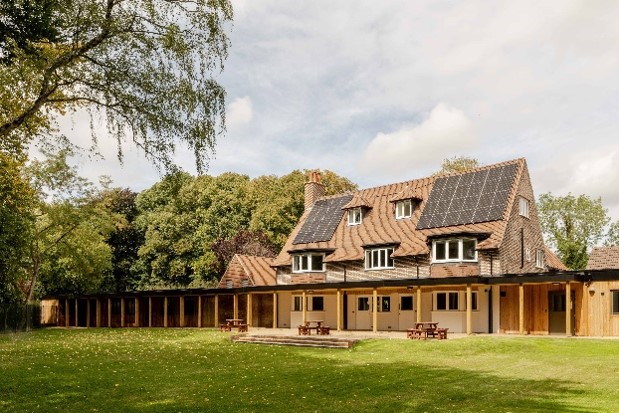
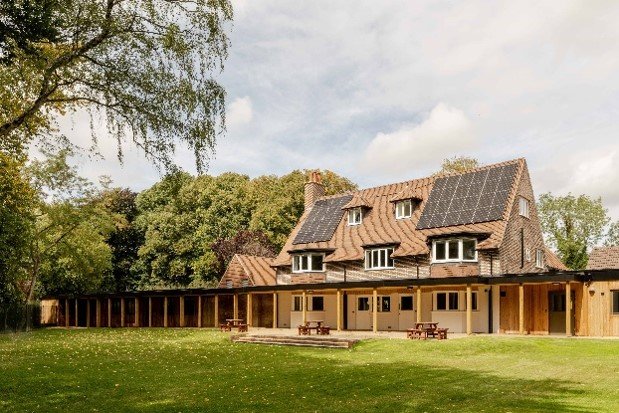
Image: Chaldon School in Surrey
- Chaldon School, Surrey: An empty, dilapidated nursing home within a mature Green Belt landscape was meticulously transformed by e-gg into a specialist secondary education provision for students with autism and associated social communication, sensory, and emotional regulation difficulties.
- Ryefields School, Derby: A neglected 1970s brutalist building, formerly an adult learning centre, was given a new lease of life as a school for children and young people with additional social, emotional, and mental health needs.
- Wilden View School, Kidderminster: A Grade II listed country house underwent a change of use, extension, and new-build conversion to become a specialist independent school for young people.
These examples illustrate the immense potential when architects specialising in this area unlock the inherent value of existing structures, breathing new life into them as thriving educational environments.
Regeneration and Sustainability: Dual Benefits
Beyond individual school benefits, such educational developments act as powerful catalysts for local regeneration. By bringing schools and learning facilities into empty buildings, these projects protect the future of valuable assets, generate activity, employment, and investment in surrounding areas. It’s a win-win, creating positive outcomes for both local communities and education providers, particularly in addressing the sharply rising demand for SEND places.
Sustainability is another cornerstone of this approach. Extending the lifespan of a building by retaining existing structures preserves substantial amounts of embodied carbon, reduces demolition waste, and lessens the demand for new construction materials. Furthermore, upgrades to insulation, ventilation, and heating systems can significantly improve building performance, making these revitalized spaces not only functional but also environmentally efficient.
Navigating the Path to Success
While the benefits are clear, careful planning and expert guidance are essential. Many interesting sites are protected by heritage, Green Belt, or other designations, which can deter potential investors. However, with the right expertise, these constraints can be viewed as opportunities. Early feasibility studies are crucial to assess a building’s structure, layout, condition, and context, ensuring a project is both practical and economically viable.
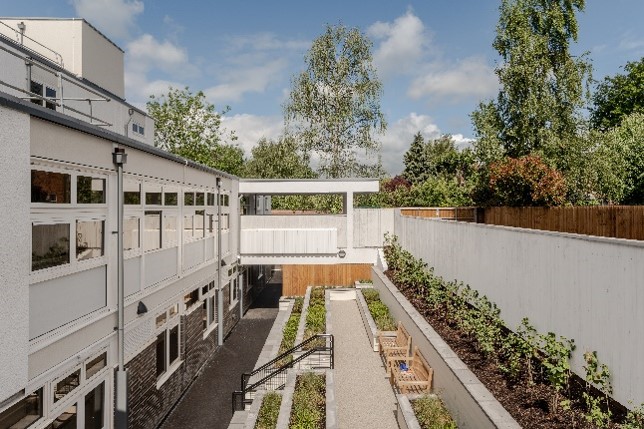
Image: Ryefields School in Derby
The connection between buildings and nature is particularly important. Existing sites often boast mature landscapes with established trees and shrubs, providing opportunities for outdoor classrooms, forest schools, social spaces, gardens, and recreational areas that significantly support mental health and wellbeing.
In conclusion, the vast number of empty buildings across the UK represents an invaluable resource for the education sector. As educational demands evolve, looking beyond new construction and strategically reusing existing assets offers a quicker, more cost-effective, and environmentally responsible path to creating inspiring learning environments. This approach not only addresses pressing educational needs but also champions regeneration, reduces environmental impact, and strengthens community connections.
Images: John Edwards and e-gg
Other features:
Why regenerative design is the next chapter for the built environment