





Even amidst another global energy crisis, ongoing public anger over sewage scandals, and predictions of truly catastrophic climate impacts coming our way, environmental issues barely feature in current election campaigning. But when it comes to climate and nature, approaches vary massively between parties, and we cannot afford to ignore this.
Communities under stress
On Thursday, millions of votes are set to be cast in regions of the UK that are already experiencing the impacts of the climate crisis.
Just this weekend, multiple wildfires – made more likely and more devastating by the hot dry weather – raged in Wales, where the 96 seats in the Senedd (Welsh Parliament) are being contested.
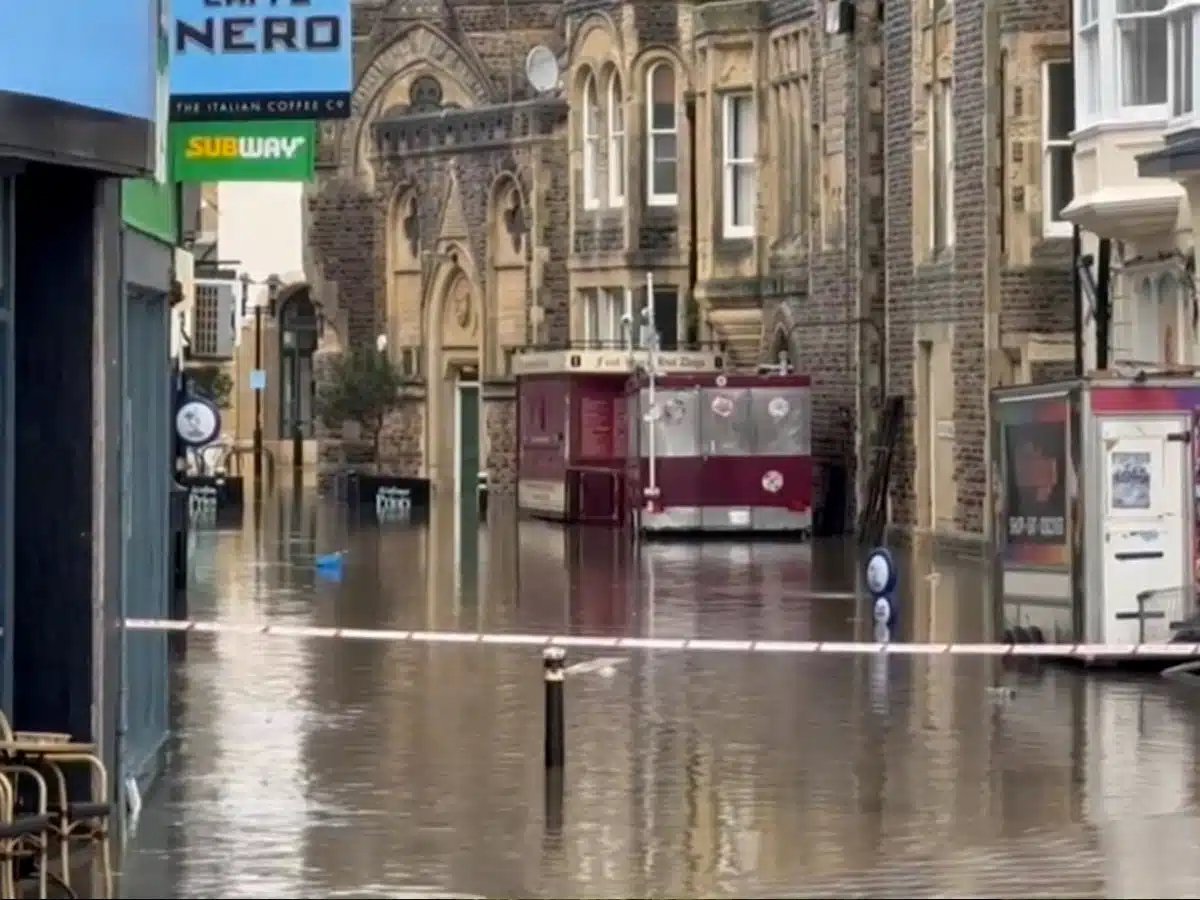
Areas preparing to elect new councillors include those struggling to recover from repeated flooding. In Hastings, where one in six homes are now considered at “high risk” of flooding, local resident Jane Ripley describes how in 2023:
Shops, homes and businesses were inundated and many millions of pounds worth of damage was caused. The cleanup took months in some cases. Homes had to be completely refurbished only to be flooded again just as severely ten months later.
Three years on, the impact on her community continues:
Flats are still empty there, unable to get insurance. In a town with higher than average levels of homelessness, poverty and inequality, we are not equipped to cope with more flooding … You don’t have to look to distant shores for climate refugees, we have them right here in East Sussex.
Climate and environmental policies across the board are failing to keep us safe. Advisory bodies have warned that the UK is ‘not prepared’ for climate impacts and is ‘off track’ on almost all its environmental commitments. Deprived areas and minoritised groups are disproportionately harmed – for example, facing the most serious health risks from air pollution. Meanwhile, continuing to rely on fossil fuels pushes even more households into fuel poverty.
Policy lags behind public concern
Even amongst those who haven’t yet had to face a flooded home or the consequences of breathing toxic air, climate and nature are important issues to the UK public. Yet politicians underestimate public support for action, and this is reflected in the commitments on offer to us in these elections.
Ahead of England’s local elections, Greenpeace have analysed each party’s position on climate and nature.
They found the Conservatives and Reform fixated on torpedoing targets to limit climate change and regulations that protect nature, concluding that:
Reform would turbo-charge the climate crisis, allowing billionaire oil barons to squeeze every last drop of oil from the North Sea while lowering taxes for them, but increasing prices for us.
Labour’s investment in renewable energy was praised, but as the exception rather than the rule in its environmental policy decisions. Alongside wavering on commitments to end new oil and gas developments, cutting international climate finance, and suppressing a report warning of critical threats to food supplies and national security, they found that Labour:
consistently pitches nature protections in opposition to economic growth, despite [nature] providing the bedrock to our economy, food security, health and wellbeing.
In Scotland, there has been a dramatic shift away from prioritising climate action amongst the major parties, in what the Institute for Public Policy Research (IPPR) describes as:
A dispiriting retreat from the consensus across 2021 manifestos that Scotland should play an ambitious role in the global fight against climate change.
Turning the tide
Despite this trend, it is still possible to ‘vote climate’ in these elections. Liberal Democrat and Green Party positions on the environment are significantly stronger than Labour’s, with both opposing new North Sea oil and gas drilling and calling for greater protections for nature. Plaid Cymru has pledged to cut carbon emissions faster than any other party, and the SNP has policies that would financially support workers’ transitions into clean energy and nature-friendly farming jobs.
But with the cost-of-living crisis dominating as the top issue for voters across the political spectrum, climate and environmental issues aren’t front and centre of any party’s campaigning. Rather than communicating about risks that currently feel overwhelming, abstract or distant to many, the Greens have made a strategic choice to connect the dots between environmental action and improving people’s lives day to day.
Even if this strategy pays off, there remains a huge, dangerous gulf between the (lack of) salience of climate and nature in politics and the urgency of the threats we all face as our climate and ecosystems hurtle towards collapse. To people like Jane in Hastings who knows only too well how vulnerable her local community is to climate risks, and for anyone whose heart rate quickens at any mention of tipping points or an impending ‘super El Niño’, it’s clear that this gap needs closing, fast.
Featured image via ITV