







Australia Alleges 3M Knew of "Forever Chemical" Dangers for Decades in Landmark $2 Billion Lawsuit
CANBERRA, Australia – The Australian federal government has unleashed a legal salvo against manufacturing giant 3M, alleging in court documents that the company was aware for over 50 years that its firefighting products, containing highly persistent PFAS "forever chemicals," posed significant health and environmental hazards. This bombshell revelation forms the cornerstone of Australia’s record-breaking $2 billion lawsuit against 3M and its Australian subsidiary, marking the largest legal claim ever brought by the Australian government.
The lawsuit, initiated in May by Attorney General Michelle Rowland, centers on widespread PFAS contamination at 28 Australian defense bases. Commonwealth lawyers, in voluminous filings exceeding 1,600 pages, assert that products sold to Australia were known to contaminate water and soil, persist indefinitely in human and animal bodies, and contribute to severe health issues. These alleged health impacts include reduced kidney function, altered immune responses, effects on fertility and puberty, and lower birth weights in infants.
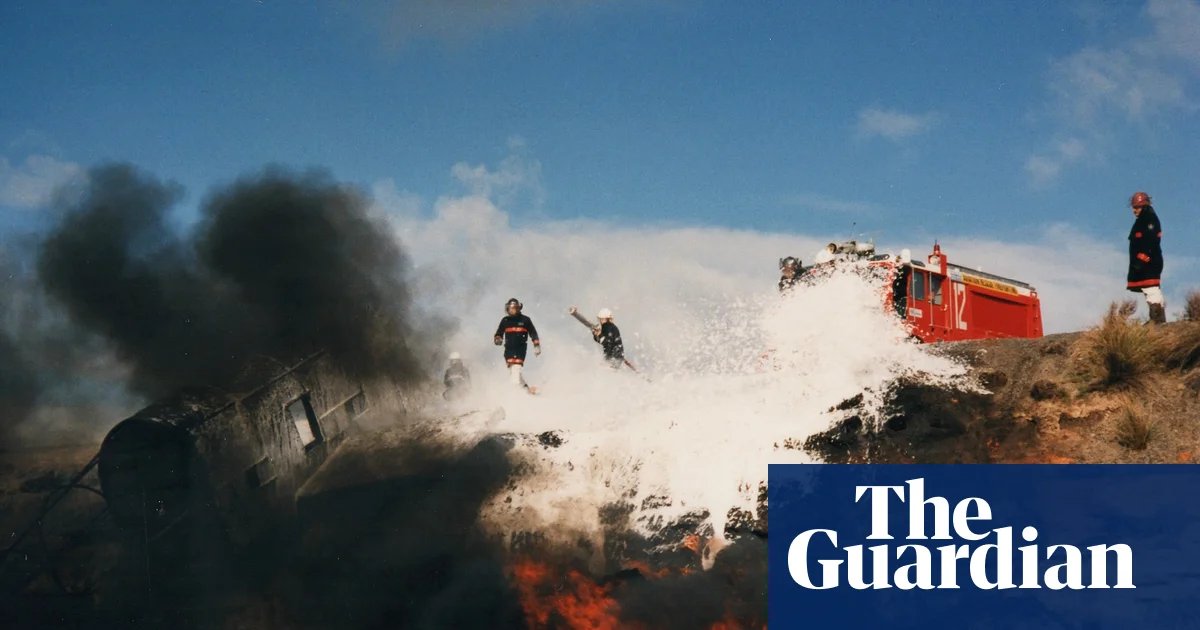
At the heart of the government’s claim is the contention that 3M’s aqueous film-forming foam (AFFF) – a firefighting product – was known to be potentially damaging to the environment and harmful to human health. Crucially, the government argues that 3M’s Australian operations should have possessed this knowledge no later than 1973.
Evidence unearthed by government lawyers points to deeply concerning internal company documents. One particularly damning document from April 1981 reveals that 3M explicitly prohibited "women of child bearing potential" from working at one of its Alabama plants. The stated reason: to shield them from exposure to a "type of fluorochemical that can cause birth defects in rats." This internal policy starkly contrasts with the public assurances provided by the company during the same period.
PFAS, or per- and polyfluoroalkyl substances, are a vast family of over 14,000 synthetic compounds renowned for their resistance to heat, water, and oil. Their pervasive use in countless industrial and household products has led to widespread environmental contamination, largely due to their extreme persistence. Some PFAS compounds, like PFOA (one of the three key PFAS chemicals banned in Australia last year), have been classified as carcinogens in humans.
Despite claims of "non-toxic" and "non-irritating" properties in company brochures provided to the Australian government as early as 1967 and 1968, the federal government alleges that 3M was well aware of the products’ dangers. Purchasing of these products by Australia began in 1972, with 3M reportedly offering large quantities of AFFF at a reduced price in September of that year.
The court filings detail a timeline that further underscores the alleged deception. Sometime before December 1973, 3M purportedly made statements assuring that the products were "non-toxic" and "non-irritating" to humans, would not harm grass, were biodegradable, and were "not expected to adversely affect the ecology of receiving streams in the vicinity of its use."
However, a decade later, in June 1983, the Australian federal government specifically requested 3M Australia to identify any "harmful environmental effects" of AFFF and potential issues with its disposal. Despite these concerns, the Commonwealth continued to purchase 3M AFFF, contingent on its conformity with defence standards, from 1989 until about 2003. Defence began phasing out PFAS chemicals in 2004, and purchases of 3M AFFF ceased in 2003.
Since 2011, the government has been conducting extensive investigations and monitoring of potential PFAS contamination at defence bases and surrounding areas, revealing the insidious nature of these chemicals. The filings indicate that PFAS are leaching into groundwater from various sources, including concrete, asphalt, soil, and sediment, contaminating surface water and drains. Ongoing monitoring is expected to continue for years to come.
The legal action highlights lists of "high priority" bases with significant PFAS risk factors, with one 2016 list identifying 24 such sites requiring further assessment and remediation. The lawsuit details hundreds of millions of dollars in existing legal settlements for loss and damage, including $360 million in class actions and over $214 million allocated for ongoing investigations, monitoring, remediation, and mitigation efforts. An additional $51 million has already been spent on research and evidence collection.
3M has not yet publicly commented on the latest allegations in the court documents. In May, a company spokesperson stated that 3M never manufactured PFAS in Australia and ceased selling the products in question approximately two decades ago. The spokesperson also noted that the Australian defence forces continued to use the products for nearly two decades after 3M stopped sales, and affirmed the company’s intention to "defend ourselves against these claims through the legal process."
The sheer scale and complexity of the case were acknowledged by Federal Court Justice Catherine Button earlier this month, who remarked during a case management hearing in Melbourne that she had "never seen a claim like this" and characterized the undertaking as an "understatement" of daunting proportions.
A further hearing in the case is anticipated in October, with 3M expected to present its defense before the end of the year. This landmark lawsuit promises to shed further light on the historical understanding and alleged concealment of PFAS dangers, with profound implications for environmental protection and public health globally.