









Apple Maps Officially Rolls Out Sponsored Search Results to Users
Apple has officially begun integrating advertising into its native mapping service, marking a significant shift in the company’s approach to monetization within its ecosystem. Following an initial announcement this past March, users across the United States and Canada have started reporting the appearance of paid placements within the Apple Maps interface.
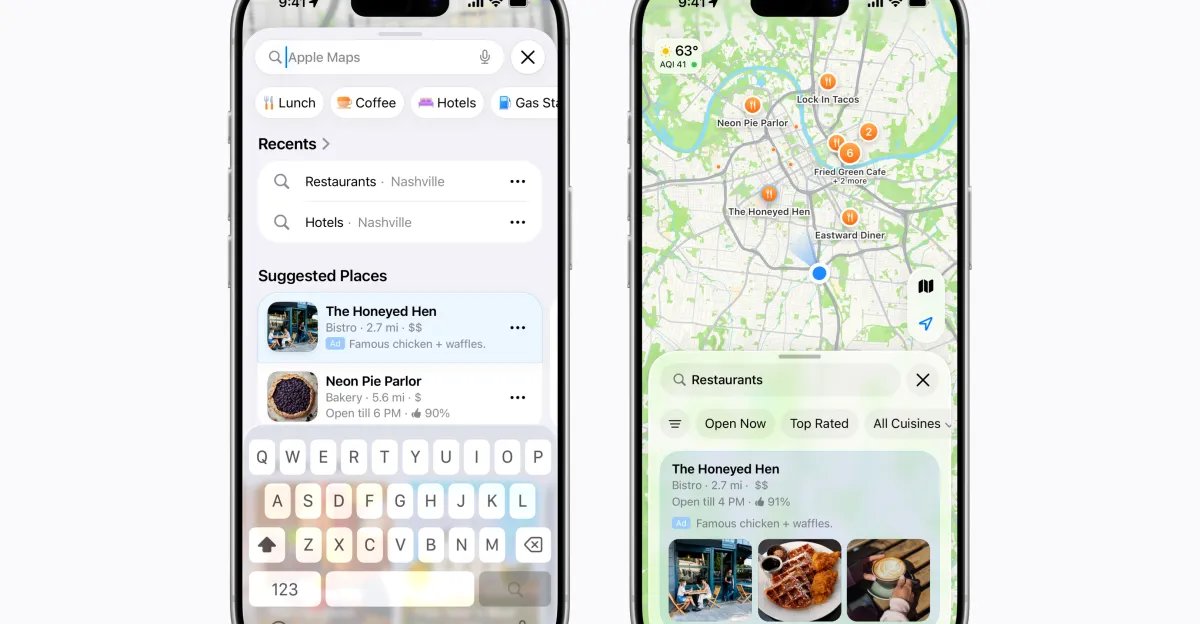
The rollout, which began in earnest this week, places sponsored content directly within the search experience. According to reports, businesses can now pay to secure top-tier visibility in the “suggested places” section, as well as at the very top of standard search results.
A Familiar Experience
The implementation mirrors the long-standing strategy employed by Google Maps. Apple’s sponsored listings are clearly identified with a blue “ad” icon, allowing users to distinguish between organic results and paid placements.
For many users, the transition was marked by a proactive notification upon opening the app. The prompt explains that Apple Maps may now present local ads based on a user’s approximate location, active search queries, or the current view of the map.
Privacy-First Monetization
In an era where data tracking is a primary concern for consumers, Apple is doubling down on its privacy-centric reputation. The company has emphasized that while ads are location-aware, they are not tied to the user’s personal Apple Account.
In its March announcement, Apple outlined a strict data-handling policy for the platform:
- No Association: A user’s location and their interactions with ads are not linked to their Apple ID.
- On-Device Processing: Personal data related to advertising is kept local to the user’s device.
- Data Sovereignty: Apple maintains that it does not collect, store, or share this specific advertising data with third parties.
Expanding the Footprint
The current rollout is primarily focused on North American users, with broader availability expected to phase in over the coming weeks. For Apple, this marks a new chapter in its business strategy, effectively turning one of its most essential utility apps into a powerful advertising storefront for local businesses.
As these ads become a permanent fixture of the user experience, the success of the initiative will likely depend on whether Apple can maintain its promise of privacy while providing enough value to both advertisers and those navigating the app.