







Bringing 2D Art to Life: A Deep Dive into Professional Environment Creation
Creating a compelling 3D world often begins with a singular, evocative 2D concept. The challenge, however, lies in bridging the gap between a static illustration and an immersive, explorable space. By leveraging modern real-time tools, artists are finding new ways to maintain the charm of hand-painted aesthetics while utilizing the technical prowess of current-generation game engines.
Establishing Composition and Depth
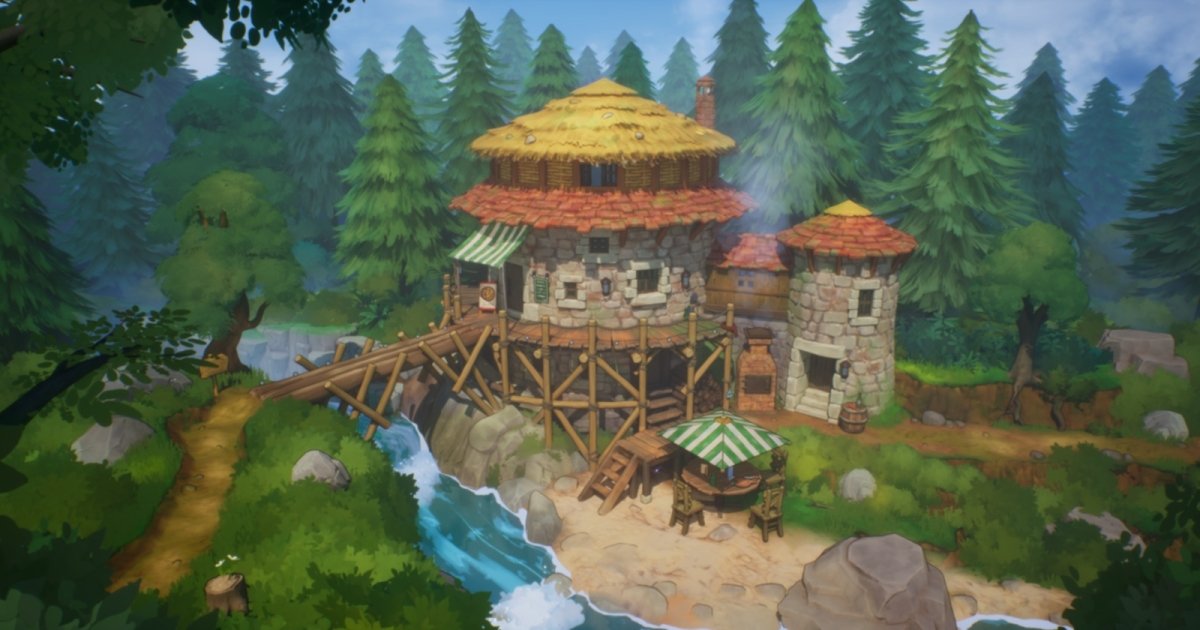
The foundation of a successful environment is rigorous pre-planning. By using an original illustration as a blueprint, artists can establish key camera angles early in the development process. To transition from a flat image to a volumetric space, the balance between architecture, vegetation, and terrain is critical.
A common pitfall in environment design is visual repetition, which can break the player’s immersion. To combat this, professionals employ several sophisticated techniques:
- Asset Variation: Incorporating subtle color shifts in foliage and rock textures.
- Layering Details: Utilizing decals and scattered debris to break up flat surfaces.
- Strategic Staging: Implementing self-shadow control to define the relationship between the foreground, midground, and background, ultimately strengthening the overall sense of depth.
Mastering Lighting and Mood with Lumen
Lighting serves as the heartbeat of any scene. When turning a 2D illustration into a 3D environment with a hand-painted look, the engine’s lighting model must be carefully calibrated to retain artistic intent. Utilizing Unreal Engine’s Lumen technology allows for dynamic light direction and precise control over the interplay between shadow and light.
To craft distinct atmospheric conditions, artists often combine Exponential Height Fog with specialized “fog cards.” This layering technique allows for nuanced mood shifts—whether simulating a crisp morning or a mysterious twilight. Final atmospheric touches are typically dialed in via the Post Process Volume, where techniques like Bloom are applied to enhance the ethereal quality of nighttime sequences.
The Rendering Workflow
The final polish relies on sophisticated camera work and rendering pipelines. Animation sequences are blocked out directly within Unreal Engine, ensuring that movement feels intentional and cinematic. For the final output, the Movie Render Queue serves as the industry standard, allowing for high-fidelity sequences that capture the full scope of the artist’s vision.
By combining these technical workflows with a strong artistic eye, creators can successfully translate the soul of a painting into a living, breathing 3D environment.