






For years, skeptics have leveled a consistent critique against Apple: the company has lost its innovative spark. Critics pointed to the rise of advanced generative artificial intelligence models, the stagnation of the iPhone’s industrial design, and the cancellation of high-profile moonshot projects like the autonomous electric car as evidence of a tech giant resting on its laurels. However, the most recent product showcase from the Apple campus in Cupertino has systematically dismantled these narratives, signaling a return to aggressive hardware iteration and consumer-focused engineering. The centerpiece of this pivot is the long-rumored, highly anticipated foldable device: the iPhone Duo.
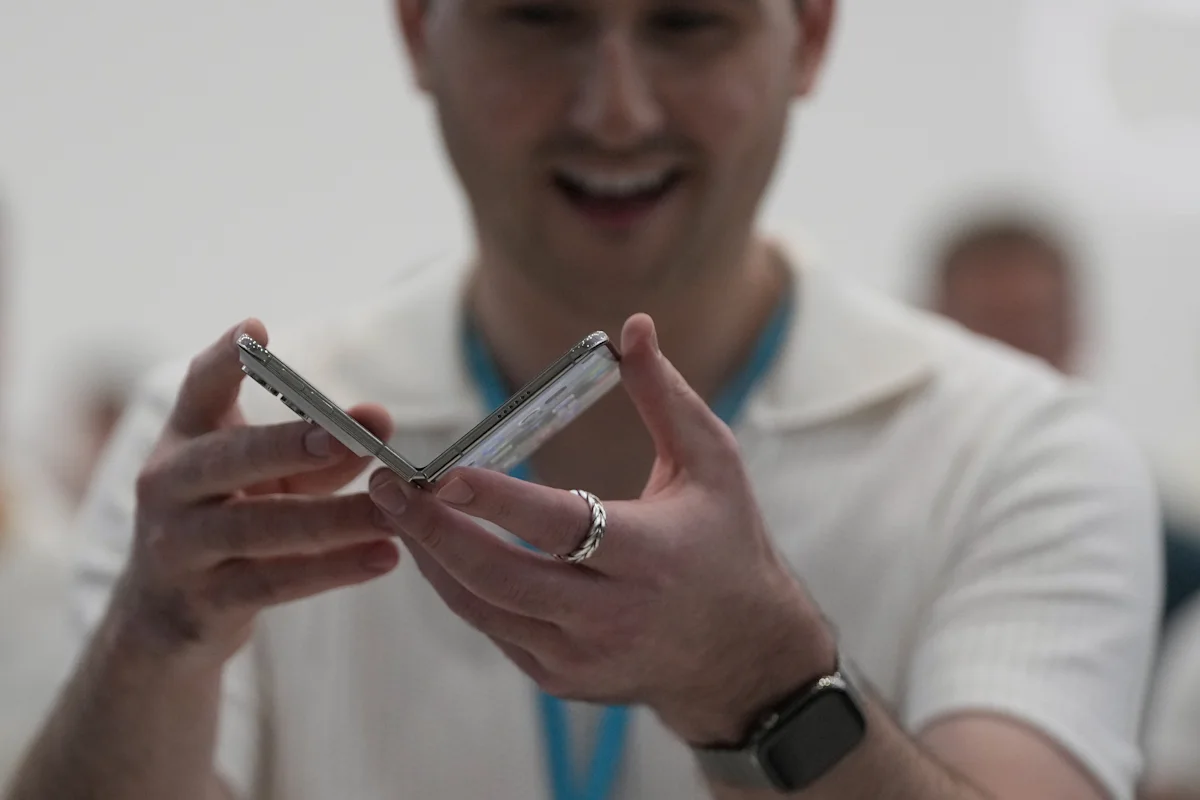
The iPhone Duo represents more than a structural change; it is an architectural overhaul of the mobile experience. Featuring a passport-inspired folding mechanism, the device transitions from a portable 5.4-inch front display to an expansive 7.6-inch internal canvas. This dual-state utility addresses a growing demand for devices that bridge the gap between pocket-sized convenience and workstation-level productivity. By utilizing advanced hinge mechanics and a proprietary screen material that mitigates the crease common in early foldable attempts, Apple has prioritized longevity and tactile performance, setting a new benchmark for premium hardware construction.
Beyond the folding glass, the iPhone Duo is powered by the new A20-series chip, a silicon achievement that emphasizes both efficiency and high-speed computation. The A20 utilizes a refined fabrication process that allows for superior thermal management, which is critical for a device that frequently switches between intensive multitasking and high-fidelity media playback. The integration of Touch ID directly within the folding display provides a seamless security experience, marking a sophisticated fusion of biometric identification and flexible screen technology.
This hardware foundation is essential for supporting the new internal camera systems. The rear-camera array, upgraded with significantly larger sensors and improved optical stabilization, allows users to leverage the expanded screen real estate for professional-grade photography and video editing on the go. As Goldman Sachs analyst Michael Ng noted, these hardware updates are engineered to sustain strong demand cycles, ensuring that even as the smartphone market reaches high penetration, the value proposition for upgrading remains compelling.
Innovation at Apple is no longer confined to the chassis; it is deeply embedded in the device’s sensory capabilities. The latest iteration of the Apple Watch introduces advanced acoustic processing, allowing the hardware to summarize ambient conversations in real-time. While this feature raises immediate questions regarding privacy and social interaction, it represents a significant leap in functional utility. By processing auditory data locally and utilizing on-device machine learning to distill meetings or discussions into concise points, Apple is positioning its wearable technology as a cognitive assistant rather than a simple fitness tracker.
This move underscores Apple’s broader strategy to integrate intelligence into the physical environment. By moving away from purely reactive interfaces and toward proactive summarization, the company is attempting to solve the problem of information overload. For the professional user, this means the ability to synthesize hours of verbal exchange into actionable data without manual transcription, effectively turning the wrist-worn device into an essential tool for productivity and information retention.
The updates to the AirPods line follow a similar trajectory of refinement. With a claimed 50 percent increase in noise cancellation capability, these earbuds utilize advanced signal processing and refined transducer hardware to filter out a broader spectrum of environmental distractions. This update is particularly relevant for the remote workforce and frequent travelers who require a consistent auditory environment to maintain focus. By enhancing the hardware’s capability to isolate and suppress noise, Apple continues to solidify the AirPods as a critical peripheral that justifies its premium price point through tangible, day-to-day utility.
Furthermore, the longevity of these products is bolstered by battery innovations across the iPhone 18 Pro series. By optimizing power management and energy density, Apple has managed to deliver supercharged battery life, addressing one of the most common consumer pain points. In the context of modern mobile usage—where devices are expected to handle gaming, streaming, and intensive background processing—these incremental improvements in power efficiency have a disproportionately large impact on the user experience.
As with any major shift in form factor, the market reception will determine the long-term viability of the iPhone Duo. AT&T CEO John Stankey noted during the Goldman Sachs Communacopia & Tech conference that while the foldable device will likely remain a specialized tool for a particular segment of the user base, its introduction serves a critical purpose. It expands the ceiling of what is possible within the Apple ecosystem. By offering a high-end, premium-priced alternative, Apple is not just competing with other foldable smartphones; it is incentivizing its current base to reinvest in the ecosystem.
Ultimately, the launch of the iPhone Duo and the surrounding suite of hardware updates suggests that Apple has moved past its period of perceived stagnation. By combining high-stakes hardware experimentation—such as the foldable display—with deep-level internal improvements in chip architecture and sensory processing, the company is reclaiming its position as an industry leader. For investors and consumers alike, the message is clear: the focus has shifted back to hardware as the primary driver of digital transformation, proving that the tech giant remains capable of delivering hardware that challenges the status quo.
Disclaimer: This content is auto-generated for informational purposes only.
Source: Read Original News