







The Evolution of the BMW 3 Series Platform
The automotive industry is currently witnessing a significant transition as manufacturers balance the legacy of internal combustion engines with the demand for advanced electrification. Recent sightings of the uncamouflaged 2027 BMW 3 Series M350 xDrive confirm that the Bavarian automaker is leaning into this hybrid era with a refined approach to performance engineering. As a successor to the M340i, the M350 xDrive represents a strategic repositioning of the middle-tier performance sedan, focusing on powertrain efficiency and chassis rigidity.
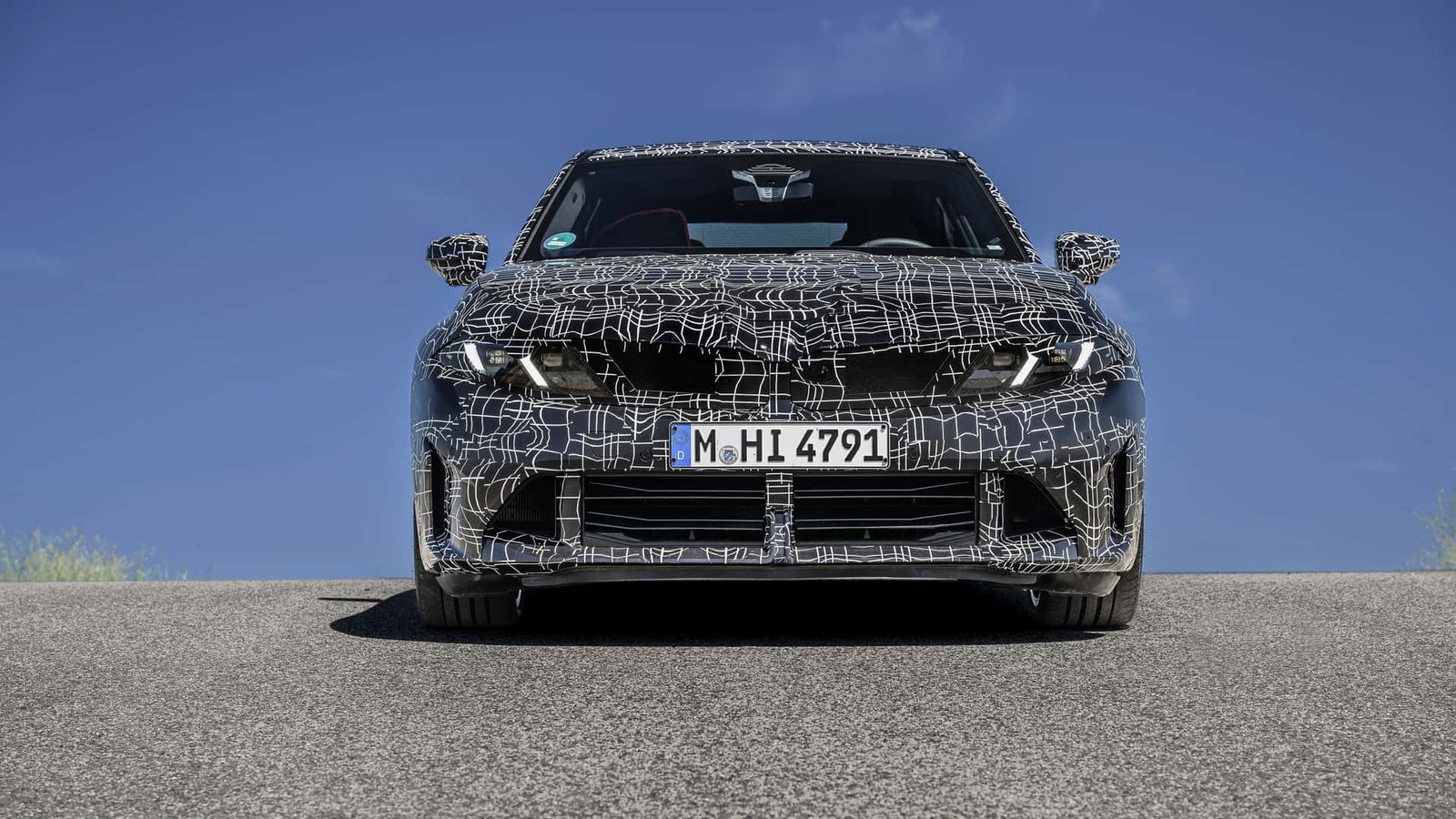
From a structural standpoint, the 2027 model utilizes a modular architecture that supports a wider array of electrified powertrains. By shedding the heavy aesthetic camouflage typically seen during development phases, the vehicle reveals a more aggressive aerodynamic profile. The front fascia incorporates enlarged air intakes designed to optimize cooling for the upgraded mild-hybrid systems, while the rear features a redesigned diffuser that integrates seamlessly with the quad-exhaust configuration. This shift signals a departure from purely mechanical dominance, prioritizing computational flow management alongside raw power output.
Advanced Powertrain and Hybrid Integration
At the core of the M350 xDrive lies a significant update to the B58 engine architecture, now integrated with a 48-volt mild-hybrid system. This electrification strategy is not merely for fuel efficiency; it serves as a critical tool for performance augmentation. The electric motor provides immediate torque fill, effectively mitigating the delay typically associated with turbochargers. This results in a more linear power delivery curve, allowing the vehicle to maintain peak torque across a broader RPM range.
The xDrive all-wheel-drive system has also undergone a technical overhaul. The 2027 model utilizes an electronically controlled multi-plate clutch system that facilitates dynamic torque distribution between the front and rear axles. By continuously monitoring wheel speed, steering angle, and yaw rate, the vehicle’s central control unit can shift power in milliseconds. This enables the car to exhibit rear-wheel-drive characteristics during spirited driving while maintaining the traction benefits of all-wheel drive during adverse weather conditions or high-performance acceleration.
Technological Integration and Interior Architecture
Inside the cabin, the 2027 BMW 3 Series M350 xDrive shifts toward a screen-centric user interface. The cockpit features the latest iteration of the iDrive operating system, which is built on a Linux-based architecture designed for low-latency responsiveness. The integration of a curved display that merges the digital instrument cluster with the central infotainment unit allows for a more streamlined interaction model.
Technological sophistication extends to the vehicle’s Advanced Driver Assistance Systems (ADAS). The new 3 Series utilizes an array of high-resolution radar and LiDAR sensors to improve lane-keeping precision and adaptive cruise control efficiency. The vehicle’s internal network architecture has been upgraded to support higher data transmission speeds, ensuring that the software-defined components—such as active dampers and steering feedback loops—can be updated over-the-air. This modular software approach allows BMW to refine the driving dynamics of the vehicle long after it leaves the assembly line, providing owners with consistent improvements to throttle response and braking modulation.
Aerodynamics and Thermal Management
The exterior design of the M350 xDrive serves a functional purpose that transcends mere aesthetics. With the removal of camouflage, the precision of BMW’s engineering team is evident in the air curtains located at the edges of the front bumper. These features are designed to create a high-velocity curtain of air over the front wheels, which reduces turbulence and improves the drag coefficient.
Thermal management is equally crucial for the 2027 model. Because the hybrid system generates significant heat during regenerative braking and high-demand acceleration, the M350 xDrive features an active grille shutter system. When the engine requires maximum cooling, these shutters remain open; however, at highway speeds, they close to minimize aerodynamic drag, effectively boosting range and fuel economy. The careful placement of heat exchangers behind these shutters ensures that the transmission, engine, and battery array operate within their optimal temperature windows, which is essential for maintaining the longevity of the vehicle’s electrical components.
Market Impact and Future Outlook
The arrival of the M350 xDrive arrives at a pivotal time for the compact luxury sports sedan segment. Consumers are increasingly seeking vehicles that bridge the gap between track-ready agility and daily usability. By positioning the M350 xDrive as a high-performance hybrid, BMW is betting that drivers want the responsiveness of a performance-oriented vehicle without the carbon footprint associated with larger, unassisted displacement engines.
The impact of this model on the competitive landscape will likely be significant. Rivals from German and Japanese competitors have largely moved toward similar hybrid architectures, but BMW’s focus on integrating the power delivery of the mild-hybrid system with a rear-biased xDrive system provides a distinct identity. As the automotive sector pushes toward a fully electric future, the M350 xDrive serves as an essential bridge, proving that performance-oriented internal combustion engineering remains relevant when paired with intelligent, software-driven electrification. The 2027 model is set to become a benchmark for what can be achieved when legacy performance standards are augmented by modern digital control systems.
Disclaimer: This content is auto-generated for informational purposes only.
Source: Read Original News