





“This time I lost the battle.” With those six poignant words, England’s premier speed merchant Mark Wood has officially drawn the curtain on an electrifying 11-year international career. The announcement, delivered via social media on Tuesday, signals the end of a storied journey defined by raw, tearaway pace, an infectious personality, and an exhausting, lifelong struggle against the physical toll of elite-level fast bowling.
At 36, Wood leaves behind a legacy as one of the most feared bowlers of his generation. While his career statistics—253 wickets across all three formats—are impressive, they only tell half the story of a man whose heart often pushed his body further than medical science dared suggest.
A Career Defined by Grit and Pace
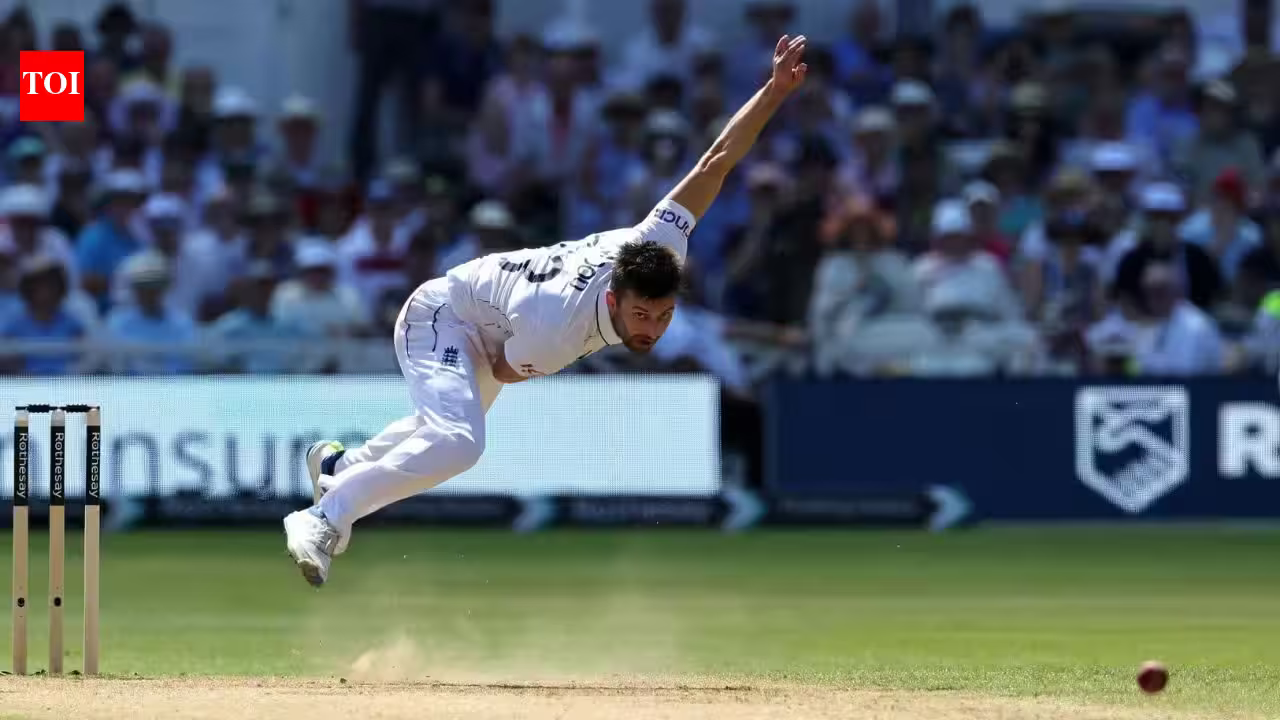
Mark Wood arrived on the international stage in 2015, bringing with him a blend of genuine, high-octane speed and the kind of unpredictability that every captain dreams of having in their arsenal. From his Test debut to his final appearance, Wood was a disruptor. He didn’t just bowl; he attacked, consistently clocking speeds that rattled the world’s most disciplined batters.
His impact was instantaneous. Fans will fondly remember the pivotal moment at Trent Bridge in 2015, where Wood claimed the final wicket of Nathan Lyon to clinch a historic Ashes series victory for England. It was the birth of a reputation: Wood was a man for the big occasion. Whether bowling on the flat tracks of the sub-continent or the bouncy surfaces of Australia, he remained a potent force. His performance in the 2021-22 Ashes series, where he claimed 17 wickets, served as a masterclass in heart and resilience, often operating as the lone spark in an otherwise struggling English bowling unit.
The Anatomy of a Warrior
The narrative of Wood’s career has been inextricably linked to the injury ward. Throughout his 11 years at the top, he battled relentless setbacks involving his ankles, elbows, and most significantly, his knees. It was a recurring left knee issue that ultimately accelerated his exit from the game.
During the opening Test of the last Ashes series, Wood was forced to stop after delivering just 11 overs. The familiar, sickening swelling returned, a recurring ghost from a previous surgical procedure. That brief spell proved to be his final act in an England shirt.
“I’ve always tried to be resilient and come back from injury to prove people wrong and show everyone what I can do,” Wood wrote in his farewell statement. “Unfortunately, this time I lost the battle.”
The decision was not one made in haste, but rather the result of stark medical reality. Wood acknowledged that the demands of the longest formats—Test and 50-over cricket—were no longer physically sustainable. “On medical advice, Test cricket and 50-over cricket are not possible, so the England dream has slowly been ground out of me over the last year,” he admitted.
Architect of Global Glory
While his Test career provided the grit, it was in the shorter formats where Wood became a legendary figure in English cricket history. He was a foundational pillar of the white-ball revolution that transformed England from also-rans to world beaters.
In the 2019 ODI World Cup—a tournament that defined a generation of English cricket—Wood was instrumental. He snared 18 wickets in 10 matches, operating with a hostility that allowed England’s middle-overs bowling to thrive. He followed that achievement by being a key part of the squad that secured the 2022 T20 World Cup title in Australia, proving his adaptability and enduring value in the shortest format, where he claimed nine wickets during that triumphant campaign.
Tributes Flow for a Fan Favorite
Beyond the wickets and the pace, Mark Wood was widely regarded as the heartbeat of the England dressing room. His positivity, humor, and unwavering team-first attitude made him one of the most popular figures in the sport.
Rob Key, the managing director of England men’s cricket, led the tributes, highlighting the sheer excitement Wood brought to the sport. “Mark Wood thrilled crowds every time he got the ball in his hand,” Key stated. “He brought a level of intensity and energy that was rare to witness, and his contribution to the success of this team—both on and off the field—cannot be overstated.”
The Next Chapter
As the dust settles on his international career, the question for many fans is what comes next. Wood has expressed a desire to remain involved in the sport in some capacity. While the grueling schedule of international touring is now behind him, his experience and tactical acumen could prove invaluable in a coaching or mentoring role, or perhaps as a specialist in the growing ecosystem of franchise T20 leagues.
“I got to live out a dream,” Wood concluded, reflecting on his decade-plus of service. “I hope I can continue playing cricket in some capacity and pursuing other challenges in the future.”
For now, the cricket world bids farewell to one of the game’s true “good guys” and one of its fastest bowlers. Mark Wood leaves the international arena not as a player defeated by his own limitations, but as an athlete who pushed his body to the absolute brink in pursuit of glory. He didn’t just lose a battle; he won the war of defining his legacy as a fierce competitor and a quintessential England servant.
Disclaimer: This content is auto-generated for informational purposes only.
Source: Read Original News