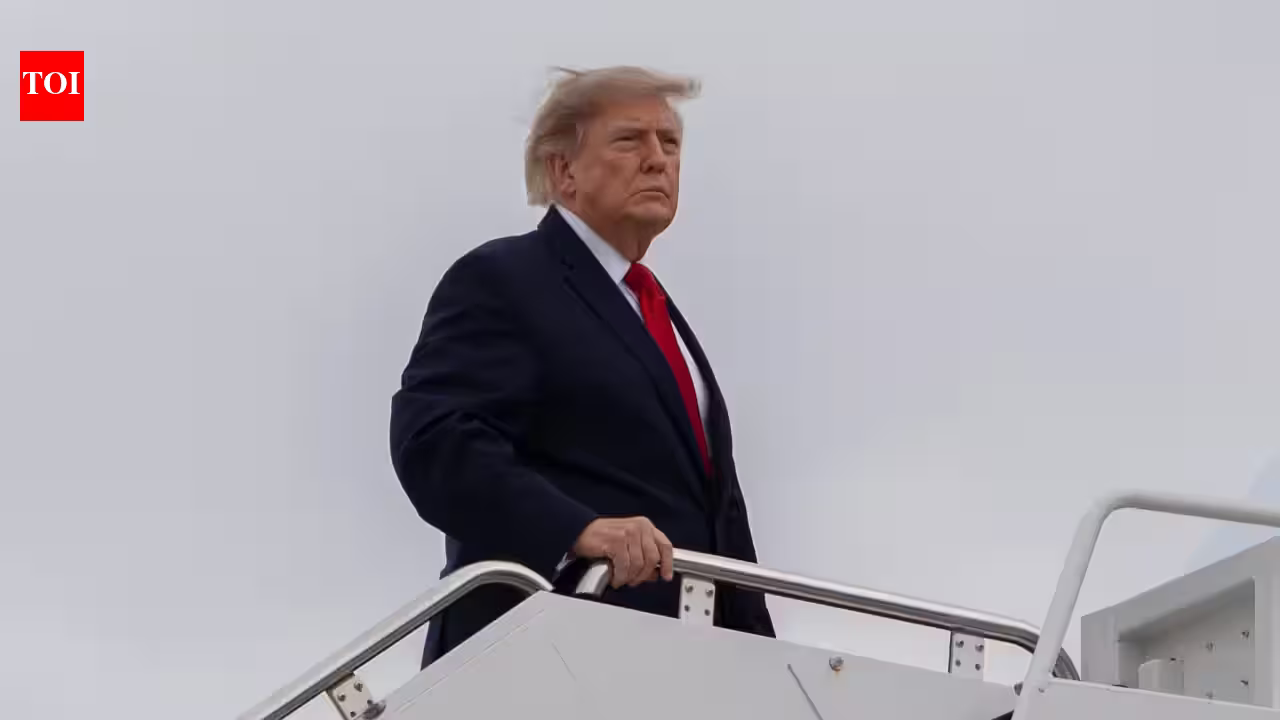









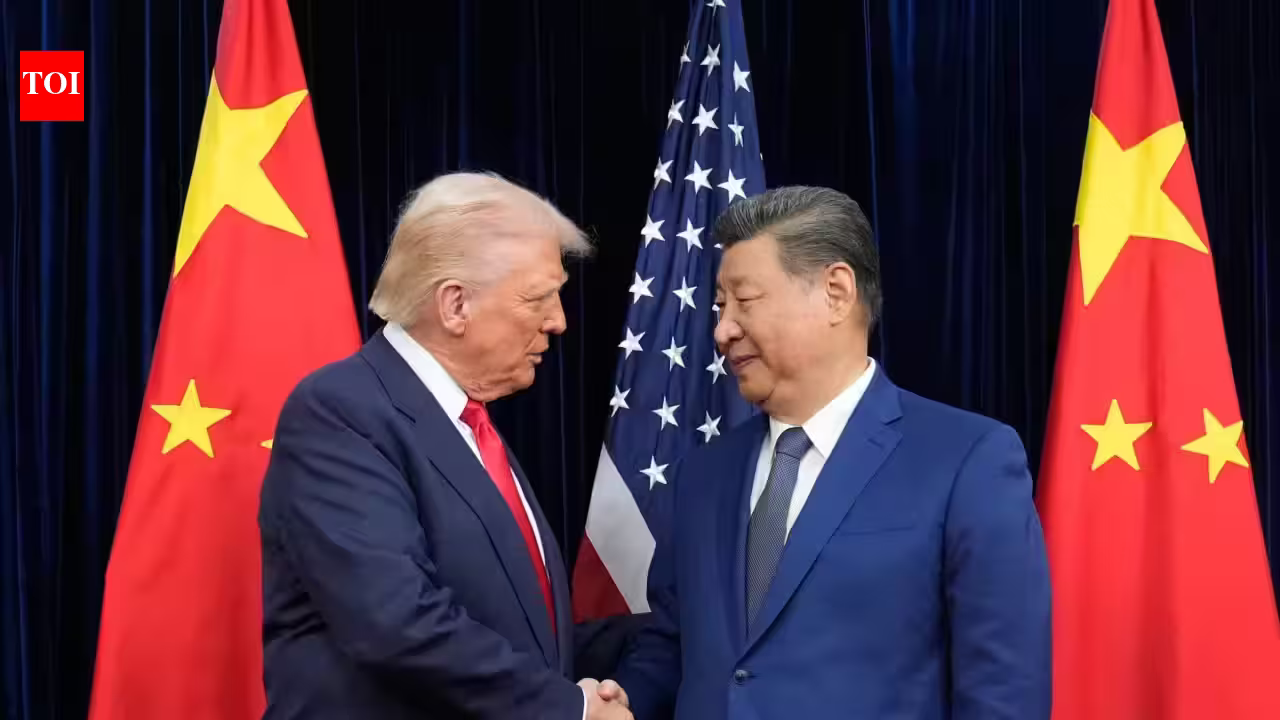
The recent diplomatic engagement between President Donald Trump and President Xi Jinping marks a significant moment in global geopolitics. While the meeting focuses on issues ranging from tariffs to technological supremacy and maritime security, the secondary impact on emerging economies is profound. For India, this summit serves as a reminder that its economic trajectory and strategic weight cannot remain tethered to the fluctuations of the US-China rivalry. As the two superpowers move toward a managed competition rather than outright decoupling, India must recalibrate its industrial and diplomatic strategies to ensure its rise remains self-sustaining.
The Shift in Manufacturing and Supply Chain Logic
For several years, the “China+1” strategy served as a powerful tailwind for India’s manufacturing sector. Global firms, seeking to mitigate risks associated with over-reliance on a single jurisdiction, began shifting parts of their production ecosystems to India. This trend was underpinned by a transition from “just-in-time” supply chains to “just-in-case” resilience. India’s Production Linked Incentive (PLI) schemes in sectors such as electronics, pharmaceuticals, and telecommunications gained significant momentum during this period, with major players like Apple and its suppliers expanding their footprints in Indian states.
However, a potential thaw in US-China relations poses a complex challenge to this momentum. If geopolitical tensions subside, the immediate urgency for companies to exit or diversify away from China may diminish. While China’s structural challenges—such as an aging workforce and rising labor costs—remain, its vast infrastructure, mature manufacturing clusters, and unmatched logistics connectivity remain formidable. If the “China risk” premium decreases, India will face a stiffer test of its comparative advantage. It will no longer suffice to be the secondary alternative; India must now position itself as a primary, high-efficiency manufacturing hub that offers superior value beyond merely being an escape hatch from Chinese tariffs.
Navigating the Technological Frontier
Semiconductors and artificial intelligence have become the primary theaters of US-China technological competition. India has made strategic strides in this arena, exemplified by the US-India Initiative on Critical and Emerging Technology (iCET). This partnership targets deep collaboration in AI infrastructure, quantum computing, and space exploration. Yet, the summit highlights the fragility of this positioning. If Washington allows for increased “non-sensitive” technology commerce with Beijing, American companies may re-engage with the massive Chinese market, potentially slowing the flow of specialized investment toward Indian startups and manufacturing facilities.
For India, the challenge lies in moving beyond the “trusted partner” narrative. While being a secure, democratic alternative to China is an asset, it is not an economic strategy in itself. To maintain the growth trajectory of its technology sector, India must accelerate its internal reforms in infrastructure, land acquisition, and ease of doing business. The goal is to evolve the proposition from “choose us because China is restricted” to “choose us because India provides the best ecosystem for innovation.” Achieving this requires deepening domestic intellectual property regimes and scaling up high-end workforce training, ensuring that Indian firms move up the value chain from basic assembly to sophisticated design and research.
The Critical Minerals Conundrum
The dominance of China in the processing of rare earth elements provides Beijing with significant geopolitical leverage. These minerals are the lifeblood of modern technology, vital for everything from electric vehicle motors and wind turbines to advanced defense systems. The US-China summit underscores that access to these materials is a pillar of national security. While India and the US have established a framework for critical minerals cooperation, the pace of implementation is paramount.
If the US secures a predictable flow of rare earths through its negotiations with China, the immediate impetus for Washington to bankroll expensive alternative supply chains in the Indo-Pacific could wane. India is currently developing rare-earth corridors in states like Odisha and Tamil Nadu, aiming to become a global player in the processing value chain. To hedge against a potential US-China detente, India must expedite its mining and processing efforts independently of external geopolitical pressures. Demonstrating technical capability and consistent output will be the only way to retain the interest of global capital when the geopolitical urgency regarding Chinese supply chains temporarily abates.
Energy Security and Strategic Autonomy
Energy remains a delicate point of contention in international relations. Both India and China are major consumers of energy from countries currently under various degrees of Western sanctions. The upcoming discussions between Trump and Xi will inevitably touch upon these energy flows, with Washington looking to restrict Chinese access to Iranian oil and further tighten the net around Russian energy exports.
India’s energy strategy is dictated by the imperative of maintaining affordable fuel prices for its growing economy. If the US provides concessions to Beijing on energy-related tariffs or sanctions, but continues to scrutinize India’s energy purchases, it would signal a shift in the hierarchy of US strategic priorities. India must stay vigilant regarding the fine print of any US-China accords. Ensuring that India’s energy diplomacy retains its independence is critical, as any perception of subservience to US external pressure could undermine India’s ability to maintain its own strategic autonomy in the region.
The Future of the Quad and Regional Stability
The rise of the Quad—comprising the US, India, Japan, and Australia—has been largely predicated on creating a balance against China’s expansive influence in the Indo-Pacific. A US-China detente does not negate the regional challenges India faces, such as border sensitivities with China, the role of Pakistan, and the competition for influence across the Indian Ocean. However, it does alter the diplomatic calculus.
Should the US-China relationship become more predictable, the high-level focus on regional security alliances might be recalibrated. While the Quad will likely persist as a platform for maritime domain awareness and disaster relief, its political weight could potentially diminish if Washington shifts toward a more transactional relationship with Beijing. India cannot afford to outsource its security concerns to the Quad. Instead, it must continue to strengthen its bilateral ties with Japan, Australia, and ASEAN nations, ensuring that the architecture of security in the Indo-Pacific remains multipolar and resilient, regardless of the temperature of Washington-Beijing relations.
Ultimately, India’s path to becoming a global economic power depends on internal structural transformation rather than external geopolitical conditions. The US-China rivalry has provided a favorable context, but true sustained growth is the result of industrial depth, domestic market scale, and policy consistency. By focusing on its internal advantages, India can insulate its progress from the inevitable cycles of cooperation and conflict between the world’s two largest economies.
Disclaimer: This content is auto-generated for informational purposes only.
Source: Read Original News