





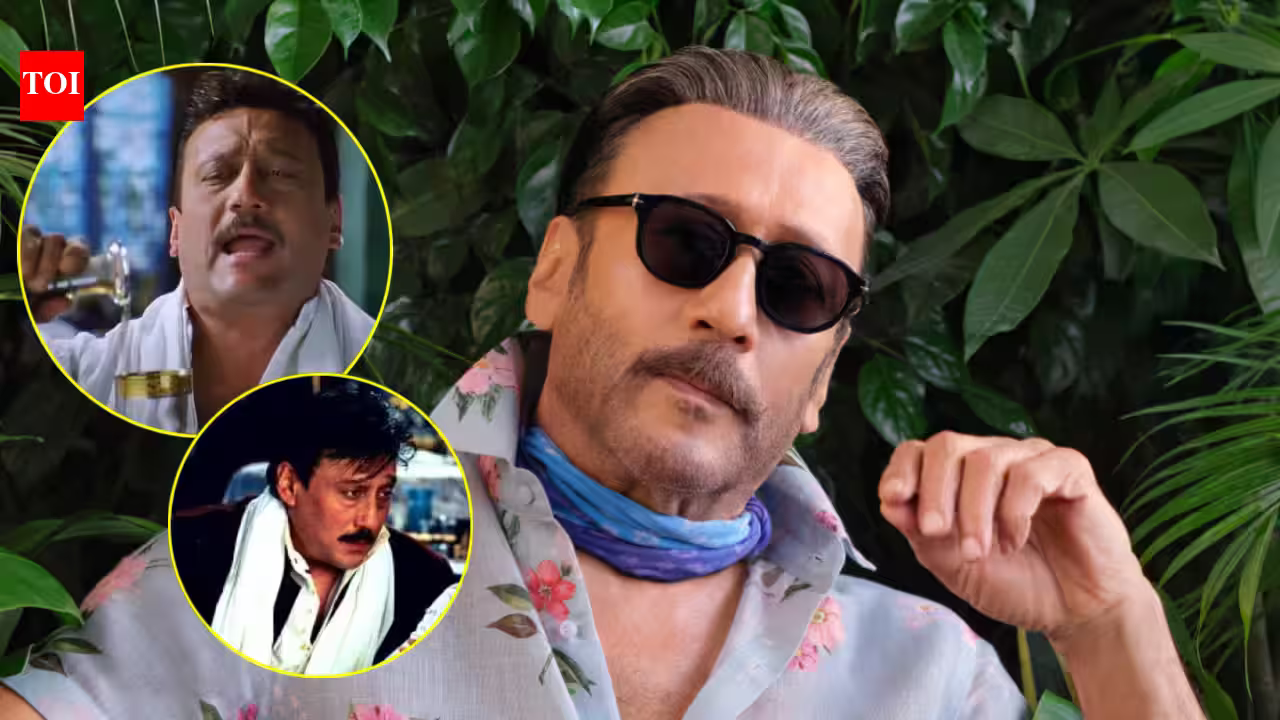
In the high-stakes, ego-driven corridors of Bollywood, where leading men often trade in their scripts for more “substantial” screen time, Jackie Shroff has always operated by a different set of rules. While his peers spent the early 2000s obsessing over box-office dominance and top-billing, the “Bhidu” of Hindi cinema was busy carving out a niche as the ultimate professional—a man who could steal a film without ever claiming the marquee.
His latest revelation regarding his iconic turn as Chunnilal in Sanjay Leela Bhansali’s Devdas serves as a masterclass in cinematic humility and instinct. In a recent interaction that has since gone viral, Shroff pulled back the curtain on the casting process of the 2002 magnum opus, revealing that he essentially inherited the role after a parade of A-list stars turned it down, terrified of being overshadowed by Shah Rukh Khan.
The Role Nobody Wanted
Devdas was not just a film; it was a cultural event. With a colossal budget, the combined star power of Shah Rukh Khan, Aishwarya Rai, and Madhuri Dixit, and the visionary aesthetic of Bhansali, the film was the industry’s most coveted project. Yet, the role of Chunnilal—the tragic protagonist’s loyal, booze-soaked confidant—proved to be a hot potato.
As Shroff recounts, the industry’s elite were hesitant. The feedback from those approached for the part was remarkably uniform: if the film is titled Devdas and centers entirely on Shah Rukh Khan’s arc, what space is left for the supporting cast? To many, it felt like an exercise in vanity-less labor. But when the offers reached a standstill, the production turned to Shroff, who has long been the industry’s “go-to” guy for roles that demand soul rather than mere screen minutes. His response was characteristically effortless: “Yes, I’ll do this role.”
Finding the King of the Kotha
What sets Jackie Shroff apart from the typical “hero” is his ability to view a script through the lens of atmosphere and legacy rather than ego. During his conversation with fans, Shroff explained that he didn’t care about the size of the role; he cared about the texture of the character.
He pointed to the film’s rich, operatic setting—specifically the world of Chandramukhi, played by the incomparable Madhuri Dixit. “Madhuri ji is there, and I am the king of her character’s brothel,” he mused. “Why shouldn’t I sit there?” For Shroff, the prospect of inhabiting a character with such a distinct, gritty, and vital energy within Bhansali’s lavish canvas was an opportunity in itself. He didn’t need to be the center of the frame; he just needed to be a pillar within the world the director was building.
The “Visibility” Philosophy
There is a specific kind of confidence required to be unbothered by one’s own screen time. In an industry that often measures success by the number of close-ups an actor receives, Shroff’s philosophy stands as a refreshing anomaly. When he read the dialogue and realized he would have a song, a few sharp lines, and a pivotal presence, he was satisfied.
He famously quipped, “Even if my role comes during the interval, it won’t matter to me because I am seen merely by standing.” It is a testament to his screen presence that he was, indeed, seen. Decades later, Chunnilal remains one of the most recognizable figures in modern Indian cinema. He wasn’t just a sidekick; he was the bridge between the tragedy of Devdas and the grace of Chandramukhi, a performance that required a specific brand of rugged vulnerability that few others could have delivered.
A Legacy Built on Instinct
Shroff’s remarks about how “when nobody accepts the role, they come to me” are laced with a self-deprecating wit, but they also highlight a crucial truth about his career longevity. By taking on the parts that others viewed as beneath their station or too risky, he has secured his place in some of the most enduring films in history.
His interaction with the audience member who confessed to watching Devdas five times was the perfect punctuation mark to the story. He leaned in, playful and sharp as ever, and asked, “You also saw it. I was visible, right?” The laughter in the room confirmed what critics have known for years: Jackie Shroff’s visibility doesn’t come from the length of his scenes, but from the weight he brings to them.
The Art of the Supporting Actor
In retrospect, the refusal of other actors to play Chunnilal was their loss and our gain. Had one of those hesitating stars signed on, the character might have been played with a defensive posture—an actor constantly trying to “grab” the spotlight from Shah Rukh Khan. Instead, we got the effortless, lived-in camaraderie of Jackie Shroff.
He didn’t try to be Devdas; he was perfectly content being the man who kept the lights on in the shadows of the mansion. As we look back at the cinematic landscape of the early 2000s, Devdas remains a testament to Bhansali’s grand vision, but it is also a reminder that a film’s heart often beats in its supporting roles. Jackie Shroff didn’t just accept a role that no one else wanted; he took a supporting character and made him indispensable. And as it turns out, that is exactly why he remains a legend of the craft—visible, essential, and entirely, authentically himself.
Disclaimer: This content is auto-generated for informational purposes only.
Source: Read Original News