








The Strategic Importance of the Mumbai-Bengaluru Rail Corridor
The Indian rail network serves as the backbone of the nation’s logistical and economic framework. Among the most critical arterial routes, the corridor connecting Bengaluru—India’s premier technology hub—and Mumbai—the financial capital—has long been a focal point for infrastructure development. For over three decades, commuters have grappled with travel times exceeding 24 hours, often relying on legacy rail services that struggle to meet the demands of a modern, fast-paced professional workforce. The impending launch of the second Vande Bharat sleeper train on this route represents more than a logistical upgrade; it signals a fundamental shift in how the Indian Railways intends to capture the mid-to-long-distance transit market.
By reducing travel time to under 16 hours, the railways are creating a competitive alternative to domestic air travel. This shift is vital for the business ecosystem. As the two cities remain deeply integrated through corporate supply chains, software exports, and financial services, the ability to transit between them in a single overnight journey offers a productive, time-efficient, and cost-effective solution for professionals. This development aligns with the broader national objective of decongesting airports and providing a semi-high-speed rail alternative that balances the urgency of the business traveler with the comfort of a sleeper service.
Engineering Advancements in the Vande Bharat Sleeper
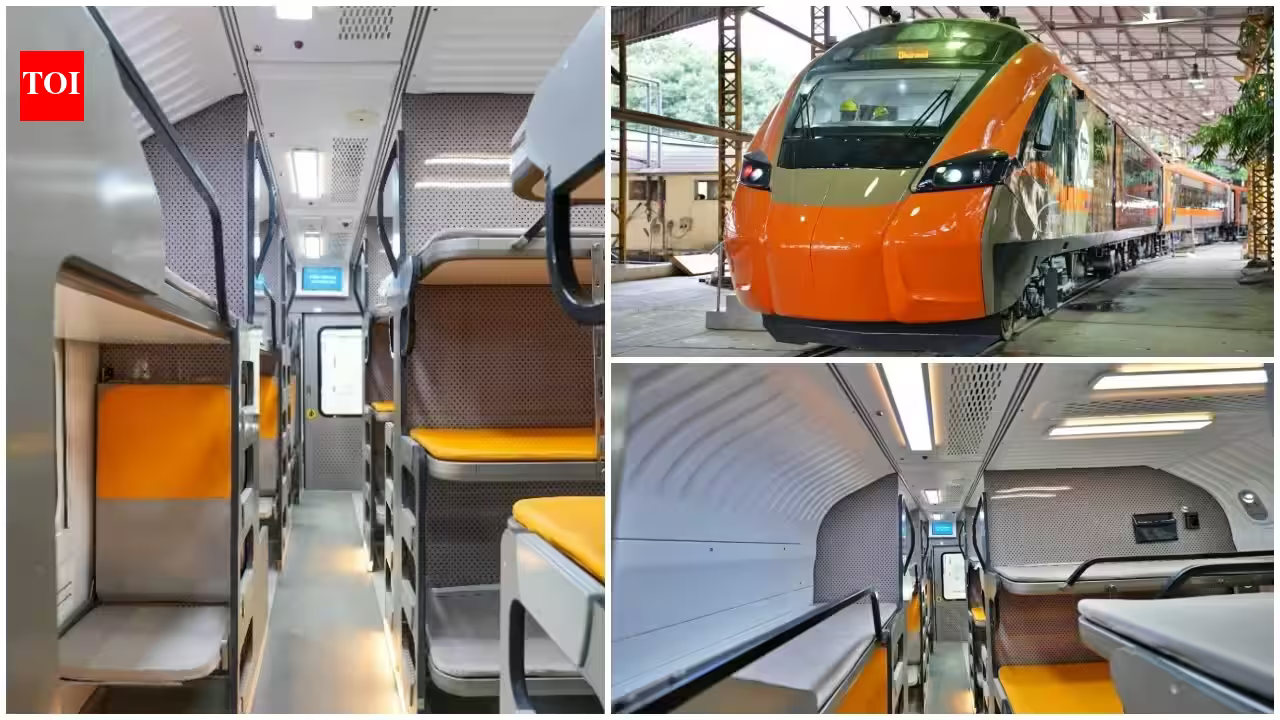
The Vande Bharat sleeper platform is a testament to the evolution of indigenous rail manufacturing under the “Make in India” initiative. Unlike the existing chair car variants, the sleeper version is engineered specifically for long-haul journeys. The rolling stock consists of 16 passenger coaches, meticulously categorized into 11 AC 3-tier, four AC 2-tier, and one AC First Class configuration. This mix ensures that the service caters to varying market segments while maintaining a high standard of passenger experience.
Technically, the train is built to sustain speeds of up to 160 kmph, though its structural integrity has been tested at 180 kmph. Beyond raw velocity, the integration of regenerative braking technology reflects a commitment to energy efficiency. Safety remains paramount, with the inclusion of the KAVACH anti-collision system, which is rapidly becoming the standard for the national rail network. The design language—influenced by European transit models—incorporates ergonomic improvements such as easier access to upper berths, modular pantry units, and centralized coach monitoring systems. These technical specifications move the needle from simple mass transit to a high-utility, premium service model that bridges the gap between conventional trains and luxury travel.
Enhancing the Passenger Experience and Operational Efficiency
The transition toward premium rail services in India is characterized by a shift toward aircraft-inspired amenities. The Vande Bharat sleeper emphasizes hygiene and convenience, featuring modular bio-vacuum toilets and, in the AC First Class section, dedicated shower facilities with hot water. These features are designed to serve the needs of the modern Indian traveler who values comfort alongside efficiency. The installation of fully sealed gangways and automatic interconnecting doors serves a dual purpose: improving the internal climate control and reducing noise pollution, which significantly enhances the overall quality of the journey.
From an operational perspective, the implementation of a Centralized Coach Monitoring System and emergency communication interfaces directly linked to the locomotive driver provides a robust safety net. Furthermore, the inclusion of GFRP (Glass Fiber Reinforced Polymer) panels for interior surfacing reduces weight while increasing durability and ease of maintenance. By automating door operations and standardizing interior layouts, Indian Railways is optimizing turnaround times and minimizing the operational friction that historically plagued long-distance inter-city travel.
Market Impact and Future Connectivity
The deployment of the Vande Bharat sleeper between Bengaluru and Mumbai is a bellwether for the future of Indian inter-city connectivity. By operating a service that bridges the gap between traditional night trains and the speed of regional air travel, the Ministry of Railways is effectively targeting the “time-sensitive” demographic. For the corporate sector, a 16-hour journey allows passengers to utilize the evening hours for rest and arrive at their destination refreshed, ready for the business day. This utility is expected to drive higher occupancy rates compared to standard express trains.
Furthermore, this launch acts as a pilot for expanding the semi-high-speed sleeper network across other high-density corridors. As the tracks are upgraded to support higher speeds, the Vande Bharat platform is positioned to capture a larger share of the transit market currently dominated by private vehicles and budget airlines. For the railway’s balance sheet, this premium service model offers higher revenue per passenger kilometer, essential for sustaining the capital-intensive nature of the Vande Bharat project. The success of this route will likely accelerate the transition of other major metropolitan links, such as Delhi-Mumbai or Chennai-Hyderabad, toward this upgraded infrastructure.
Navigating Infrastructure Challenges
While the technical specifications of the Vande Bharat sleeper are world-class, the primary constraint remains the underlying track infrastructure. India’s vast railway network, while extensive, is still undergoing the critical upgrades required to safely support consistent 160 kmph operation. Sections of the route may currently limit the train’s speed due to curvature, signaling bottlenecks, or traffic congestion on shared freight corridors.
The Railway Board’s commitment to initiating this service signifies that even with incremental infrastructure upgrades, the performance gains are substantial enough to justify the service. By focusing on prioritized corridors, the railways can demonstrate value to the public and justify further investments in track modernization. The ongoing development of additional sleeper variants by the Integral Coach Factory (ICF) indicates that the strategy is not to wait for a perfect national network but to deploy specialized trains that can provide the best possible performance given current track limitations. This pragmatic approach, combined with continuous feedback loops from passengers, ensures that the service will remain relevant and responsive to the needs of India’s rapidly growing economy. The Vande Bharat sleeper is, fundamentally, an evolving asset—one that reflects the country’s current manufacturing capabilities while serving as an engine for future economic integration.
Disclaimer: This content is auto-generated for informational purposes only.
Source: Read Original News