







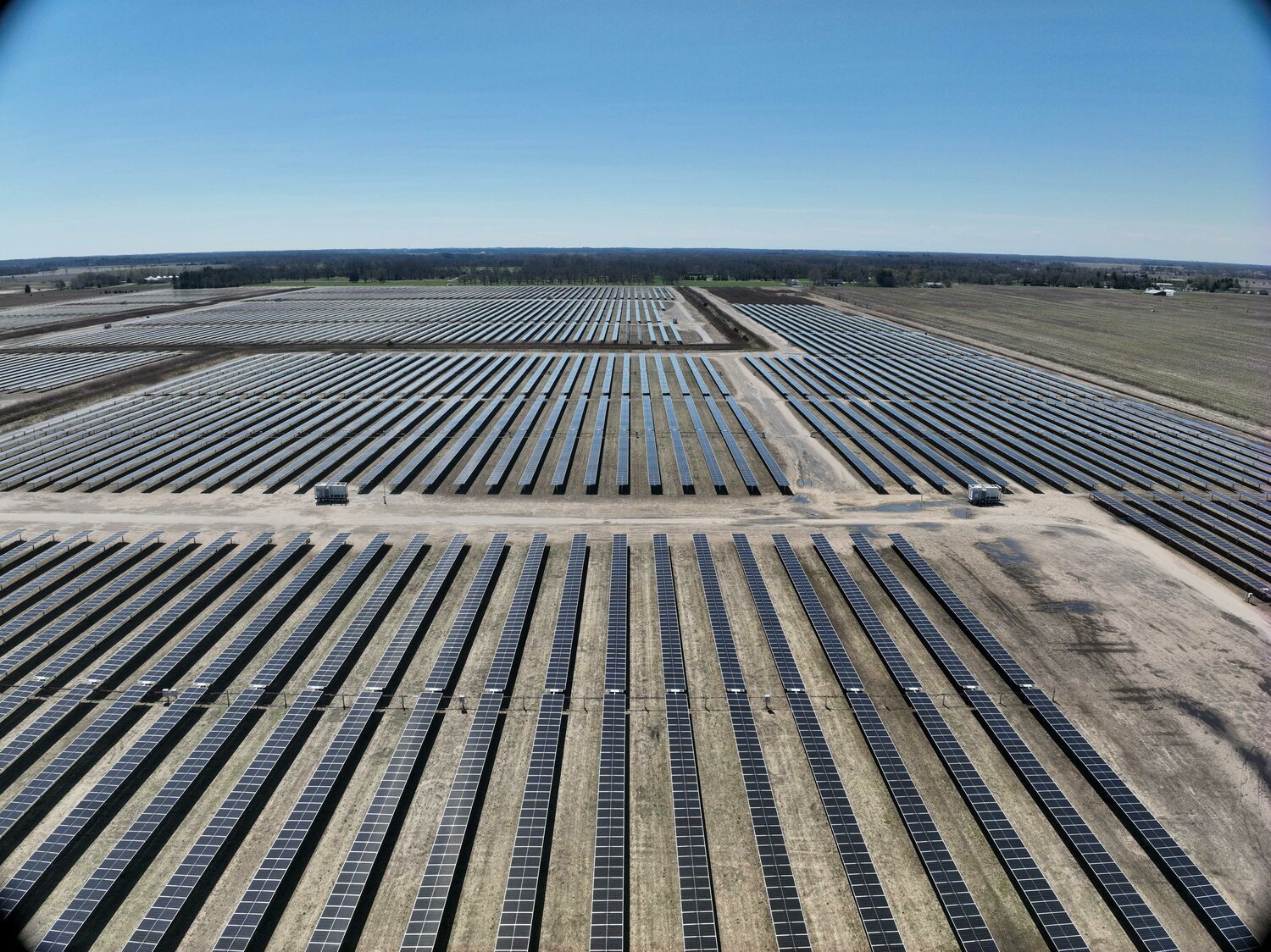
A $350 million financing package for a major Indiana solar project has cast a spotlight on the evolving relationship between renewable energy developers and technology “hyperscalers.” As renewable energy developer Zelestra moves forward with its 203-megawatt (MW) Reclamation Solar project in Gibson County, the deal underscores a critical question: Can long-term corporate power purchase agreements (PPAs) serve as the bedrock for the capital-intensive infrastructure needed to transition the U.S. power grid?
The Reclamation Solar project, currently under construction on reclaimed coal mining land, is backed by a long-term PPA with Meta. This agreement was instrumental in securing green credit facilities from a consortium of lenders, including the Canadian Imperial Bank of Commerce (CIBC), BBVA, and Societe Generale. The transaction contributes to a broader trend for Zelestra, which has now secured approximately $1.14 billion in U.S. project financing in 2026, supporting over 800 MW of solar capacity.
For lenders, the presence of a “creditworthy” offtaker like Meta fundamentally shifts the risk equation. By locking in a long-term contract, Zelestra can insulate the project from the volatility of wholesale electricity prices, providing the predictable cash-flow projections necessary to secure favorable debt financing. In an era marked by rising construction costs and significant transmission constraints, this contracted revenue framework offers a level of stability that traditional merchant energy projects often lack.
However, the efficacy of this model depends on the specific terms of these agreements, including pricing, duration, and delivery obligations—details which remain largely undisclosed. While the PPA provides a commercial safety net, it does not function as a panacea for project risk. Solar generation remains inherently tied to environmental conditions, and developers must still navigate the complexities of interconnection and market integration. Furthermore, while these agreements help meet corporate sustainability goals, they do not inherently guarantee round-the-clock, carbon-free energy for the high-demand data centers operated by companies like Meta.
The Reclamation project also highlights the unique challenges of “brownfield” development. By repurposing former coal mining land, Zelestra is utilizing industrial property that might otherwise sit idle. While this approach avoids the environmental controversy often associated with developing undisturbed agricultural land, it introduces its own set of engineering and regulatory hurdles. Converting post-mining sites requires careful management of soil stability, drainage, and potential contamination. Depending on the site’s history, these factors can necessitate specialized foundations and rigorous environmental remediation, which may complicate project timelines and budgets compared to greenfield developments.
The collaboration between Zelestra and Meta is extensive, with the two entities reporting eight U.S. solar PPAs—totaling roughly 1.4 gigawatts—announced or signed in 2026. This partnership provides a clear window into how hyperscalers are leveraging their balance sheets to catalyze renewable development. Yet, industry analysts caution that while this model is effective for large-scale players, it may not be easily replicable across the entire market.
Ultimately, the long-term viability of this financing model rests on three pillars: the continued appetite of corporate buyers to sign long-term, high-priced contracts; the sustained willingness of major banks to underwrite construction and operational risks; and the ability of developers to deliver these complex projects on budget.
As the Reclamation Solar project moves toward its scheduled commercial operation in late 2027, it serves as a litmus test for the industry. The $350 million financing package is a sign of confidence from the financial sector, but the project’s true success will be measured by its ability to reliably deliver power and generate the anticipated returns in a landscape where construction, regulation, and market volatility continue to reshape the economics of renewable energy.
Disclaimer: This content is auto-generated for informational purposes only.
Source: Read Original News