








Two Virginia state senators have introduced a legislative proposal that could fundamentally alter the landscape of the state’s burgeoning digital infrastructure industry. Ahead of the upcoming General Assembly session, Democratic Senators Russet Perry and Danica Roem have pre-filed a bill that seeks to impose a moratorium on the construction of new data centers across Virginia. If passed, the legislation would prohibit the approval or development of any new facilities from July 1, 2025, through July 1, 2030.
The proposed pause is framed as a necessary intervention to allow the Commonwealth time to develop comprehensive regulatory protections. Senators Perry and Roem, representing Loudoun and Prince William counties—regions often referred to as “data center alley” due to their high concentration of the facilities—argue that the current pace of development has outstripped the state’s ability to mitigate environmental and community impacts.
Central to these concerns is the environmental footprint of data centers, particularly regarding water quality. As these massive server farms generate significant heat, they require extensive cooling systems. Critics and local observers have raised alarms about the potential for chemical runoff. When rain falls on the vast, impermeable surfaces surrounding these facilities, it can collect cooling agents and pollutants, transporting them directly into local watersheds.
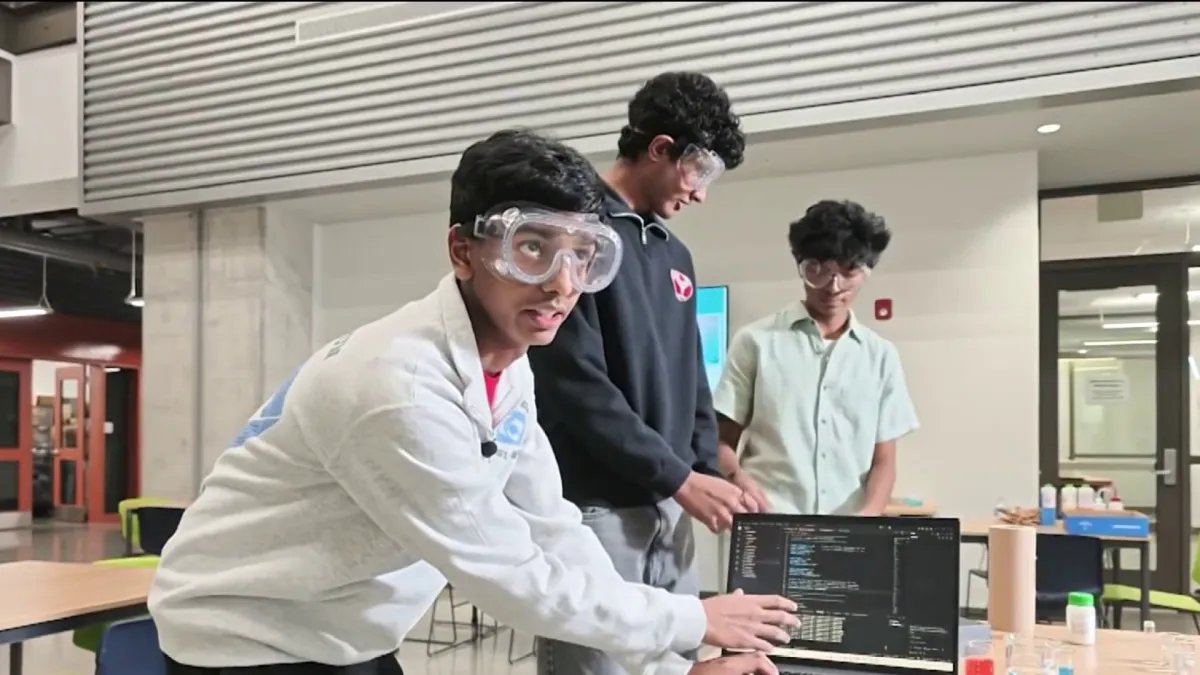
As legislators push for a regulatory timeout, a group of local high school students is providing the scientific evidence needed to inform future policy. Adhvik Raj, Karthik Uppalapati, and Priyanshu Kanhere, all 16-year-olds from Loudoun County, have launched an independent research project to monitor stream health near local data centers. Frustrated by the lack of empirical data regarding chemical contamination in their community, the students engineered a specialized sensor device to measure water quality.
“They use cooling agents and when it rains the water sometimes takes the cooling agents with them,” Raj explained. “Since it can’t penetrate the ground right next to data centers, it runs off into streams.”
The project, funded by a grant from Loudoun County, involves a comparative study. By collecting data from streams located near data center hubs and contrasting those findings with water samples from undeveloped areas, the students aim to isolate the specific impact of the industry on local ecosystems. The research has quickly transcended the scope of a high-school extracurricular activity, capturing the attention of the Virginia Department of Environmental Quality (DEQ). The state agency is now collaborating with the students to integrate their findings into a broader environmental monitoring strategy.
For the students, the initiative is about civic responsibility as much as it is about environmental science. “Because Loudoun County is the homeland of data centers throughout the entire world, as students—or as people in general—we should be able to do something to help our government out, help our people out, and to try to solve the issue in a better way,” Uppalapati said.
The timing of the students’ research aligns with a growing legislative appetite for oversight. Senator Perry has emphasized that the proposed moratorium is intended to provide space for the state to establish “real protective measures.” By leveraging the data collected by the students, the DEQ and state lawmakers hope to move away from conjecture and toward evidence-based policy.
As the 2025 legislative session approaches, the work of these three students serves as a bridge between grassroots environmental advocacy and the halls of government. Whether the moratorium bill successfully clears the legislature remains to be seen, but the collaboration between state officials and local youth highlights a shifting focus toward accountability in one of the world’s most significant technological hubs. For Raj, Kanhere, and Uppalapati, the process has been a lesson in the power of local action. “It feels rewarding that we’re doing something, it’s meaningful,” Raj noted. They are now working to ensure that their home, and the massive industry that defines it, operates with a greater regard for the environment they will inherit.
Disclaimer: This content is auto-generated for informational purposes only.
Source: Read Original News