






The California Energy Commission (CEC) has released updated projections detailing a massive expansion of the state’s electric vehicle (EV) charging infrastructure, estimating that 478,000 public and limited-access charging ports will be operational by 2030. This ambitious roadmap is designed to support the state’s transition to zero-emission passenger vehicles and heavy-duty trucks, reflecting a shift in strategy toward higher-density urban areas and logistical hubs.
As California moves toward its goal of ending the sale of new internal combustion engine vehicles by 2035, the infrastructure buildout has become a critical bottleneck. The latest data indicates that while freeway-adjacent fast-charging corridors remain vital, the bulk of the necessary capacity will be integrated into multifamily residential sites and fleet depots. This decentralized approach targets the “charging desert” problem, where drivers lacking access to private home garages or off-street parking face significant barriers to EV adoption.
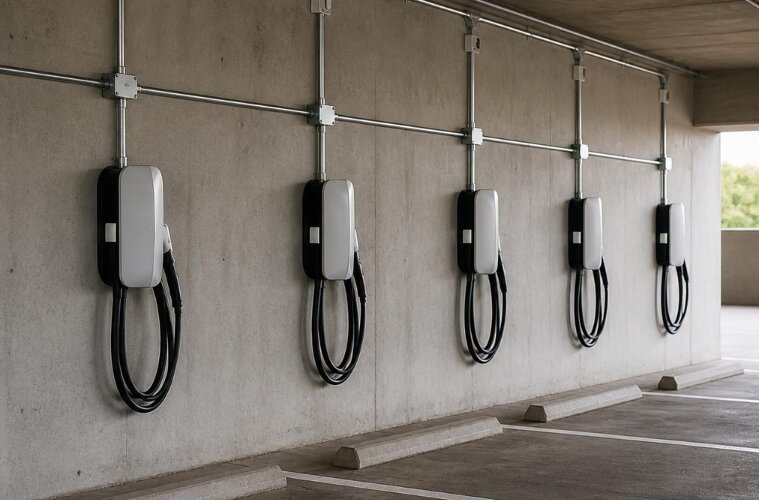
According to the CEC, the projected 478,000 ports represent a significant increase in investment for community-focused infrastructure. Multifamily housing developments—such as apartment complexes and condominiums—are expected to serve as a primary pillar of this expansion. By retrofitting existing residential structures and requiring “EV-ready” infrastructure in new construction, the state aims to normalize plug-in access for millions of residents who do not have the luxury of residential wall-box chargers.
Simultaneously, the electrification of commercial transportation is driving a significant portion of the projected load growth. Fleet depots—ranging from last-mile delivery services to large-scale trucking logistics centers—are increasingly becoming electrified hubs. These sites require high-capacity, heavy-duty chargers that can manage multi-vehicle turnaround times, necessitating significant upgrades to local electrical grids. The CEC report emphasizes that coordinating these utility upgrades with grid capacity planning is essential to prevent localized bottlenecks.
“The scale of this buildout is unprecedented, and it requires a departure from the traditional model of relying solely on public fast-charging stations,” said a spokesperson for the commission. “By focusing on where people live and where fleets operate, we are shifting the focus from ‘refueling’ to ‘opportunity charging’—charging while a vehicle is already parked for the night or for a shift break.”
The challenge ahead is not merely hardware installation but also the logistical coordination of the power grid. Integrating nearly half a million new charging ports necessitates significant investment in local transformers and distribution lines. The CEC is working closely with the California Public Utilities Commission (CPUC) and major utility providers to streamline the interconnection process, which developers have long cited as one of the most expensive and time-consuming phases of project deployment.
Financial incentives remain a core component of this strategy. Through various state programs, including the Clean Transportation Program and federal funding from the National Electric Vehicle Infrastructure (NEVI) formula program, California is providing billions in subsidies to offset the high capital costs associated with installing chargers in multifamily housing. These programs are specifically designed to reduce the economic burden on property owners, who may otherwise view the upfront cost of electrical upgrades as prohibitive.
As the state approaches the 2030 milestone, success will hinge on the integration of these projects into the existing urban fabric. Planners are currently analyzing the most efficient ways to deploy “Level 2” charging—which is slower but more cost-effective—in residential settings, while reserving “Level 3” direct-current fast chargers for high-traffic corridors and commercial logistics. By balancing these different charging speeds, the state intends to manage peak demand on the grid while ensuring that EV owners have reliable, equitable access to energy.
With this projection, California reaffirms its position at the vanguard of the global shift toward electrification. However, the report serves as a reminder that meeting climate mandates is as much about the physical capacity of the electrical grid as it is about the vehicles themselves. The next five years will determine whether the state can successfully transform its infrastructure to match its ambitious policy goals.
Disclaimer: This content is auto-generated for informational purposes only.
Source: Read Original News