








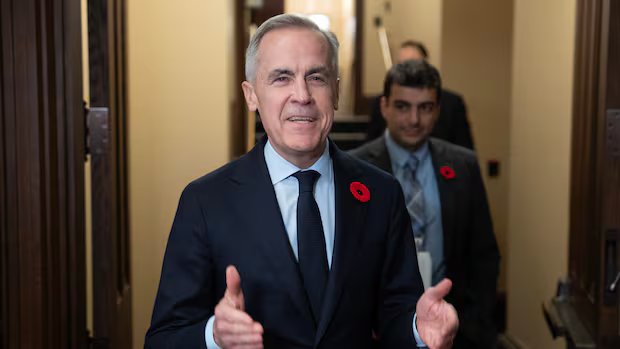
OTTAWA — Prime Minister Mark Carney has unveiled his second federal budget, a sprawling $142-billion spending plan that the government claims will secure Canada’s sovereignty while providing relief to citizens struggling with the high cost of living.
Buoyed by a financial windfall from an oil and gas boom, the government plans to ramp up spending significantly over the next five years. However, Finance Minister François-Philippe Champagne defended the move, citing the need for an “ambitious plan” to navigate global economic instability and trade tensions with the United States.
“The moment is serious,” Champagne said. “We need to do more to build this country.”
The budget introduces a suite of measures aimed at affordability, including a one-time 50 per cent top-up to the GST rebate—rebranded as the “groceries and essentials benefit”—and an $11.2-billion injection to address homelessness. Further support for low-income families will be delivered through an expanded “Build Canada Workers Benefit.”
To drive an “investment supercycle” in the face of international trade pressure, the government is introducing a $36-billion “productivity mega-deduction.” This measure allows businesses to immediately write off capital investments in infrastructure, software, and equipment, aiming to make Canada’s tax regime among the most competitive globally. Additionally, a new Crown-controlled sovereign wealth fund, the “Canada Strong Fund,” will deploy $25 billion into major domestic projects.
The budget also signals a cultural shift, featuring one of the largest investments in Canadian identity in recent history. With the nation’s 160th anniversary approaching, the government is funnelling hundreds of millions into national museums, the CBC, and a $1.5-billion initiative to retrofit hockey rinks across the country.
Despite the influx of revenue, the government projects deficits for the foreseeable future, including $62.3 billion in the 2026-27 fiscal year. Combined with rising interest rates, the cost of servicing Canada’s $1.3-trillion national debt is set to climb sharply, reaching $85.5 billion by 2030-31—an amount that will surpass federal transfers for health and equalization.
Opposition leaders were quick to condemn the plan. Conservative Leader Pierre Poilievre blasted the document as a “costly credit card budget,” warning that the unprecedented borrowing binge would only serve to further inflate the prices of fuel, food, and housing.
NDP Leader Avi Lewis also criticized the budget, arguing that it caters to the “billionaire class” rather than ordinary families. While he praised the investments in homelessness, Lewis insisted the government has failed to address the root causes of the cost-of-living crisis.
Despite the mounting debt charges, fiscal experts remain largely optimistic about the nation’s standing. Sahir Khan of the Institute of Fiscal Studies and Democracy noted that Canada’s “fiscal sustainability is intact,” pointing to the country’s strong GDP growth and top-tier credit rating as signs that the nation remains on stable footing compared to its international peers.
Disclaimer: This content is auto-generated for informational purposes only.
Source: Read Original News