






The Unforeseen Legacy of "Uncle Sam’s Plant Hunters": A Century of Botanical Impact
Miami, FL – A century ago, a dedicated cadre of botanists, affectionately known as "Uncle Sam’s Plant Hunters," embarked on a global quest that would fundamentally reshape American agriculture and inadvertently introduce some of its most persistent environmental challenges. Chronicled in a 1922 Popular Science exclusive interview with then-U.S. Secretary of Agriculture Henry C. Wallace, this small division of the USDA’s Office of Seed and Plant Introduction, under the leadership of 29-year-old botanist David Fairchild, introduced over 400,000 cultivars to the United States. While many of these introductions, such as quinoa, soybeans, mangoes, and Meyer lemons, became staples of American diets and agricultural wealth, others blossomed into notorious invasive species that continue to plague ecosystems today.
The story, adapted from Undesirable: Invasive Species, Humans and Where We All Belong by Amy Crawford, highlights a fascinating, if sometimes problematic, chapter in America’s agricultural development.
A Bold Endeavor: The Plant Hunting Craze
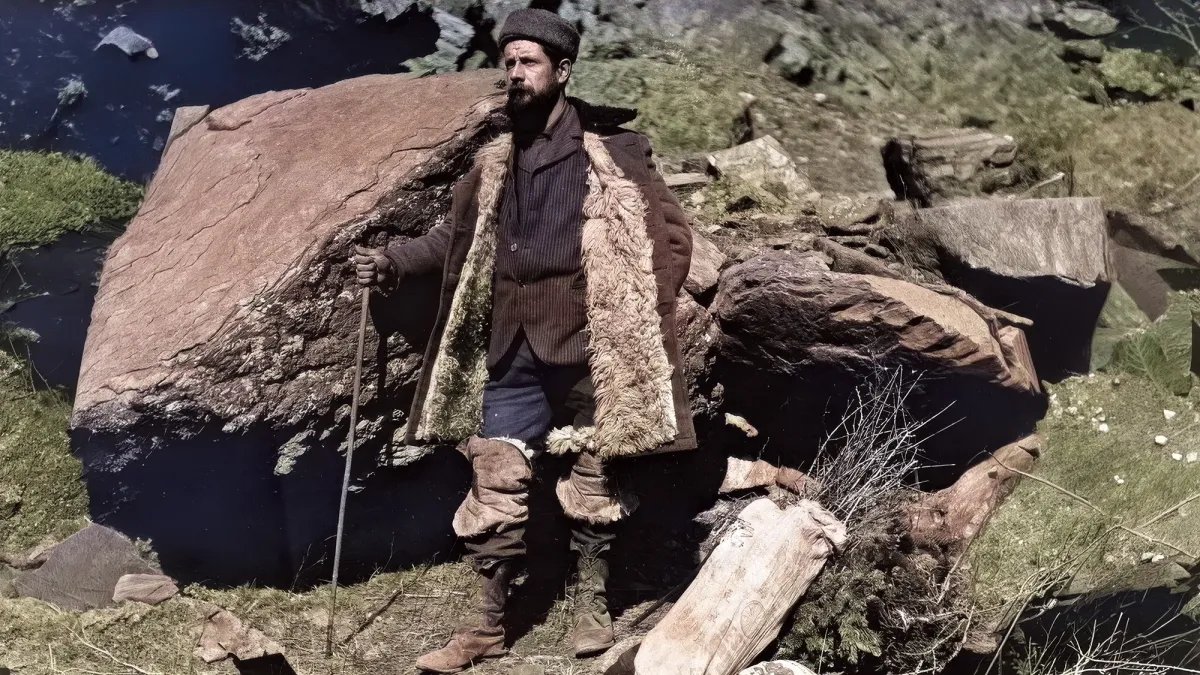
Beginning in 1897, Fairchild’s "plant hunters" were hailed as "Columbuses of the plant world," intrepid explorers braving tropical jungles and remote territories in pursuit of new botanical treasures. Their singular mission, as described by reporter E. L. Jones in 1922, was to enhance "the farm wealth and food resources of the country." This era marked a fervent global "plant hunting craze," with European nations also dispatching botanists to scour continents for new specimens. Scottish botanist George Forrest, for instance, amassed 31,000 specimens from southern China between 1904 and 1932, famously disguising himself to evade hostile guerillas.
Forrest’s 1910 account for The Gardeners’ Chronicle underscores the perils faced by these pioneers: "In the warmer regions, there is danger from miasma [unhealthy odor], fever, animals, and snakes. Not infrequently too, the collector has to seek his specimens among savage or semi-civilized peoples, who, in most instances, strongly resent his intrusion into their midst."
The United States, however, invested unprecedented resources into this botanical exploration. With the American frontier officially settled by the 1890s, farmers across diverse environments, from high plains to semi-tropical regions, eagerly sought hardy, adaptable new crops.
Miami: A Tropical Garden of Experimentation
Fairchild, with a particular passion for tropical fruit, established the first USDA Plant Introduction Garden in Miami. This experimental hub, initially a modest six acres in what is now downtown Miami, was dedicated to cultivating a vast array of plants, trees, and vines. As Fairchild recollected in his 1938 memoir, The World Was My Garden, it was "the first land available to us where we could plant anything we wanted." Among his earliest successes was the "alligator pear," now universally known as the avocado.
The Unintended Consequences: A Legacy of Invasive Species
While countless beneficial species emerged from this initiative, some introductions proved to be significant ecological missteps. In 1903, the USDA brought the Chinese tallow tree to the US, hoping to foster a new fuel oil industry. Planted in Texas, this fast-growing hardwood has since transformed native prairies and marshlands across the Gulf states into tallow tree monocultures.
Similarly, the Australian melaleuca, imported in 1914 for its rapid growth and papery bark, was later promoted by the U.S. Army Corps of Engineers to stabilize Everglades levees. Within a century, melaleuca had overrun half a million acres of South Florida, fundamentally altering its unique ecosystem.
Perhaps the most infamous of Fairchild’s imports was kudzu, a vine from Japan. Fairchild himself lived to regret its introduction, describing how seedlings he planted on his Maryland estate "all took root with a vengeance, grew over bushes, and climbed the pines, smothering them with masses of vegetation which bent them to the ground and became an awful, tangled nuisance."
The Miami Plant Introduction Garden itself outgrew its initial sites, eventually relocating to Chapman Field, an abandoned World War I airbase. Here, new species continued to arrive through the 1960s at an astonishing rate of 500 species annually. This bustling facility, expanding to 125 acres, was separated from the delicate Everglades ecosystem by little more than a chain-link fence.
A Shifting Paradigm: From Introduction to Conservation
This permeable barrier, and the philosophy it represented, now belongs to a bygone era. In the decades following Fairchild’s tenure, the USDA’s approach to non-native plants and animals underwent a dramatic reversal. Today, the intentional global shipping of thousands of species is anathema to modern conservation principles. The USDA now allocates nearly $2 billion annually to prevent, detect, and manage invasive species.
While Fairchild’s plant hunters are rightfully associated with the origins of many invasive species, their legacy is a complex tapestry of both immense benefit and unintended harm. We owe them for the Meyer lemons, pistachios, kale, mangoes, quinoa, and the now-ubiquitous avocado that enrich our daily lives.
Were David Fairchild alive today, he might express dismay at the ecological havoc wrought by some of his introductions. Yet, he would undoubtedly smile at the global popularity of avocado toast, a testament to the enduring impact of his adventurous botanical pursuits.
For more on these intriguing stories of scientific exploration and innovation, delve into the That Time When series from Popular Science.