







Beyond the Nausea: How Google’s New Motion Assist Tech Is Changing Road Trips
For many, the simple act of checking an email or reading a notification while riding in a moving vehicle is a recipe for instant physical discomfort. The culprit is sensory conflict: your eyes are locked on a static screen, while your inner ear registers the complex physical reality of the car accelerating, braking, and navigating turns. This disconnect is the primary driver of motion sickness—but Google may have finally found the digital antidote.
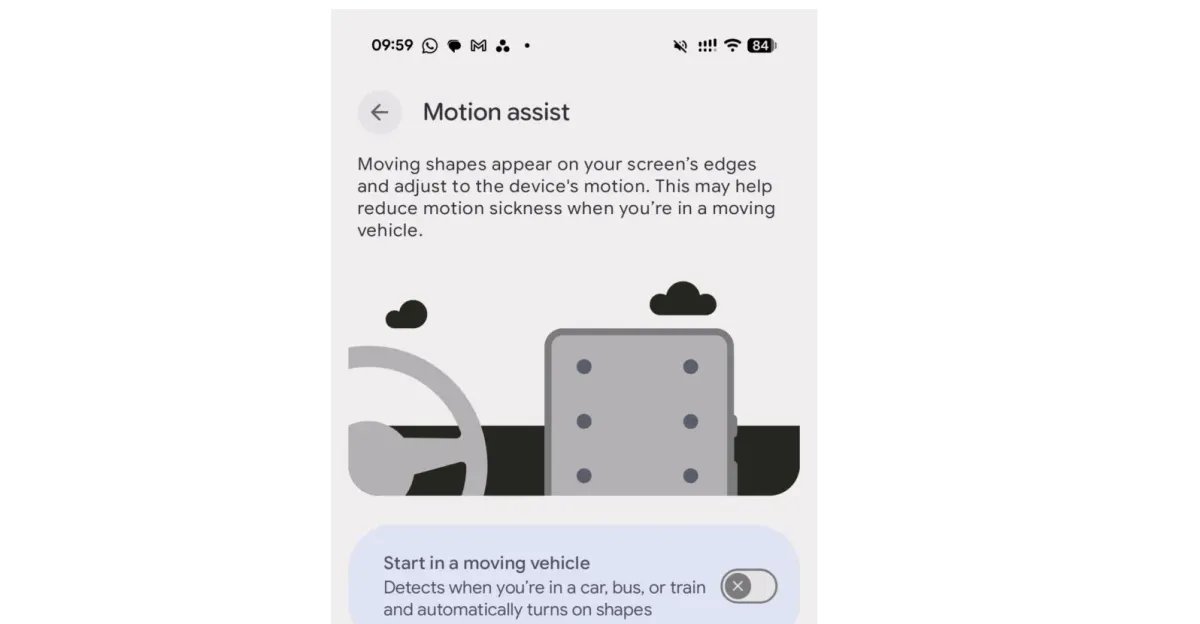
The solution lies in a clever, science-backed feature known as Motion Assist. By leveraging the sophisticated accelerometer and gyroscope sensors packed into modern smartphones, the software generates a series of subtle visual cues—often referred to as “magic dots”—that appear along the periphery of your display.
How It Works
The system operates on a simple principle of synchronization. When your vehicle turns right, the dots on your screen sweep to the left; when the car brakes, they slide forward. By introducing these peripheral cues, the software bridges the gap between what your eyes perceive and what your inner ear feels, effectively tricking the brain into settling the sensory mismatch that leads to nausea.
The real-world application of this technology has proven to be a game-changer for those who need to work or stay connected on the go. For frequent travelers and “vanlifers” who rely on mobile devices for work, the feature is more than a gimmick—it’s an essential tool. Users who previously could not stomach looking at a screen while in motion are reporting that the feature allows them to read, write, and navigate in comfort, with many early adopters calling the results “transformative.”
Customizable and Discreet
Understanding that different users have different sensitivities, Google has designed the feature to be highly configurable. Users can adjust the opacity of the motion indicators, ensuring they are prominent enough to work but subtle enough not to distract from the content on the screen. Furthermore, the system offers a variety of shapes and colors to suit personal preferences.
Accessibility is also a priority; the feature can be configured to activate automatically the moment the device detects it is in a moving vehicle, or it can be manually engaged via a dedicated tile in the Quick Settings menu for those who prefer more control.
Availability
While the technology is currently rolling out, it is worth noting that deployment can be staggered. If you are looking to enable the feature, navigate to your Google Settings, select “Your Profile,” and check under “All Services.”
While not every device has received the update just yet, the promise of a nausea-free digital experience is a significant leap forward in mobile usability. As more users gain access to Motion Assist, it is likely to become a standard expectation for anyone who frequently travels as a passenger.