









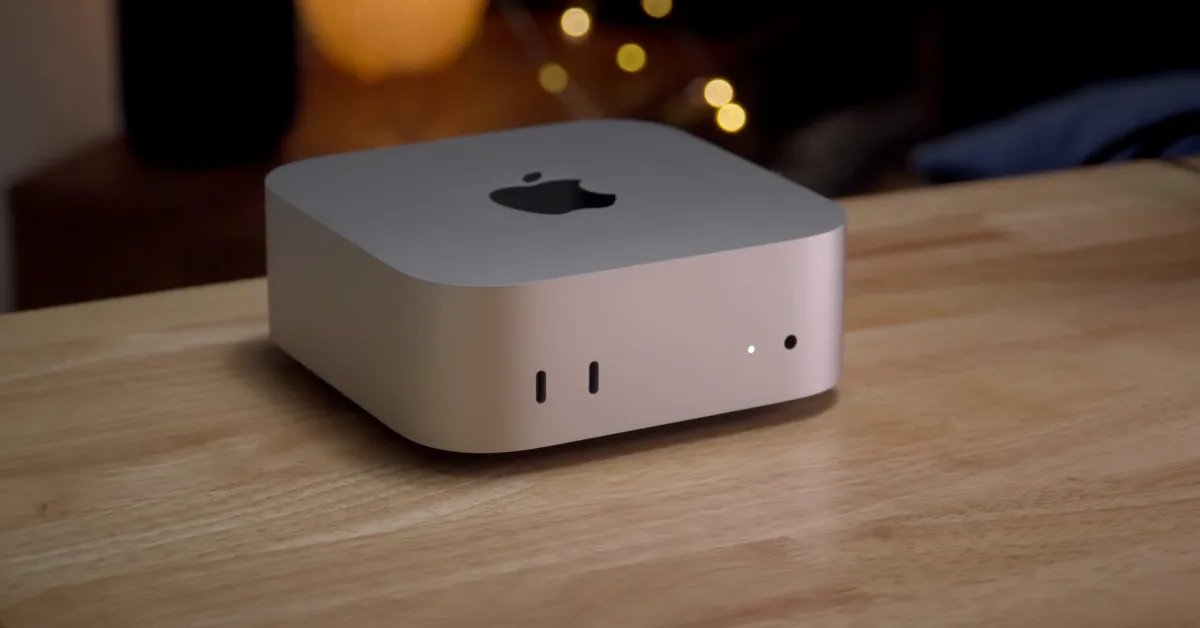
Apple is preparing to enter the professional local artificial intelligence space with a new software project titled Harbor. Recent discoveries regarding the internal development of this application suggest that Apple intends to simplify the deployment of large-scale, open-weight AI models for Mac users. By acting as a private inference server, Harbor aims to bridge the gap between complex enterprise-grade machine learning infrastructure and the accessibility of consumer-grade hardware.
Transforming Hardware into Private Infrastructure
The primary function of Harbor is to facilitate local AI inference on Apple silicon, ensuring that sensitive data remains entirely within the user’s hardware. By circumventing the need for cloud-based APIs, the application provides a security-focused environment for processing private datasets. This approach is increasingly sought after by researchers, developers, and data scientists who require the power of high-end language models but operate under strict privacy compliance requirements. Harbor eliminates the risks associated with third-party data transmission, positioning the Mac as a secure node in an organization’s computational architecture.
Simplifying Cluster Management
One of the most technically demanding aspects of running large language models (LLMs) is the requirement for massive amounts of memory. Typically, sophisticated models cannot fit into the memory capacity of a single consumer device. Harbor addresses this by enabling the clustering of multiple Mac computers over Thunderbolt 5. By pooling the unified memory of several machines, the application creates a distributed inference resource. The software handles the complex orchestration of data transmission across these connected devices, essentially abstracting away the need for advanced network engineering. For the end user, this means the ability to run models that were previously inaccessible on single-machine configurations, effectively allowing a user to build a scalable server rack out of standard desktop Macs.
Streamlined User Experience and Setup
Apple’s philosophy of minimizing friction is evident in the design specifications found for Harbor. The application seeks to automate the detection of hardware, allowing multiple Macs to join a cluster without manual configuration or complex command-line intervention. By removing the need for deep infrastructure expertise, Harbor makes local AI orchestration accessible to a broader user base. The app serves as a centralized hub for downloading, loading, and managing open-weight models, ensuring that users can focus on their specific development tasks rather than the underlying software plumbing required to initiate a model.
The Technical Role of Thunderbolt 5
A key catalyst for the feasibility of this project is the integration of Thunderbolt 5. High-speed connectivity is vital for clusters because the performance of distributed inference is often throttled by the bandwidth between compute nodes. Thunderbolt 5 provides the necessary throughput to handle large volumes of data moving across the cluster, ensuring that the latency between distributed memory banks is minimized. This hardware-software synergy allows Apple to offer a coherent, high-performance experience that rivals dedicated server environments while maintaining the form factor and energy efficiency associated with their desktop hardware.
Strategic Implications for Apple Silicon
The development of Harbor signals a shift in how Apple perceives the professional utility of its hardware lineup. As the company continues to advance its custom silicon, particularly with M-series chips that feature powerful Neural Engines and high-bandwidth unified memory, it has become uniquely positioned to challenge traditional server hardware in specific AI workloads. Harbor essentially acts as the software layer that unlocks this potential for power users. By providing a bridge between raw hardware capability and functional AI deployment, Apple is expanding the use-case scenarios for the Mac mini and Mac Studio, transforming them from general-purpose desktop computers into specialized tools for the modern artificial intelligence era.
While Harbor is currently undergoing a private preview phase under Apple’s Claris brand, the implications of its release are significant for both hobbyists and enterprise developers. If successful, it could trigger a trend toward localized, decentralized AI processing, reducing reliance on expensive and potentially insecure remote server farms. As the platform transitions from private testing to a public launch, it will be closely watched by the developer community to see how effectively it scales with various open-source models and whether it sets a new standard for local AI deployment.
Disclaimer: This content is auto-generated for informational purposes only.
Source: Read Original News