








When it comes to the Indian cinematic landscape, few stories carry the weight, reverence, and narrative complexity of the Ramayana. For years, filmmakers have wrestled with the monumental challenge of bringing the epic to the silver screen, often finding themselves caught between the rigidity of tradition and the demands of modern visual spectacle. Yet, with Nitesh Tiwari’s Ramayana: Rise of a Legend, the conversation has shifted. The latest validation comes from none other than the “Dream Girl” herself, Hema Malini, who recently stepped out of the theatre with a glowing, and perhaps somewhat unexpected, endorsement.
A Skeptic Turned Believer: Hema Malini’s Take
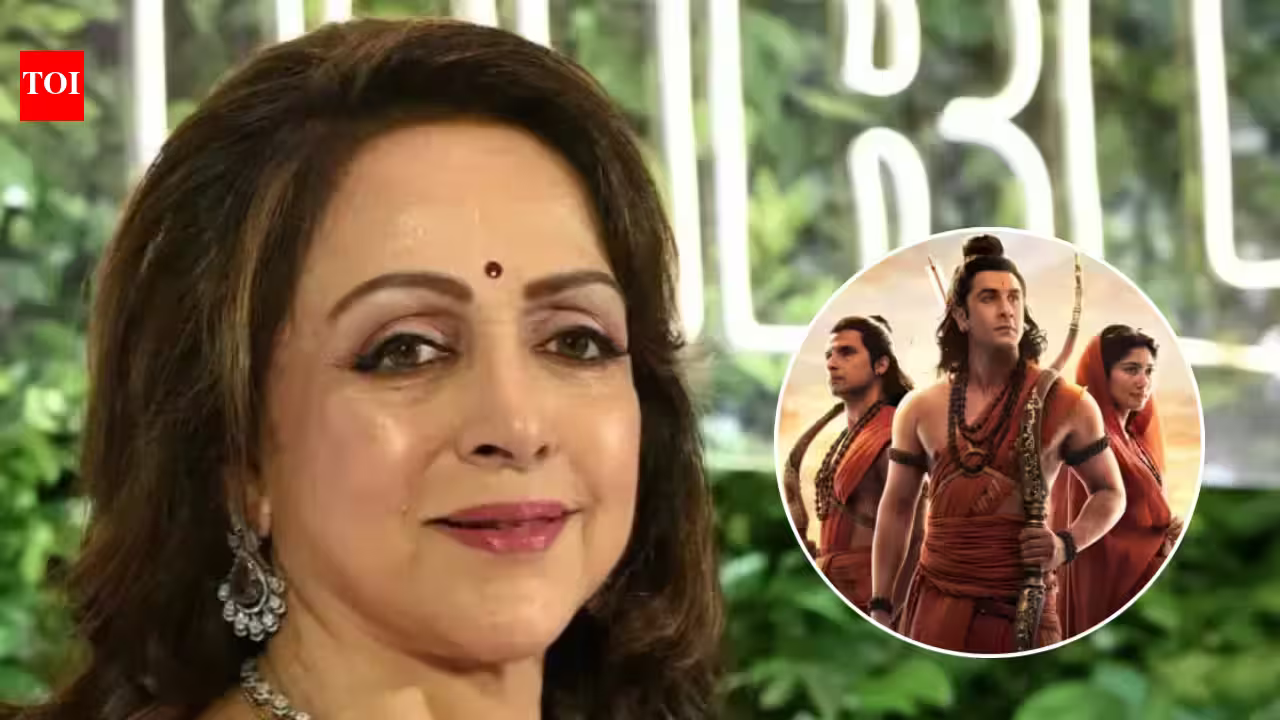
In an industry where the retelling of mythological tales is often met with microscopic scrutiny, veteran actor Hema Malini admitted she walked into the theatre with her guard up. Given that the Ramayana is woven into the very fabric of Indian childhoods, the potential for creative disappointment is high. “As it was an epic, I went with least expectations as there is just so much one can tweak in a narration that even young kids are aware of,” Malini shared via an Instagram post that has since garnered significant traction.
However, the experience of watching the film proved to be a turning point for the veteran star. She expressed that she was “pleasantly surprised at the fabulous presentation” and admitted that the film’s visual ambition, specifically the “mind-blowing special effects,” left her breathless. For a performer who has witnessed the evolution of Indian cinema over several decades, such high praise for the film’s technical prowess suggests that Tiwari has managed to strike a delicate balance between respecting the source material and embracing cutting-edge spectacle.
The Power of ‘Apt’ Casting
The central debate surrounding any adaptation of the Ramayana inevitably lands on the casting. Finding actors who can embody the grace of Rama, the resilience of Sita, or the menacing magnetism of Ravana is a Herculean task. In Rise of a Legend, the chemistry and screen presence of Ranbir Kapoor, Sai Pallavi, and Yash have become the heartbeat of the production.
Hema Malini specifically lauded the “apt casting of the protagonists,” noting that the audience’s reaction was palpable. She observed that the theatre-goers were not just watching a movie; they were “transported as they were to another period, and made to participate in the events that unfolded.” This immersion is perhaps the highest compliment a historical epic can receive. When the suspension of disbelief is so complete that the audience feels like a participant in the narrative, the director has succeeded where many before him have faltered.
Beyond the Lead Trio: Why Mukesh Chhabra is Winning
While the leads carry the star power, the internet has been abuzz with praise for casting director Mukesh Chhabra’s bold choices for the supporting roles. It isn’t just the headliners making waves; the ensemble cast has been highlighted as a major pillar of the film’s success.
Rapper and cultural tastemaker Badshah recently took to X to vocalize what many in the industry are whispering: that the casting is nothing short of a “masterstroke.” He specifically singled out the choices for the supporting cast, noting, “Lara [Dutta] for Kaikeyi and Ravi Dubey for Lakshman was a master stroke.” By blending established A-listers with powerhouse performers from the television and streaming circuits, the film has managed to create a textured, lived-in world where every character feels essential to the tapestry of the story.
Bridging Technology and Tradition
One of the most fascinating aspects of Hema Malini’s critique was her emphasis on the “latest technical innovations” employed by the production team. For a long time, Indian mythological films were hindered by practical limitations that often looked dated. However, Tiwari, backed by producers Namit Malhotra and Yash, has clearly leaned into a global visual language.
By utilizing modern VFX, the film manages to elevate the mythological narrative into a cinematic experience that feels both ancient and contemporary. It creates a “unique experience for the Indian audience,” which is essential in a market that is increasingly exposed to high-budget international fantasy epics. The film doesn’t just narrate a story; it presents a world—one where the mystical elements of the epic feel tangible rather than cartoonish.
A Legacy in the Making: What’s Next?
Ramayana: Rise of a Legend is not merely a standalone project; it is the first half of a two-part grand design. Having released on November 5, 2026, the film has set a high bar for the ambitious concluding chapter expected in 2028. With Sunny Deol bringing a fierce, grounded energy to the role of Hanuman and the wider cast providing the emotional scaffolding for the journey, the franchise is currently positioning itself as the definitive version of the story for a new generation.
When icons of the stature of Hema Malini join the chorus of praise, it serves as a powerful seal of approval. It suggests that Ramayana: Rise of a Legend has managed to transcend the cynical “expectations vs. reality” trap. As the film continues its theatrical run, the discourse surrounding it has shifted from “can they pull this off?” to “how will they top this in the sequel?”
In a landscape often fragmented by polarized opinions and harsh social media critiques, Nitesh Tiwari’s vision appears to be one of the rare instances where artistry, technology, and a deep-seated respect for the source material have converged. For now, the audience seems to be in agreement with the industry veterans: the epic has finally found its rhythm.
Disclaimer: This content is auto-generated for informational purposes only.
Source: Read Original News