








The Technical Evolution of the iPad Mini Display
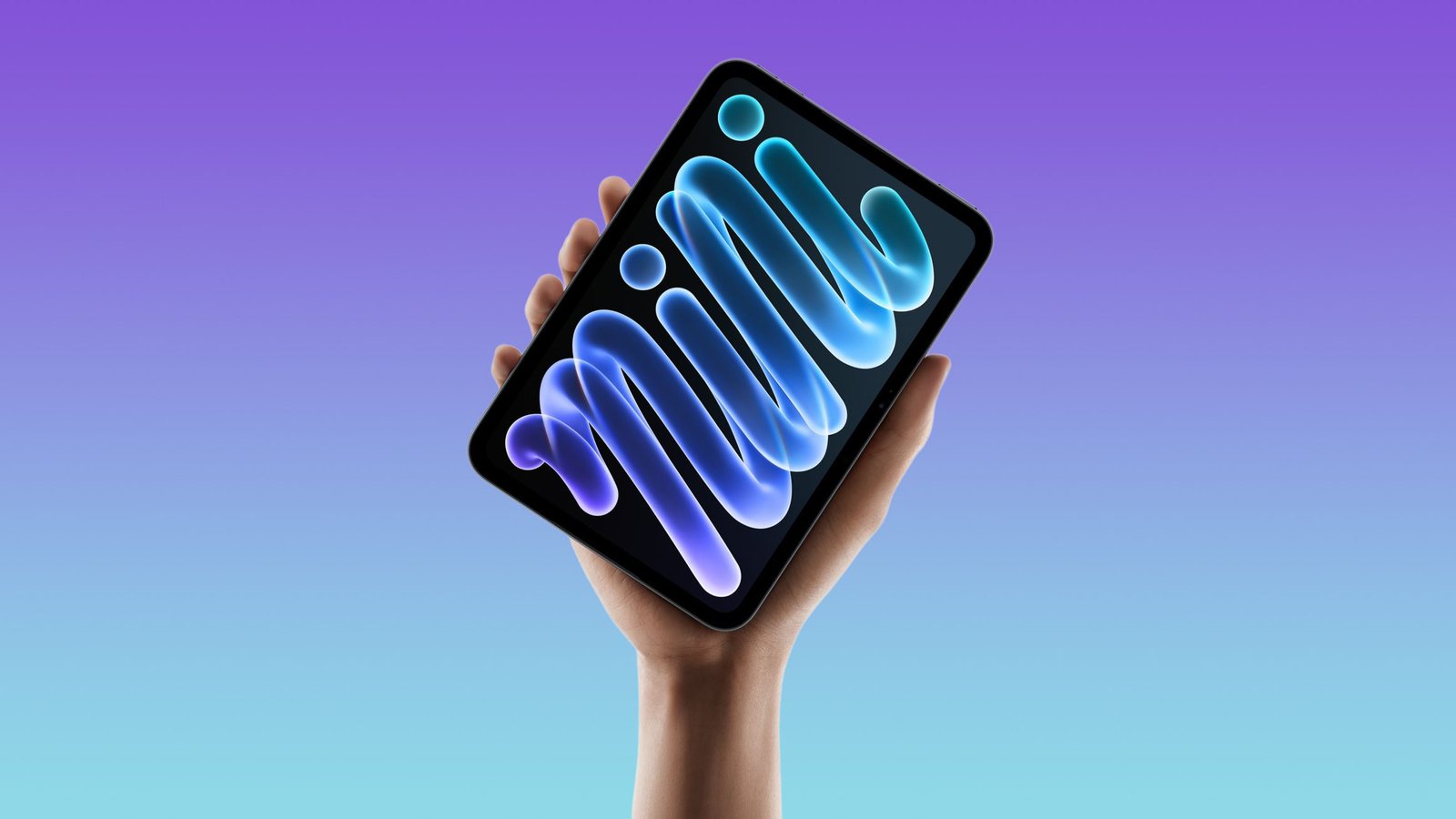
Apple recently introduced the latest iteration of the iPad mini, marking a significant hardware transition by moving from traditional LCD technology to an OLED panel. While this upgrade brings substantial improvements in contrast, color accuracy, and overall luminance, it has also sparked technical discourse regarding the omission of ProMotion, Apple’s adaptive 120Hz refresh rate technology. In the current product lineup, ProMotion remains a defining hardware distinction reserved for the premium iPad Pro series, leaving the new iPad mini locked at a 60Hz refresh rate.
Despite the absence of a high-refresh-rate panel, Apple’s hardware design team emphasizes that the visual experience is defined by more than a singular specification. David Pakula, Apple’s vice president of hardware design, recently articulated the technical rationale for this decision, highlighting the inherent physical properties of OLED technology. The primary improvement lies in pixel response time, which measures how quickly a pixel can transition from one state to another.
Understanding Pixel Response and Motion Clarity
To evaluate the visual output of the new display, one must distinguish between the refresh rate and pixel response time. The refresh rate, measured in Hertz, refers to how many times per second the display updates the entire image. Pixel response time, measured in milliseconds, refers to the time a single pixel takes to shift from one color or brightness level to another.
Standard LCD panels, which rely on a liquid crystal layer and a constant backlight, are susceptible to a phenomenon known as ghosting or motion blur. This occurs because the liquid crystals require a finite amount of time to physically rotate and block light. In contrast, OLED pixels are self-emissive, meaning each individual pixel generates its own light. Because there is no liquid crystal layer to manipulate, these pixels can transition between states almost instantaneously.
According to Apple, the OLED panel in the new iPad mini provides pixel response times that are an order of magnitude faster than those found in the preceding LCD-based models. This structural improvement inherently reduces motion blur, providing a cleaner, more stable image during fast-paced scrolling or animations. Apple posits that this inherent hardware speed compensates for the lower refresh rate, delivering an experience that feels fluid to the user despite the 60Hz cap.
Technical Advancements in Luminance and Contrast
Beyond the improvements in pixel response, the shift to OLED fundamentally alters the display’s light management capabilities. The previous iPad mini model reached a peak brightness of 500 nits. The new OLED panel elevates this significantly, offering 600 nits for standard dynamic range content and an impressive peak of 1,200 nits for high dynamic range (HDR) material.
The most dramatic technical change, however, is the contrast ratio. Because LCD displays utilize a backlight that remains active even when showing dark colors, they often struggle with deep blacks, which can appear as dark gray due to light bleed. OLED technology allows for “true black” by effectively powering off individual pixels. This results in an industry-standard 2,000,000:1 contrast ratio. This capability allows for more precise highlights and deep shadows, which improves the visibility of complex imagery and benefits high-end photography and video production workflows.
Use-Cases and Practical Performance
The design of the iPad mini emphasizes portability and specialized productivity. By maintaining a high pixel density of 326 pixels per inch (PPI) and incorporating P3 wide color support, the device remains a high-fidelity window for creative tasks. Users who utilize the device for mobile photo editing, color grading, or high-definition media consumption will benefit from the OLED panel’s improved color gamut and HDR capabilities.
The reduction in motion blur provided by the faster pixel response time also serves users who perform rapid navigation of large files or web interfaces. While 120Hz ProMotion remains the benchmark for those who require the most responsive input latency for professional illustration or high-frame-rate gaming, the new OLED implementation offers a tangible improvement for general productivity and media consumption. The display effectively bridges the gap between the limitations of legacy LCD technology and the top-tier hardware found in the professional-grade iPad Pro.
Strategic Hardware Segmentation
Apple’s decision to withhold ProMotion from the iPad mini highlights the company’s long-standing strategy of product tiering. By reserving specific display features for the iPad Pro, the company distinguishes its professional-grade hardware from the more consumer-focused or portable lines. The iPad mini is marketed as a compact companion device, and the integration of OLED serves to enhance its primary utility—portability and sharp, high-contrast imagery—without encroaching on the technical specifications prioritized by professional artists and high-end power users.
The new iPad mini, which is scheduled for release on November 6, represents a calculated evolution of its display technology. By prioritizing the superior contrast and response times of OLED over the high-frequency refresh rates of ProMotion, Apple has balanced technical advancement with current product positioning. For the average user, the improvement in color depth, pixel transition speed, and overall brightness creates a more versatile display that excels in the varied environments where a portable tablet is typically deployed. The device remains a significant step forward for the form factor, even while specific pro-level features remain exclusive to the higher-cost tiers of the tablet catalog.
Disclaimer: This content is auto-generated for informational purposes only.
Source: Read Original News