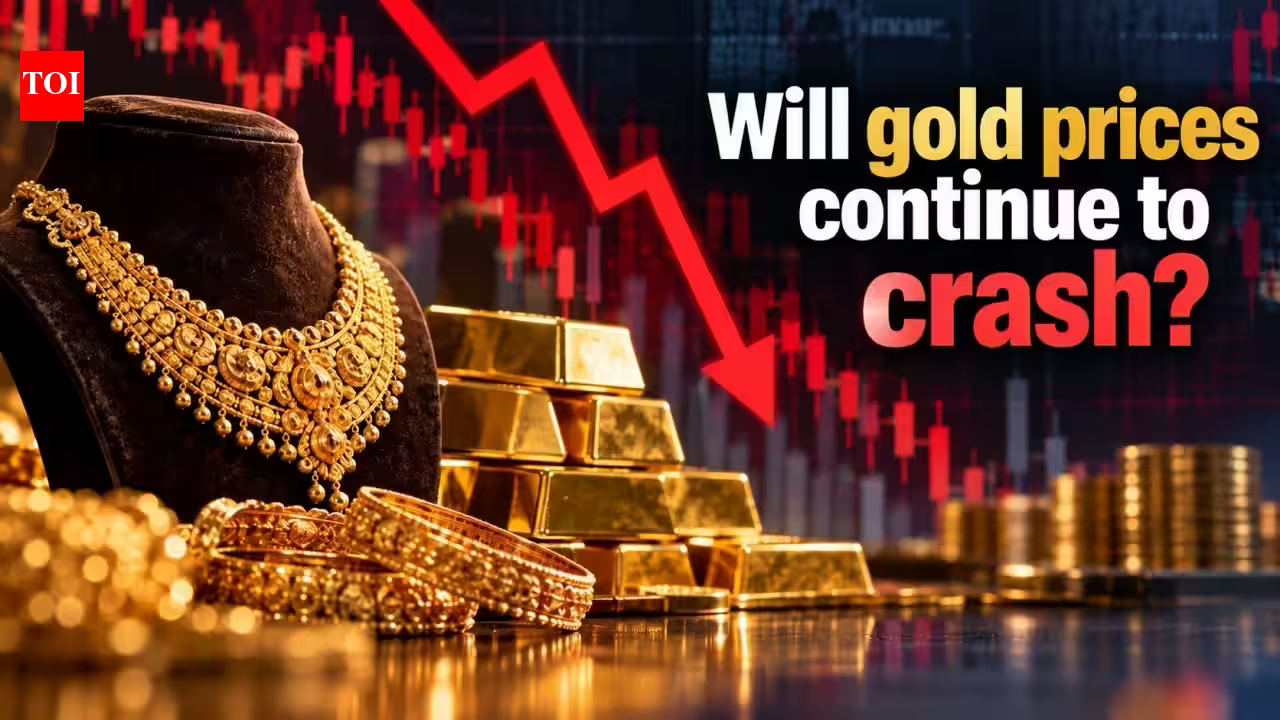









Navigating the Current Volatility in Precious Metals
The precious metals market, specifically gold and silver, is navigating a period of pronounced instability. Following a week of significant downward corrections on the Multi Commodity Exchange (MCX) and international Comex markets, investors are re-evaluating their positions in response to a complex web of macroeconomic pressures. Gold, traditionally viewed as a reliable store of value, has faced substantial selling pressure as institutional investors engage in profit-booking. This shift in sentiment is largely driven by the interplay between a strengthening US dollar and climbing bond yields, both of which reduce the attractiveness of non-yielding assets like bullion.
The decline in prices has been steep, with domestic futures seeing sharp corrections. This movement underscores the sensitivity of the market to external global shocks and domestic policy shifts. For the Indian investor, this volatility creates a challenging environment where traditional hedges are temporarily failing to protect portfolios against broader market corrections. Understanding the convergence of these factors—ranging from Federal Reserve monetary policy cycles to geopolitical friction in West Asia—is essential for those managing commodity-linked risk in the current fiscal quarter.
The Influence of Monetary Policy and Domestic Implications
For the Indian market, the focus remains firmly fixed on the Reserve Bank of India’s (RBI) upcoming monetary policy decision. Markets have priced in expectations of a 25-basis-point rate hike, a move aimed at curbing inflationary pressures. An increase in domestic interest rates typically acts as a double-edged sword for precious metals. While higher rates often dampen consumer demand for gold due to increased borrowing costs and better returns on fixed-income instruments, the RBI’s posture remains critical in determining the value of the Indian Rupee against the US dollar.
A hawkish stance from the central bank may provide some support to the domestic currency, which could potentially buffer the price of imported gold. However, the broader trend is governed by global liquidity cycles. As global central banks—most notably the US Federal Reserve—maintain a stance of monetary tightening to combat sticky inflation, the opportunity cost of holding gold remains high. Investors are closely monitoring the services PMI (Purchasing Managers’ Index) readings and consumer sentiment indicators. These metrics serve as proxies for the health of the broader economy; if they suggest continued resilience, the likelihood of prolonged high interest rates increases, which would likely keep gold prices under further downward pressure.
Geopolitics and the Safe-Haven Premium
Geopolitical developments, particularly the US-Iran situation, continue to act as a significant wildcard for commodity prices. Historically, gold serves as a primary beneficiary of “safe-haven” buying during times of international instability. However, the recent market performance suggests that the “war-risk premium” is no longer a guaranteed floor for prices. As reports surfaced regarding stabilized oil flows from West Asia, some of the urgency that previously propelled bullion prices higher has dissipated.
This disconnect between geopolitical risk and price performance indicates that market participants are currently prioritizing technical and macro-economic fundamentals over conflict-related fears. While a major, unforeseen escalation in regional hostilities could theoretically reignite safe-haven demand, the current market reality is one of cautious optimism regarding supply chains. For precious metals to sustain a recovery, it would require a significant shift in this risk perception. Until such a shift occurs, investors should anticipate that headlines concerning West Asian tensions will only trigger short-term, reflexive price movements rather than a sustained upward trend.
Currency Dynamics and the Strengthening Dollar
The relationship between the US dollar and precious metals remains inverse and highly reactive. A stronger dollar makes gold more expensive for holders of other currencies, effectively suppressing global demand. The current resilience of the greenback, buoyed by relatively attractive US Treasury yields, has forced gold to cede the gains it achieved during softer employment data periods. In the domestic context, the dollar-rupee exchange rate is a critical variable. Since India imports a significant portion of its gold requirements, the landed cost is directly affected by the strength of the dollar.
Analytical projections suggest that if the US Dollar Index sustains its position above the 102 level, the pressure on international gold prices will likely remain intense. This environment of a “stronger-for-longer” dollar creates a ceiling for gold, irrespective of the metal’s status as a long-term hedge against inflation. Investors observing the MCX gold futures should pay close attention to the correlation between the dollar index and treasury yields. A reversal in either of these indicators would be the most immediate signal of potential relief for bullion, potentially allowing it to recover from recent multi-percentage-point losses.
Strategic Outlook for Commodity Investors
Looking ahead, the market is characterized by significant two-way movement, with no clear trend established for the medium term. The sharp decline in silver—which has been more pronounced than that of gold—further complicates the outlook. As an industrial metal, silver is heavily reliant on manufacturing activity and global economic growth. The weakness observed in silver reflects a broader correction across industrial commodities, suggesting that market participants are anticipating a cooling in global industrial demand.
For market participants, the current climate demands a disciplined approach. The strategy of aggressive accumulation during dips has proven costly in the recent past, as the “floor” for gold prices has shifted downward. A more measured analysis of the macroeconomic data—specifically US consumer sentiment and trade balances—is required to time entry points effectively. While the fundamental drivers of long-term gold demand remain intact, the immediate path is one of correction. Investors should be prepared for continued volatility as the market digests the implications of the RBI’s policy shift and the eventual stabilization or escalation of international geopolitical tensions. Diversification remains the most prudent defense against the specific risks currently impacting the bullion sector.
Disclaimer: This content is auto-generated for informational purposes only.
Source: Read Original News