









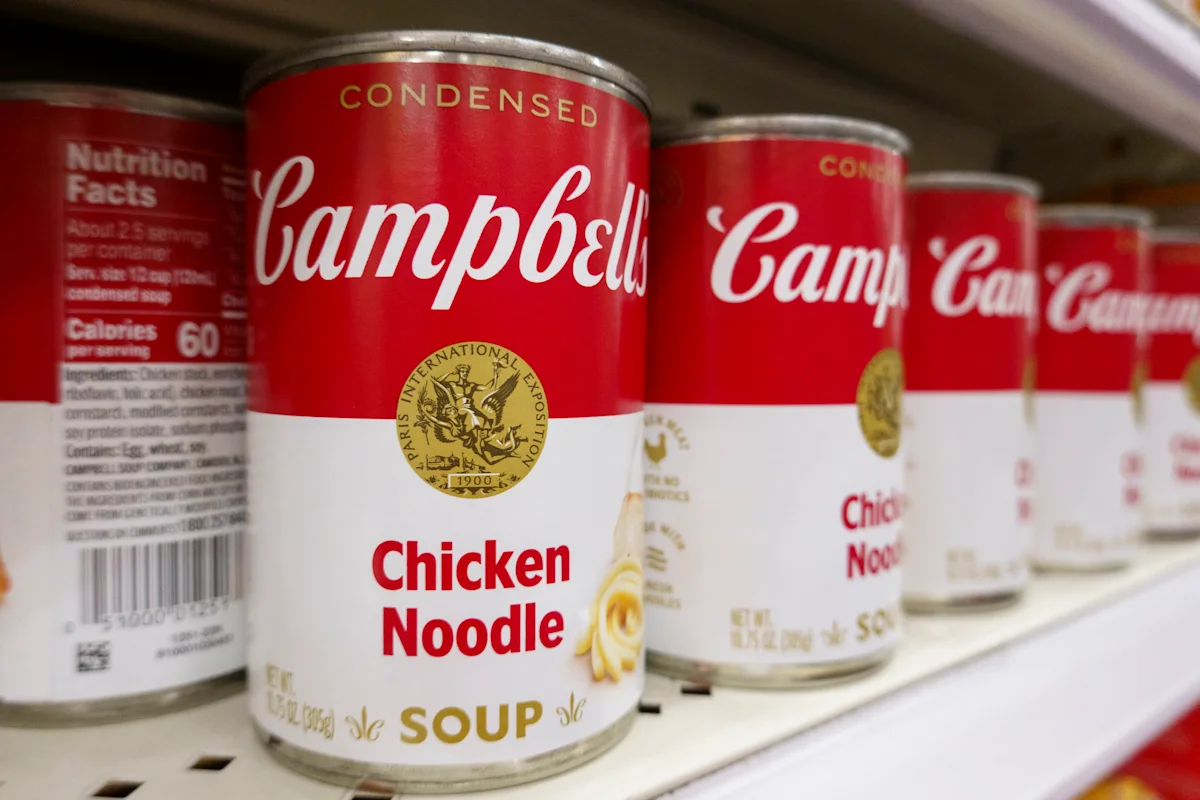
Campbell’s Stock Plunges as Food Giant Slashes Dividend Amid Financial Struggles
Shares of The Campbell’s Company (CPB) fell sharply on Thursday morning, tumbling 6% after the food manufacturer reported a dismal set of financial results for its fiscal fourth quarter. The sell-off was triggered by a combination of declining sales, lower profit margins, and a significant reduction in the company’s dividend payout.
A Steep Decline in Financial Performance
Campbell’s latest earnings report highlighted the mounting pressure on major food producers. For the fourth quarter, the company saw net sales slip 8% to $2.1 billion. Profitability also took a major hit, with gross profit margins contracting by 310 basis points to 27.3%. Perhaps most concerning to investors was the 37% drop in adjusted earnings per share, which fell to $0.39.
Commenting on the results, Mick Beekhuizen, Campbell’s President and CEO, noted that the company is currently navigating a difficult environment defined by “top-line softness and inflation-driven margin headwinds.”
Dividend Reset and Debt Reduction
In an effort to stabilize its financial position, the company’s board has approved a 36% cut to its quarterly dividend, bringing it down to $0.25 per share.
CEO Beekhuizen framed the move as part of a strategic “reset” designed to strengthen the company’s balance sheet. By reducing the dividend, the organization aims to accelerate debt reduction, providing more flexibility as it navigates ongoing economic volatility.
Industry-Wide Inflation Pressures
Campbell’s struggles are emblematic of a broader crisis facing the food manufacturing sector. Companies throughout the industry have been squeezed by rising input costs, with surging prices for essential agricultural commodities—including wheat, corn, and sugar—eating into bottom lines. These inflationary pressures have forced many companies to reconsider their cost structures and long-term capital allocation strategies.
Looking Ahead: A Roadmap for Savings
To combat these challenges, Campbell’s is launching a major cost-cutting initiative. Starting in fiscal 2027, the company plans to implement a program targeting $500 million in total cost savings by fiscal 2030.
The market has reacted skeptically to these developments, with Campbell’s stock now down approximately 15% year-to-date. As the company works to pivot, investors will be closely watching whether these cost-cutting measures and debt-reduction efforts can restore shareholder value in a high-cost environment.