







Technical Infrastructure Failures Impacting Season 15
The highly anticipated launch of Diablo 4’s Season 15, titled Season of Hell’s Legacy, encountered significant technical obstacles on September 15, 2026. Designed to be the cornerstone of the franchise’s 30th-anniversary celebration, the update was intended to introduce a wealth of new content and mechanics. However, an onslaught of login errors quickly destabilized the experience for a large portion of the player base.
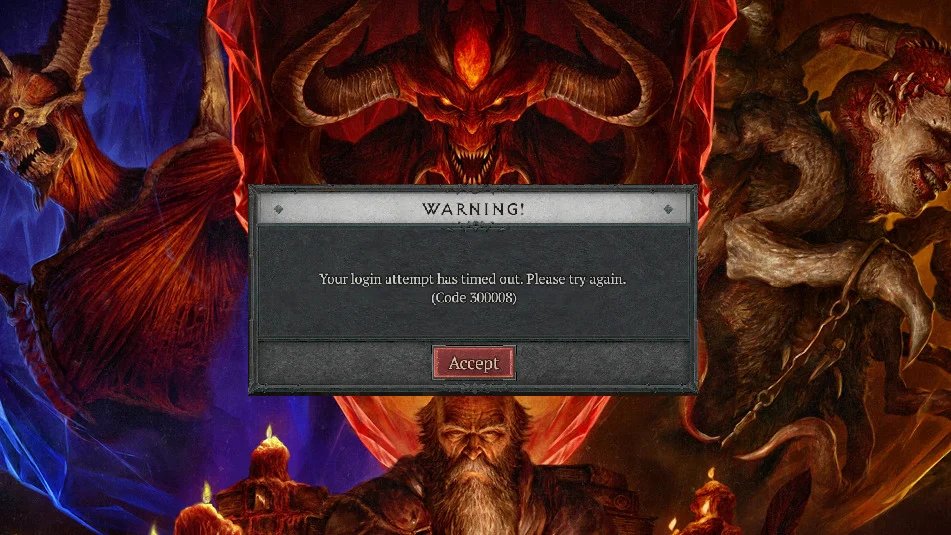
The primary technical failure manifested as recurring error codes, most notably 3000008 and 3000006. These codes, which typically signify a failure in authentication or server-side synchronization, prevented users from establishing a stable connection to the Blizzard servers. The magnitude of these connection failures forced the development team to halt the seasonal rollout officially. While some users managed to access the game briefly, the pervasive nature of the connection errors necessitated a full delay of the seasonal content to ensure data integrity and server stability.
The Rebirth Feature and Data Synchronization Errors
Beyond the widespread login failures, developers faced a critical data management issue regarding the newly introduced “Rebirth” feature. This mechanic was intended to allow players to transition existing characters from the standard, or Eternal, realm into the new seasonal environment. However, reports emerged that this feature failed to trigger the required server-side resets, leaving characters with their previous Paragon Board progress, gold, and inventory intact.
In a seasonal structure, these resets are essential to maintain a level playing field and preserve the internal economy of the game. When a feature intended to clear character state fails to perform its logical operation, it creates a desynchronization between the client’s local state and the server’s authoritative database. Blizzard’s decision to delay the season suggests that the development team is addressing a deeper, systemic error in the deployment script that governs character migration and progression initialization. Consequently, any progress achieved by the small subset of players who managed to log in during the initial window is likely to be rolled back to prevent further corruption.
Content Highlights and Legacy Uniques
The Season of Hell’s Legacy was crafted to serve as a tribute to the history of the franchise, specifically honoring three decades of Diablo development. The content package features a new questline centered on the character Deckard Cain, a central figure in the series’ lore. These quests were designed to guide players through a narrative reconstruction of historical events from previous iterations of the game, adapted for the engine utilized by Diablo 4.
Additionally, the update introduces nine new Legacy Uniques. These items, such as the Stone of Jordan and Messerschmidt’s Reaver, are intended to function as high-tier gear that references legendary relics from the franchise’s past. From a technical design perspective, these items represent a significant adjustment to the game’s itemization hierarchy, adding complexity to endgame builds. These additions are designed to offer players increased agency in optimizing their character stats, though the rollout of these assets remains currently inaccessible due to the suspension of the seasonal environment.
The Challenge of Platform-Specific Integration
The technical difficulties were compounded by the simultaneous launch of the Diablo 4 port for the Nintendo Switch 2. Launching a new seasonal cycle alongside a platform expansion places a significant load on global authentication servers and data synchronization protocols. The influx of new players accessing the game for the first time via a new hardware platform likely created an unexpected surge in requests, testing the elasticity of Blizzard’s backend architecture.
Managing concurrent updates across disparate platforms—PC, consoles, and the newly added Switch 2—requires high levels of synchronization in the backend deployment pipeline. If the authentication middleware experiences latency or failure during the handoff between the game client and the server, it results in the error codes witnessed by the community. The failure of this specific launch highlights the technical complexity of maintaining a persistent, cross-platform, live-service ecosystem that requires consistent server-side state resets for seasonal cycles.
Impact on the 30th Anniversary Celebration
The 30th anniversary of the Diablo franchise is a significant marketing and community milestone, marking the release of the inaugural title in 1997. The Season of Hell’s Legacy was positioned as the primary vehicle for this celebration, aiming to bridge the gap between legacy gameplay and current mechanical systems.
The delay of such a milestone update serves as a reminder of the volatility inherent in modern live-service titles. When a technical update involves both massive content additions and fundamental changes to player state management, the risks to server stability are high. For the developers at Blizzard, the immediate priority is identifying the root cause of the synchronization errors that led to the Rebirth feature failure. Until the technical foundation is secured, the intended celebration of the series’ history remains paused. The player base must await further updates regarding the stability of the servers and the official, rescheduled deployment time for Season 15, which will necessitate a clean slate for all participants to ensure the long-term health of the season’s progression systems.
Disclaimer: This content is auto-generated for informational purposes only.
Source: Read Original News