









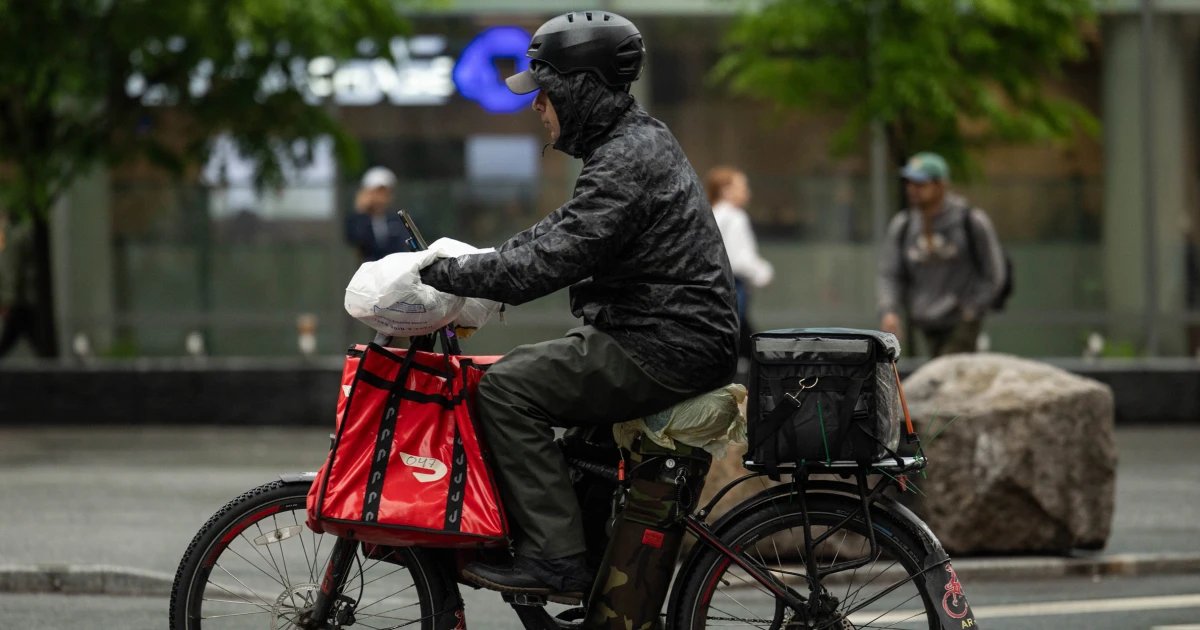
DoorDash has agreed to a $131.5 million settlement with New York City officials to resolve a lengthy investigation into the company’s labor practices. The deal, announced on Tuesday, concludes a probe by the city’s Department of Consumer and Worker Protection regarding claims that the delivery platform failed to pay workers properly or on time.
The settlement marks a significant development in the ongoing friction between the gig economy’s largest players and major metropolitan regulators. For DoorDash, which has faced mounting pressure from labor advocates, the agreement serves as both a resolution to past grievances and an admission of internal technical failures.
## Addressing Wage Discrepancies and “Design Tricks”
The investigation, which spanned several months, centered on accusations that DoorDash—along with competitor Uber Eats—had utilized opaque app designs to effectively deprive delivery workers of significant earnings. Earlier this year, regulators alleged that these platforms were engineering their interfaces to steer workers away from tips or confuse pay structures, potentially costing the gig workforce over $550 million.
According to the terms of the settlement, DoorDash will distribute approximately $115 million in relief to roughly 264,000 “Dashers.” The company noted that the median payment for eligible workers will be around $48. The remaining $16.7 million of the settlement consists of a direct fine paid to the city.
The bulk of the worker relief—roughly $83 million—is earmarked to settle disputes over how the app calculated pay for workers who were active on the platform and waiting for assignments, but not actively engaged in a delivery. Another $12.3 million covers instances where payments were processed significantly behind schedule.
## Technical Glitches and Operational Transparency
In a candid acknowledgment of the situation, DoorDash admitted that the wage issues were the result of systemic errors rather than malicious intent. “Simply put, we screwed up,” the company stated, emphasizing that while the errors were unintentional, they were unacceptable.
The company attributed the payment failures to complex operational challenges, such as deliveries that crossed municipal boundaries, orders with multiple pickup locations, or deliveries that were partially canceled. Furthermore, DoorDash pointed to internal technical bugs and issues regarding incomplete banking information as contributing factors to the delayed or missing funds. The company maintains that it has since remediated the software issues that triggered these discrepancies.
The settlement highlights the persistent challenges that tech giants face when applying automated, AI-driven logistics to complex labor regulations. As these platforms rely on sophisticated algorithms to manage everything from route optimization to dynamic pricing, the transition from code to real-world compliance remains a high-stakes environment where “technical bugs” can quickly escalate into multi-million dollar legal liabilities.
## The Broader Battle Between Tech and Municipal Regulators
New York City has emerged as a primary battleground for the gig economy. DoorDash, alongside rivals like Grubhub and Uber Eats, has engaged in a series of legal conflicts with the city over the past few years. These disputes have touched on a variety of operational requirements, ranging from mandates to share customer data with local restaurants to the implementation of strict tipping and minimum-wage laws.
While DoorDash has opted for a settlement to close this chapter, the broader landscape for delivery apps remains contentious. As cities continue to implement more rigorous oversight of the “on-demand” economy, companies are finding that their proprietary software must be increasingly transparent to satisfy labor laws. With Uber Eats remaining under the lens of city regulators, industry analysts expect that the pressure to reform payment transparency and algorithmic fairness will continue to shape how these platforms design their apps and engage with their workforce moving forward.
Disclaimer: This content is auto-generated for informational purposes only.
Source: Read Original News