





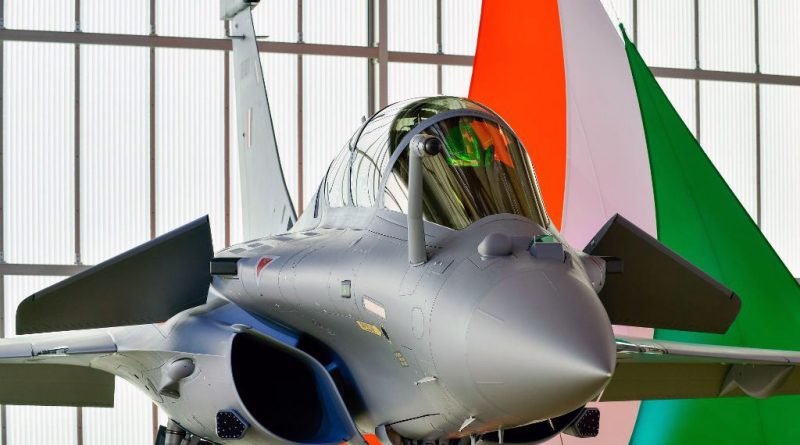
India’s biggest fighter aircraft acquisition in more than a decade has run into an unexpected obstacle—not over price, delivery schedules or industrial participation, but over software.
India and France have yet to conclude negotiations for 114 Dassault Rafale fighters worth over $35 billion after New Delhi sought broader access to the aircraft’s software architecture, a request Paris has so far been unwilling to fully accommodate, according to a report first published by the French business newspaper L’Essentiel de l’Eco.

Multi-Role Fighter Aircraft (MRFA) programme relies on software platforms
The issue has emerged as one of the key outstanding points in the proposed Multi-Role Fighter Aircraft (MRFA) programme, highlighting how software sovereignty has become almost as strategically important as airframes, engines, and weapons in modern combat aircraft acquisitions.
The contract was supposed to be completed in February 2025, during French President Emmanuel Macron’s visit to New Delhi. Eric Trappier, CEO of Dassault Aviation, publicly promised to sign a contract before the end of 2025. Early this year, India’s Defence Acquisition Council cleared the proposal, and final signature is now planned for 2026 or the first half of 2027.
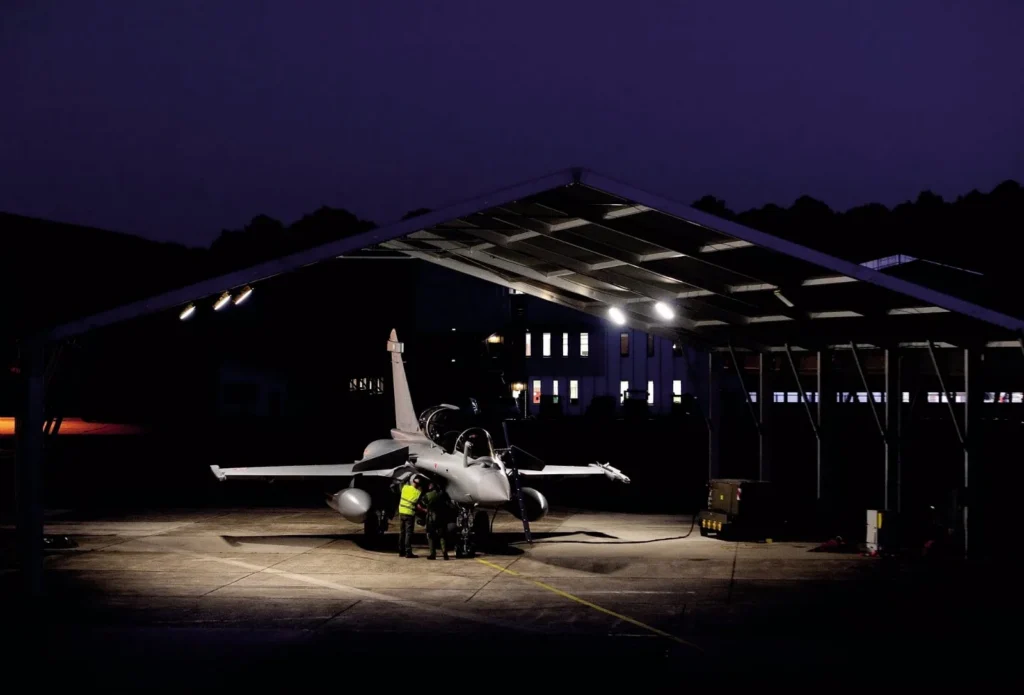
While neither the Indian nor the French government has publicly commented on the reported differences, the negotiations underscore a broader shift in military aviation.
Modern combat aircraft are increasingly software-defined platforms, where operational capability depends not only on aerodynamic performance and weapons, but also on mission software, sensor fusion, electronic warfare systems, and secure data networks.
France hesitates to share sensitive software-controlled systems
As armed forces become more reliant on digital technologies, access to software has become a central consideration in major defence procurements.
According to the L’Essentiel de l’Eco report, India is seeking greater freedom to integrate indigenous weapons, electronic warfare equipment, and future mission-system upgrades without having to rely on the original manufacturer for every software modification.
The report said France remains reluctant to provide unrestricted access to some of the Rafale’s most sensitive software-controlled systems, particularly those governing the Thales RBE2 active electronically scanned array (AESA) radar, the Modular Data Processing Unit (MDPU), and the SPECTRA electronic warfare suite, which together form the core of the aircraft’s combat management architecture.
One of the reasons behind Paris’ cautious approach, the paper cited, is concern over protecting sensitive defence technologies in an increasingly complex geopolitical environment. The report said French officials are wary that unrestricted access to proprietary software could increase the risk of technology exposure, particularly given India’s long-standing defence relationship with Russia and the continued operation of a large Russian-origin military inventory.
While India has steadily diversified its defence procurement over the past decade, Russian aircraft, air defence systems, and other military equipment continue to form a significant part of its armed forces, making the protection of sensitive software and electronic warfare technologies a key French consideration.
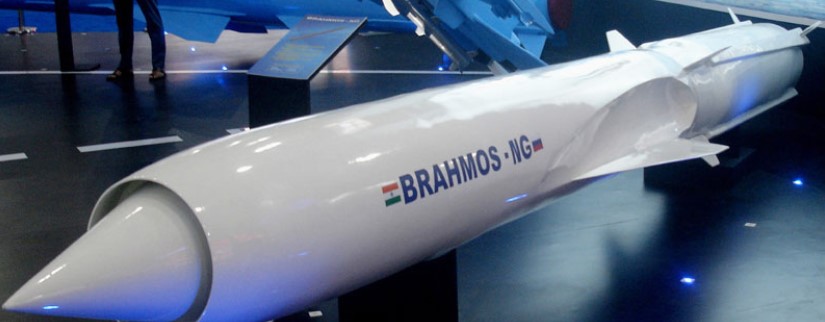
India has plans to integrate the BrahMos supersonic cruise missile, which is jointly developed by India and Russia.
Software sovereignty has become a defining issue in modern combat aircraft acquisitions
For air forces, software now determines much of a fighter’s operational flexibility.
Mission software governs how onboard sensors communicate with one another, how radar information is processed, how electronic warfare systems respond to threats, and how weapons interface with the aircraft.
Access to these digital systems can determine how quickly an operator introduces new missiles, upgrades mission capabilities, or adapts the aircraft to evolving operational requirements.
India’s reported position reflects its wider drive towards defence self-reliance. Over the past decade, New Delhi has invested heavily in developing indigenous air-launched weapons, electronic warfare systems, and networked battlefield capabilities.
Greater software access would give the Indian Air Force more flexibility to integrate future domestic systems into the Rafale without depending entirely on Dassault Aviation for every modification.
India aims for software sovereignty
The issue extends beyond simple access to computer code. Military planners increasingly view software sovereignty as an element of operational independence, allowing armed forces to sustain and adapt combat capabilities during periods of crisis without relying exclusively on overseas suppliers for upgrades or mission-system integration.
France, however, is reported to view the matter differently.
According to L’Essentiel de l’Eco, Paris regards parts of the Rafale’s software architecture as proprietary technology central to the aircraft’s operational performance and long-term security. The report said French concerns extend beyond intellectual property to protecting the integrity of highly sensitive systems that underpin the fighter’s sensor fusion, survivability, and electronic warfare capabilities.
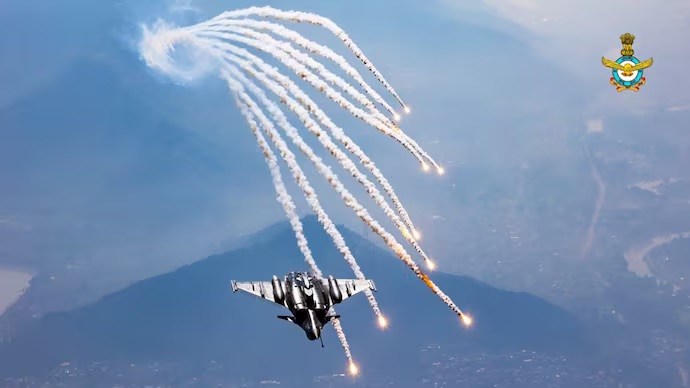
The newspaper also reported that France has indicated it is prepared to support the integration of Indian-developed weapons, but under a framework in which Dassault Aviation retains responsibility for the integration and validation process rather than providing unrestricted access to the underlying software.
The reported differences have not brought negotiations to a halt, however. According to ANI, French officials have requested additional time until mid-August to submit Paris’ formal response to India’s Letter of Request (LoR), which New Delhi issued in May for the proposed government-to-government acquisition. Defence officials told the Indian news agency that negotiations on pricing and other commercial terms are expected to begin once France’s response is received.
The negotiations will shape one of India’s largest fighter acquisitions
The proposed MRFA programme is intended to address one of the Indian Air Force’s most pressing operational challenges that of its declining fighter squadron strength.
The Indian Air Force continues to operate well below its authorised strength of 42 fighter squadrons, as older MiG-21 and other legacy aircraft leave service faster than replacements arrive.
The service continues to retire ageing MiG variants while facing delays in the induction of indigenous aircraft, including the Light Combat Aircraft (LCA) Mk1A, with the LCA Mk2 and the Advanced Medium Combat Aircraft (AMCA) still some years away from operational service.
Against that backdrop, the acquisition of 114 new fighters has become one of India’s most significant defence procurement programmes, with industrial participation, local manufacturing, technology transfer, and long-term sustainment all forming part of the negotiations.
Under the current proposal, 18 aircraft are expected to be supplied in flyaway condition, with the remaining fleet assembled in India through a domestic industrial partnership, supporting the country’s wider “Make in India” defence manufacturing objectives.
The reported software discussions, therefore, represent only one part of a much broader agreement that will shape the Indian Air Force’s combat capability for decades to come.
The MRFA programme grew out of the collapse of India’s original 126-aircraft Rafale competition
The current negotiations are rooted in one of India’s longest-running fighter acquisition programmes.
In 2012, Dassault Aviation emerged as the preferred bidder in the Indian Air Force’s Medium Multi-Role Combat Aircraft (MMRCA) competition for 126 fighters. The programme envisaged 18 aircraft being supplied in flyaway condition, with the remaining 108 to be manufactured in India under licence by Hindustan Aeronautics Limited (HAL).

However, disagreements over production responsibility, costs, and liability eventually stalled the programme. Dassault was unwilling to assume responsibility for aircraft manufactured by HAL, while India insisted the French company remain accountable for the entire fleet. The negotiations ultimately collapsed, bringing one of the world’s largest fighter competitions to an end.
Instead, the Narendra Modi government opted for a separate government-to-government agreement with France, signing a contract in 2016 for 36 Rafale fighters as an emergency capability acquisition for the Indian Air Force.
Nearly a decade later, India returned to the Rafale platform, signing another inter-governmental agreement in April 2025 for 26 Rafale Marine aircraft to equip the Indian Navy’s aircraft carriers.
Together, those two contracts have established the Rafale within both the Indian Air Force and the Indian Navy, creating a common logistics, training, and maintenance framework that naturally strengthens the aircraft’s position in the MRFA competition.
A changing strategic environment narrowed the field in the 114-aircraft competition
When the Ministry of Defence issued the Request for Information (RFI) for the MRFA programme in 2018, manufacturers from Europe, the United States, and Russia all entered the competition.
The responses included the Dassault Rafale, Eurofighter Typhoon, Saab Gripen E, MiG-35, Su-35, F/A-18E/F Super Hornet, F-15EX Eagle II, and F-21, the India-specific version of the F-16. Russia later added the Su-57 to the list.

On paper, the Indian Air Force had more choices than ever. Over time, however, the strategic landscape changed.
Russia’s invasion of Ukraine complicated future support arrangements for Russian combat aircraft, while sanctions, supply-chain pressures, and production constraints raised questions over long-term availability.
At the same time, the Indian Air Force was already managing one of the world’s most diverse fighter inventories, making the introduction of another entirely new logistics ecosystem less attractive.
The Eurofighter Typhoon remained a technically capable option, but would have introduced another European fighter fleet alongside the Rafale. Saab’s Gripen E continued to offer industrial participation but, as a single-engine aircraft, did not fully align with the Indian Air Force’s long-standing operational preference for twin-engine fighters in many mission profiles.
The Rafale, by contrast, was already in Indian service, supported by an established training system, logistics chain, and maintenance infrastructure. Its selection by the Indian Navy further reinforced that position, reducing the operational risks associated with introducing another aircraft type.

The acquisition would also substantially expand India’s Rafale fleet. With 36 Air Force Rafales already in service and 26 carrier-capable Rafale Marine aircraft on order for the Navy, the addition of 114 fighters would take the combined fleet to 176 aircraft, making the Rafale one of the country’s principal combat platforms.
The software discussions are also being watched beyond India
According to the French paper, the United Arab Emirates, which ordered 80 Rafales in 2021, has also sought broader software access. The newspaper reported that France has adopted the same position with Abu Dhabi, offering controlled software interfaces rather than transferring source code. The report said the issue contributed to the UAE’s decision earlier this year to withdraw from co-financing development of the future Rafale F5 standard, leaving France to continue funding the programme independently.