








From $2,500 to $35,000: How the Ford Mustang’s Value Proposition Has Evolved Over 60 Years
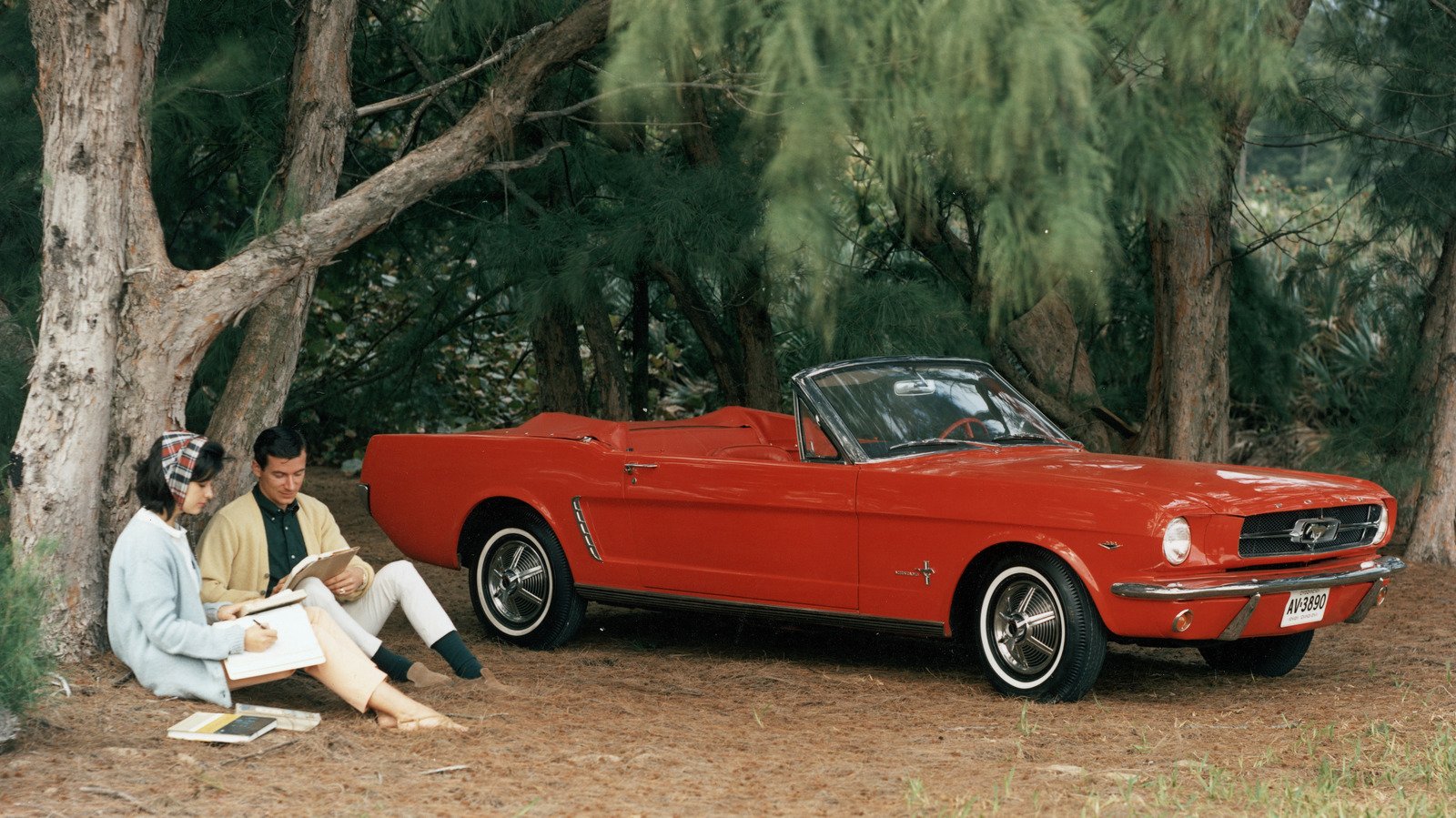
Before the rise of modern accessible performance icons like the Mazda Miata or the Toyota GR86, the Ford Mustang held the title of the definitive affordable sports car. Born in 1964 as a stylish, budget-friendly machine designed for Baby Boomers to navigate the newly expanding interstate system, the Mustang was a cultural phenomenon from day one.
Lee Iacocca, the legendary executive behind the project, famously mandated that the car start at under $2,500. Ford successfully hit that target, forever changing the automotive landscape. However, as decades have passed, the definition of “affordable” has shifted dramatically. To understand the true cost of automotive history, we have to look at the numbers behind the original 1964 Ford Mustang versus its 2026 successor.
The Inflation Reality Check
The original 1964.5 Mustang carried a base MSRP of $2,368. When adjusted for inflation, that figure sits at approximately $25,500 in 2026 dollars. By contrast, the base 2026 Ford Mustang Fastback enters the market with a starting MSRP of $34,990 (including destination).
At first glance, this represents a nearly 40% increase in real-world cost. Interestingly, that inflation-adjusted $25,500 figure is now the price point for a modern, entry-level Toyota Corolla, highlighting just how much the “base car” segment has moved upmarket in the last six decades.
More Money, More Technology
While the price gap is undeniable, a direct comparison of the hardware reveals that today’s Mustang is a vastly different animal. The 1964 base model featured a 170-cubic-inch straight-six engine producing a modest 101 horsepower. Critics at the time, including Car and Driver, famously likened the experience to “a dish of baby food.”
Conversely, the 2026 base model comes standard with a 2.3-liter turbocharged EcoBoost engine churning out 315 horsepower. The jump in performance is matched only by the leap in creature comforts and safety. While 1964 buyers were sold on the novelty of “deep foam bucket seats” and “color-keyed carpeting,” 2026 buyers receive:
- A 12.4-inch digital gauge cluster
- A 13.2-inch infotainment touchscreen
- Advanced driver-assist features like lane-keep assist and blind-spot monitoring
- Modern safety systems that were non-existent in the 1960s
The Verdict
Are you paying more for a Mustang today? Absolutely. But the modern Mustang is no longer just a stylish commuter with a sports car body; it is a high-performance machine equipped with technology that would have seemed like science fiction in the mid-sixties.
While the “attainable pony car” remains a core part of Ford’s DNA, the evolution of the Mustang reflects the realities of modern manufacturing, government safety regulations, and the vastly higher performance expectations of today’s drivers. It may not be the bargain bin hero it was in 1964, but in terms of sheer engineering capability, it is arguably more car for the money than ever before.