








The High Court’s Reality Check: Imran Khan’s OCI Status Under Fire
For years, Imran Khan has been a familiar face in the Indian public consciousness. Whether as the boy-next-door heartthrob of the silver screen or a socially conscious voice on digital platforms, his presence has been woven into the fabric of Mumbai’s elite cultural landscape. However, a recent legal showdown at the Bombay High Court has peeled back the curtain on a far more complex reality: the legal precariousness of being an Overseas Citizen of India (OCI) in a country that values its national sovereignty above all else.
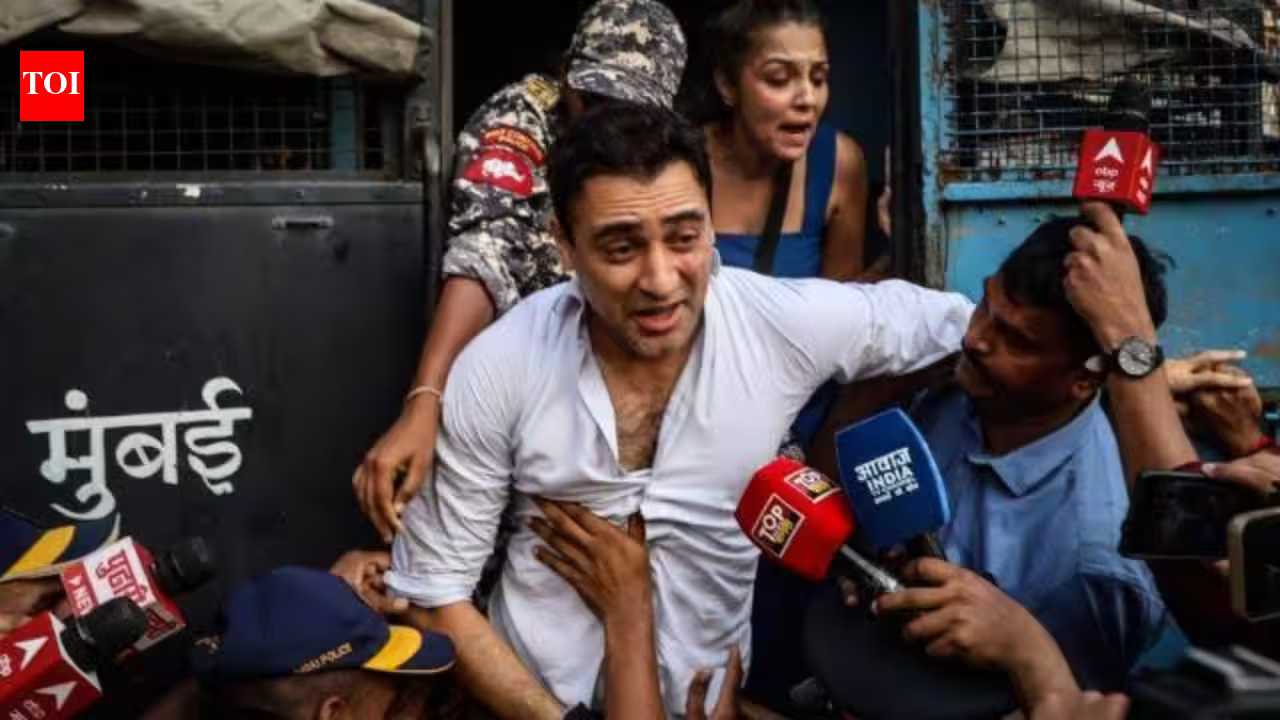
The drama began not on a film set, but at the historic August Kranti Maidan on October 10. Khan, 43, found himself in the crosshairs of the authorities after being detained during a demonstration against Chief Election Commissioner Gyanesh Kumar. The protest, which focused on alleged irregularities in the Special Intensive Revision (SIR) of electoral rolls, was viewed by the government as an overstep by a foreign national. What followed was a cold, administrative jolt: an FRRO notice ordering the actor to leave the country by October 28. As the legal battle unfolds, it serves as a stark reminder that in the eyes of the law, the line between celebrity status and foreign residency is razor-thin.
“The Mercy of the Country”: A Legal Wake-Up Call
The courtroom atmosphere on Monday was heavy with judicial scrutiny. A bench comprising Chief Justice Mahesh Chandra Tripathi and Justice Advait Sethna did not mince words, delivering a sharp critique of the actor’s decision to engage in political activism. The court’s stance was categorical: OCI cardholders do not possess the same constitutional bedrock as Indian citizens, and the right to protest is not a universal entitlement for those holding foreign passports.
“As an OCI cardholder, you are at the mercy of this country,” the bench observed, a pointed remark that shifted the narrative from a standard legal challenge to a fundamental lesson on citizenship. The judges went as far as to compare the situation to international standards, asking the rhetorical question that likely sent chills through the actor’s legal team: “If an Indian had done the same thing elsewhere would it have been tolerated? If this had happened in America, the person would have been put on the next flight back to India.”
For a man who has spent the better part of his life in India, the court’s suggestion was both pragmatic and dismissive: if Khan wishes to participate in the volatile, high-stakes arena of Indian political demonstration, perhaps he should formalize his status by applying for Indian citizenship.
Apologies and Undertakings: A Strategy for Survival
Facing the very real possibility of deportation, Khan’s legal team pivoted quickly. Senior advocate Venkatesh Dhond submitted an unconditional apology on behalf of the actor, accompanied by a formal undertaking. Khan has pledged to abstain from participating in—or encouraging—any future protests. The strategy is clearly one of de-escalation; by positioning himself as contrite and compliant, Khan hopes to maintain his life in India while his petition challenging the FRRO notice remains pending.
The bench, while stern, opted for a measure of “magnanimity,” adhering to the philosophy of Vasudhaiva Kutumbakam (the world is one family). By extending the stay on the ‘Leave India’ notice until the next hearing on December 7, the court has granted the actor a temporary reprieve. However, it is a conditional grace. The judges were clear that the authorities have the sovereign power to regulate foreign nationals, and this “big heart” shown by the judiciary should not be mistaken for a blank check for future political involvement.
Beyond the Screen: Why the Court Targeted His Influence
What perhaps irked the court most was not just the physical presence of the actor at the rally, but the digital footprint that followed. The bench specifically took note of Khan’s social media activity post-detention, suggesting that his online presence acts as a megaphone for his views. By addressing his young, impressionable followers after the incident, the court argued that the actor crossed the line from private citizen to potential instigator.
“You have young followers who are bound to get influenced,” the judges noted. This highlights a modern dilemma for the judiciary: how to handle public figures who, while technically foreign nationals, exert a level of cultural influence that rivals domestic political actors. The court questioned the very relevance of his presence at the protest, humorously noting that he didn’t even have a film to promote. It was a cutting observation, stripping away the celebrity veneer to focus on the raw administrative question: Why does a US citizen have a stake in the electoral roll revision process of India?
A Battle of Constitutional Principles
Khan’s petition, filed through advocate Zulfiquar Memon, paints a different picture. It characterizes the government’s notice as “illegal, arbitrary, perverse, and drastic.” The actor argues that the state failed to apply its mind, essentially targeting him because of his visibility. The petition argues that the state’s action is disproportionate and threatens the very principles of natural justice.
For the actor, this is an existential crisis. He has maintained that he did not participate in the gathering and lacks any official affiliation with the organizers. Whether he can prove his distance from the event remains to be seen in the coming hearings. However, the legal precedent being set is clear: fame provides no immunity from the Immigration and Foreigners Act.
As the case pauses until December 7, Khan finds himself in a strange purgatory. He is a man who calls India home, yet is legally a guest who has overstayed his welcome in the political sphere. The court has given him a lifeline, but it is a short one. The question remains whether Khan can navigate the remainder of his time in the country with the quiet passivity the court demands, or if the lure of activism will once again prove too tempting for the star, potentially leading to the final curtain on his life in India. In the world of high-stakes law, the script is being written in real-time, and it’s a role that even a seasoned actor might find difficult to play.
Disclaimer: This content is auto-generated for informational purposes only.
Source: Read Original News