




Words by ITV News Asia Correspondent Debi Edward and Sanjay Jha, ITV News in New Delhi.
Tanvi is proud to call herself a ‘cockroach’.
She’s one of the millions of young people across India that has joined the protest launched by the Cockroach Janata Party, who say they are fighting for a better future.
The party’s name comes from an insult aimed at the country’s unemployed youth, that was reclaimed by India’s Gen Z to symbolise their resistance.
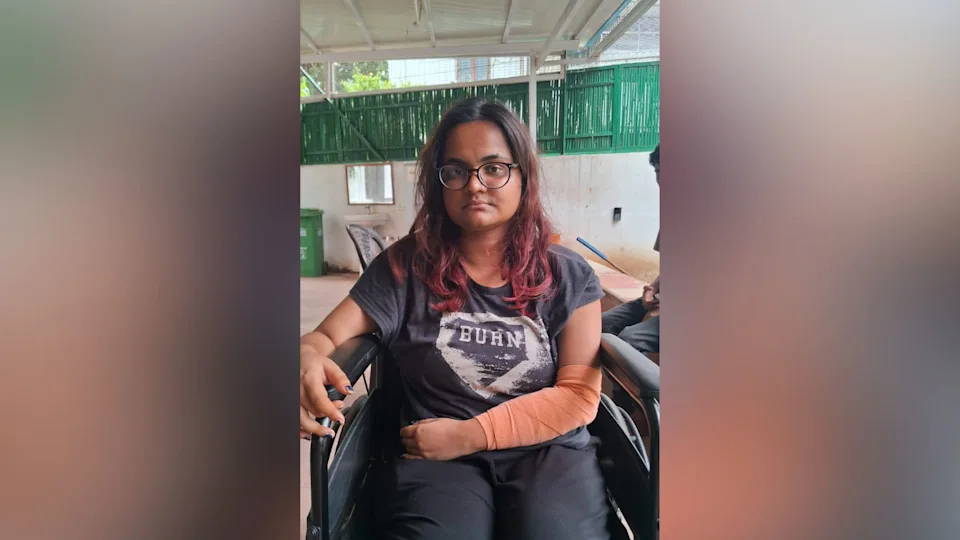
Tanvi, 21, is a sociology masters student, and spoke to us after being treated for injuries she sustained during violent clashes between police and protesters in Delhi.
She was in a wheelchair, unable to walk, with bandages on her arm and bruising on her chest.
Tanvi is a 21-year-old Sociology Master’s student who calls herself a cockroach Credit: ITV News
She told us that as the crowd swelled, the police grew increasingly aggressive, before they suddenly surged with no warning, wielding sticks and firing tear gas.
The result was chaos. Thousands of people running in all directions, many tripping over and falling prey to the police.
“We were pushed towards a large iron railing with barbed wire. There were several female students standing there, shouting and crying, pleading with the police to stop because they were hitting them with their lathis (bamboo sticks),” Tanvi said.
Tanvi couldn’t believe how violent it became in such a short space of time. As she managed to escape with her friends, she said she could see blood running down the road.
When they reached the RML hospital, it was crowded with injured protesters, so they went home to nurse their wounds instead.
Subscribe free to our weekly newsletter for exclusive and original coverage from ITV News. Direct to your inbox every Friday morning.
But by nighttime, Tanvi’s condition had worsened, and they rushed her to another hospital nearby.
The Cockroach movement began in May following a leak of national exam papers, affecting more than two million students, and requiring them to re-sit the exam.
It wasn’t the first time that exam papers or results had been leaked, or that the Indian education department had faced accusations of cheating or corruption.
At first, protestors demanded the resignation of the country’s education minister, Dharmendra Pradhan, a demand which quickly amassed the support of millions online.
Despite recent examples in Nepal and Bangladesh, it appears that the Indian government underestimated the potential for that digital dissent to transform into mass demonstrations.
In Delhi, Tanvi and her friends may be bruised and battered, but they say they remain determined to continue with their fight.
Want a quick and expert briefing on the biggest news stories? Listen to our latest podcasts to find out What You Need To Know…