








- Across India’s west coast, fishers often abandon or discard their damaged gear at sea after seabed snags, mounting economic pressures, and increasingly crowded near-shore waters make recovery difficult, creating a constant stream of “ghost gear” into the Arabian Sea.
- Once lost, fishing gear continues to function, whether it drifts through the water column or settles on the seabed, trapping marine life or entangling marine habitat.
- Incentive schemes, retrieval efforts, recycling initiatives and other efforts to reduce harm show promise in some places in India. But experts say they tend to remain piecemeal and face common challenges such as a lack of recycling infrastructure and dependence on short-term funding.
- Many experts say the key to addressing India’s ghost gear problem lies in moving from ad hoc initiatives to institutionalized systems that intervene across the gear’s lifecycle, from design and use to end-of-life disposal.
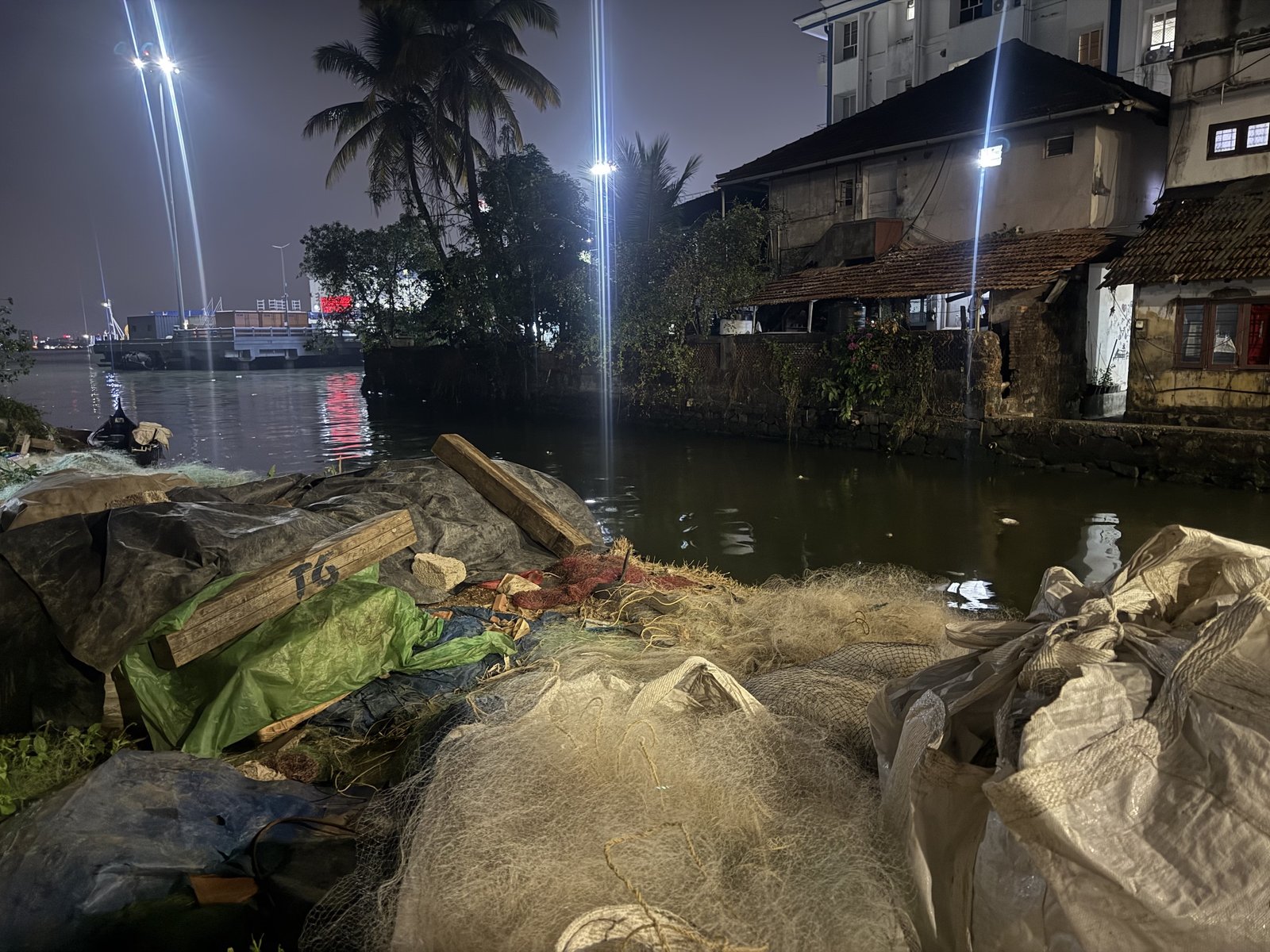
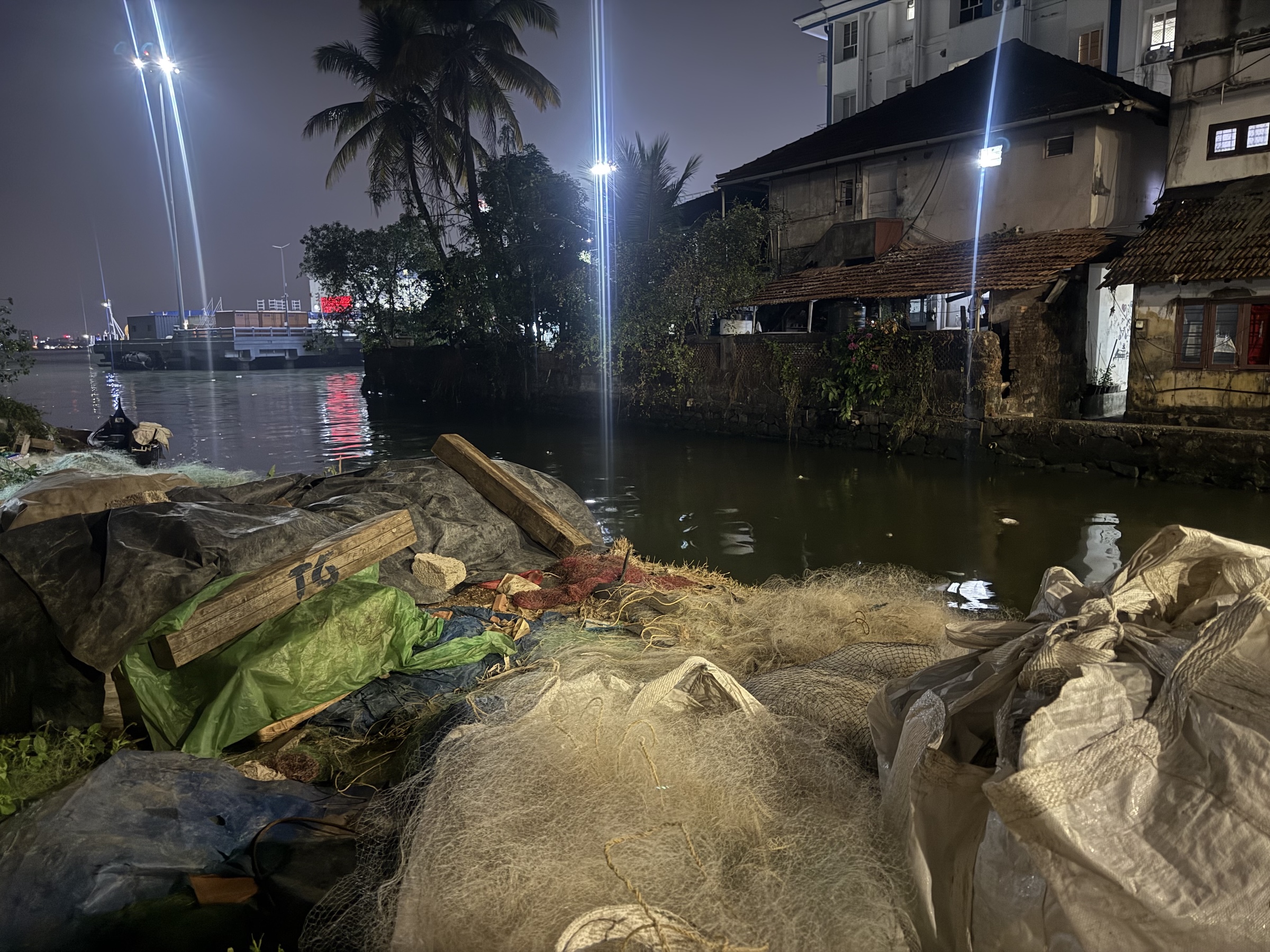
KOCHI, India — In the early light at Thoppumpady fishing harbor in the city of Kochi, coils of blue and green nylon nets lay heaped on the concrete docks, stiff with salt after a long night at sea. Many had been patched and repatched so often that they were barely holding together. Nets too damaged to mend are often cut loose offshore. Once they sink, few are ever recovered.
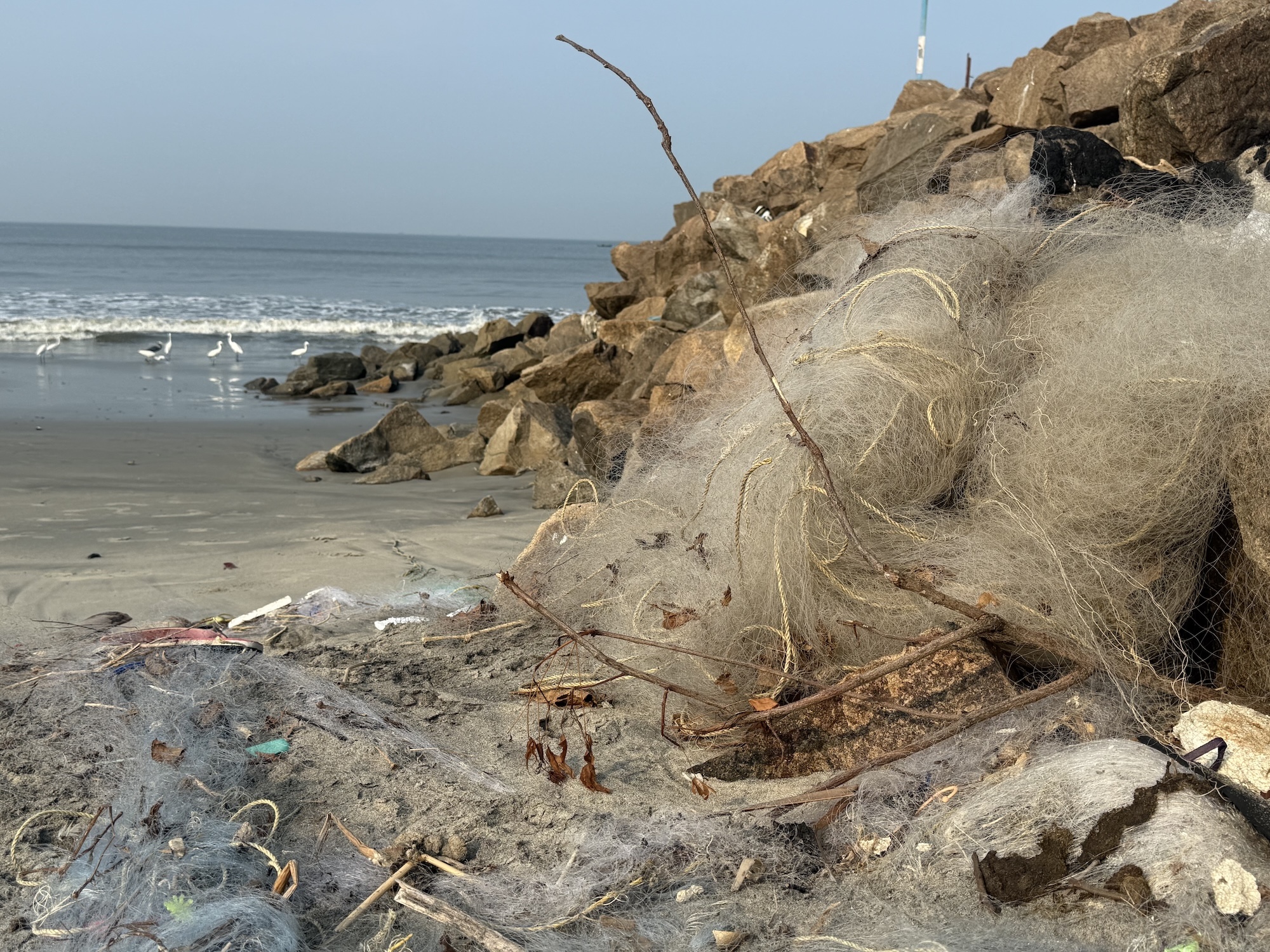
Across India’s west coast, lost fishing gear known as “ghost gear” has become a significant source of marine pollution. Nets vanish whole or in fragments, slipping into the waters of the Arabian Sea where they continue trapping fish, turtles and other marine life long after fishers abandon them.
India operates one of the world’s largest marine fishing sectors, supporting an estimated 14.5 million livelihoods along more than 7,500 kilometers (4,660 miles) of coastline. While national estimates are scarce, a 2022 study in the southwestern state of Kerala, where Kochi is located, found that fishers lost, abandoned or discarded about 21% of their fishing gear annually. That’s more than 10 times the global average of 1.82% estimated by another study, which highlights the scale of material entering India’s marine environment.
Despite growing concern among researchers and conservationists, India lacks a systematic way to track, retrieve or recycle lost fishing gear, as well as accessible mechanisms to collect and safely dispose of end-of-life nets and other equipment before they are discarded at sea. The government regulates fisheries tightly in many respects — from mesh sizes and seasonal bans to licensing requirements — but what happens after gear is lost, discarded or reaches the end of its usable life remains largely outside the system.
Routine losses
Kerala, one of India’s most important fishing states, provides a clear snapshot of the challenges.
The Kerala study, a survey of 390 fishers, found that vessels lost, abandoned or discarded an average of 167.5 kilograms (369 pounds) of gear per vessel each year. Scaling this across the state’s roughly 28,000–34,000 marine fishing vessels suggests thousands of metric tons of ghost gear enter the Arabian Sea annually from Kerala alone. The findings show that ghost gear is not solely the result of accidents at sea: Fishers reported losing 11.6% of their gear each year, abandoning 7.5% and deliberately discarding 2.3%.
While ghost gear is often associated with storms and cyclones, researchers working along India’s west coast say much of it is lost during routine fishing operations. Rocky seabeds, poorly mapped fishing grounds and conflicts between mechanized and traditional fleets all contribute to gear loss. The problems are particularly acute in crowded near-shore waters such as those off Kerala, where trawlers, gillnet fishers and smaller vessels compete for space.
“Seabed snags are the most common cause,” Abhijieet Thakare, an independent fisheries expert and coastal management practitioner, told Mongabay. “We routinely see nets and lines caught on rocky outcrops.”
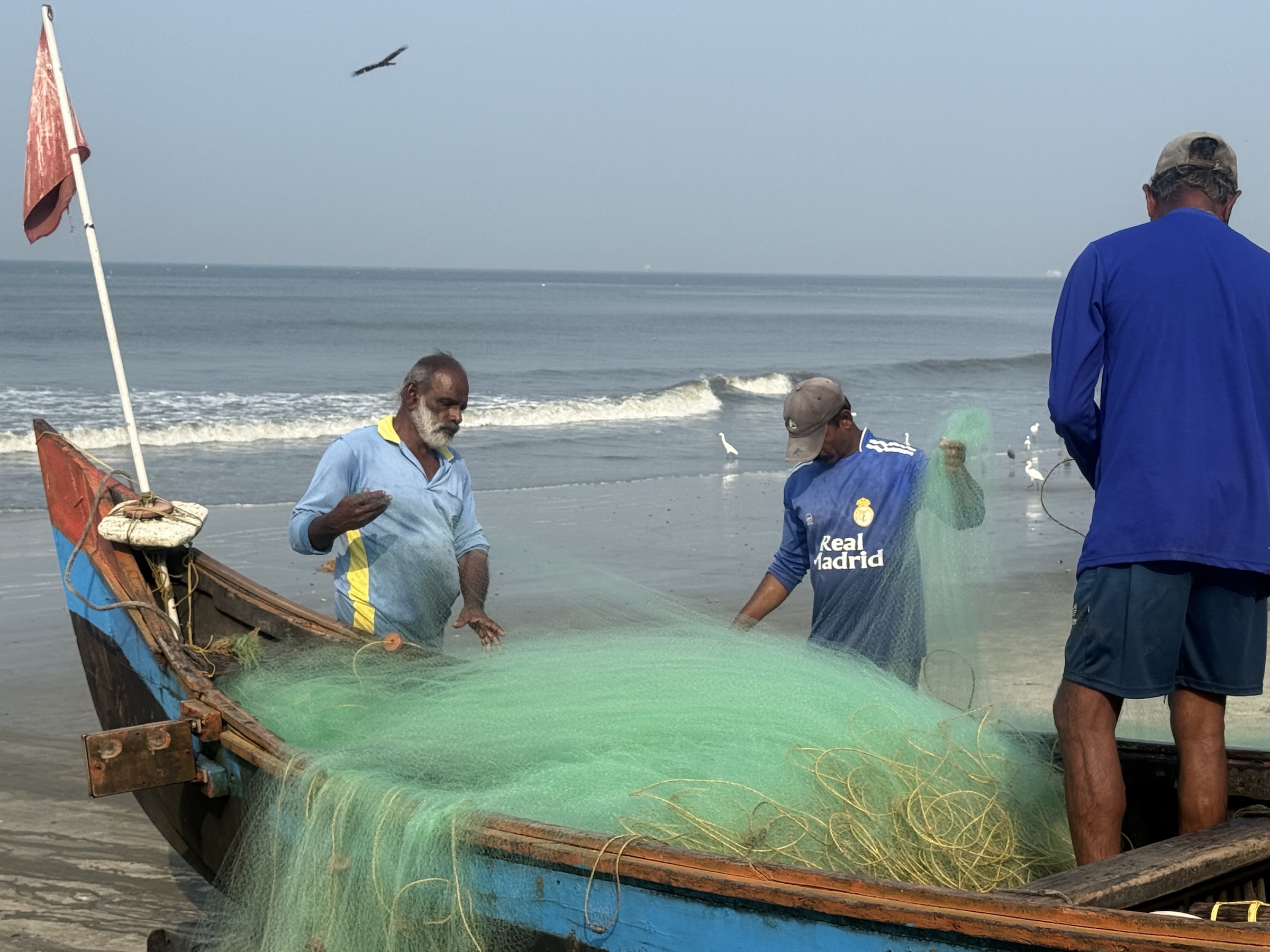
With retrieval competing against fishing time and few recycling options available, fishers often leave damaged gear behind, creating a steady flow of plastic waste into the Arabian Sea. “Carrying back a torn net costs fuel and time,” Thakare said. “If it has no value at that point, it is often abandoned.”
That calculation is not unique to Kerala. Fishers and researchers report similar patterns elsewhere along India’s Arabian Sea coast, from the Konkan region of Maharashtra state and Goa state north of Kerala to the island territory of Lakshadweep.
Once lost, fishing gear continues to function, whether it drifts through the water column or settles on the seabed. Nets ensnare fish. Lines wrap around coral structures. Over time, the gear becomes embedded in marine habitats.
As synthetic materials degrade, they fragment into smaller particles. Marine animals ingest these fragments, sometimes fatally. Studies have identified microplastics, often originating from degraded fishing gear, inside marine animals, including important fish and shrimp species consumed by humans.
There is also a regional dimension to the problem. Ocean currents carry debris across national boundaries, making it difficult to trace the origin of any single net and complicating both accountability and response.

Jurisdiction at sea
A fragmented governance structure leaves critical gaps where abandoned or damaged fishing gear slips out of oversight, experts say. “Part of the problem lies in how responsibility is divided,” Karan Deshpande, a coral reef researcher with the NGO Wildlife Conservation Society-India, told Mongabay.
In India, state fisheries departments primarily oversee fishing activities and gear regulations; state pollution control boards handle marine litter, plastic waste and environmental compliance; while state forest departments (or wildlife wings) often hold responsibility for protected marine species such as turtles, dolphins and other megafauna under the Wildlife Protection Act. Lost or discarded fishing gear frequently falls between these jurisdictions, weakening accountability and coordinated enforcement.
Despite growing evidence of environmental damage from ghost gear, India has no unified system to track or manage it, Deshpande said. Other Asian countries facing similar challenges have begun experimenting with gear-marking schemes that enable lost gear to be traced to its owner, retrieval programs and national action plans. These efforts reflect a broader regional effort to improve accountability for lost fishing gear.

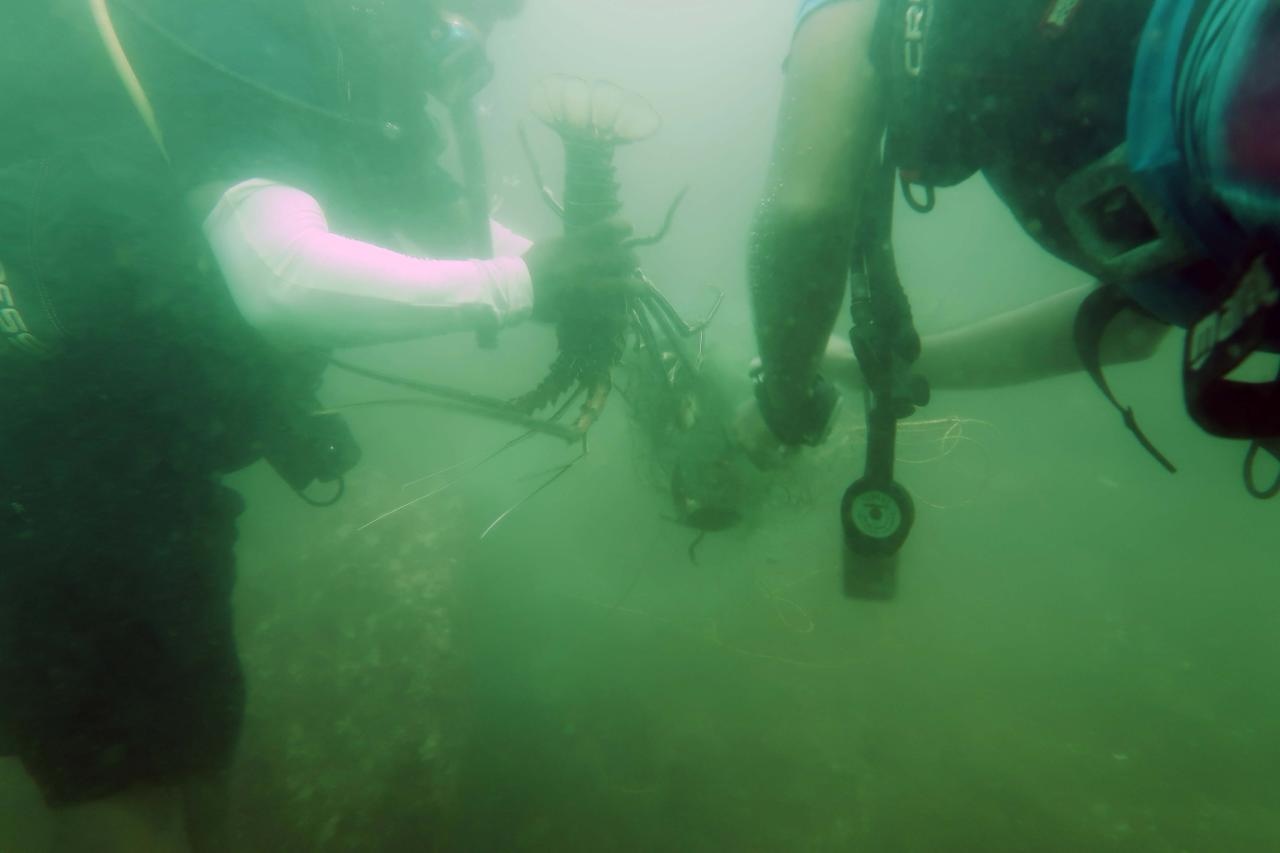
Attempts to plug the gaps have largely relied on incentives, both in India and globally. Some state governments and nonprofits compensate fishers between 15,000 and 70,000 Indian rupees (about $160 to $740) for safely releasing entangled megafauna or returning damaged nets. Elsewhere, non-governmental groups and dive teams carry out retrieval operations, bringing ghost gear ashore for recycling. But these interventions tend to remain piecemeal.
“Most government-led initiatives start well but struggle to sustain,” Deshpande said. Once funding ebbs, he said, so does the effort.
Moreover, incentive schemes have in some cases been manipulated, with fishers staging or exaggerating retrievals to claim compensation, Deshpande said. The result is mounting administrative strain, including verification burdens and payment backlogs that slow already stretched systems.
More fundamentally, he said, many of these efforts target the symptoms rather than the source. “There is a continuous input,” Deshpande said. “Retrieval alone cannot solve it.”
What’s needed are mechanisms to prevent gear loss in the first place, or to track it when it occurs, he added.
Private model of financing
Along the southern coast of Karnataka state, north of Kerala, Adhavan Dev, a marine biologist with the Centre for Climate Change Research at the Sathyabama Institute of Science and Technology, promotes just such a preventative approach within fishing communities.
The effort combines outreach with financial incentives. It encourages fishers to retrieve drifting or damaged gear and bring end-of-life nets ashore, where buyback payments provide an alternative to disposal at sea. According to Dev, participation is “often slow at first but tends to increase as fishers become more aware of the environmental and economic impacts of ghost gear.” Younger fishers, in particular, appear more receptive to the message, especially as “declining catches become harder to ignore,” he said.
The approach, however, faces obstacles beyond the fishing sector itself. Many nets are made from a mix of materials — including nylon, polyethylene, and other plastics — that are difficult to process together. Recycling facilities capable of handling mixed fishing gear remain scarce in India, leaving many collected nets stored in warehouses or yards while organizations search for viable recycling or upcycling options.
These challenges also highlight a broader funding gap. With recycling infrastructure underdeveloped and government support often limited, some ghost-gear initiatives rely on corporate social responsibility funding, which can be unreliable over the long-term.
Beyond cleanup
Many experts say the key lies in moving from ad hoc initiatives to institutionalized systems that intervene across the gear’s lifecycle, from design and use to end-of-life disposal. Dev and other researchers point to specific measures such as gear-marking systems, standardized reporting of lost gear, and dedicated facilities for collection and recycling. Similar approaches have been adopted in countries including Norway, Iceland, Australia and Indonesia, offering models that India could adapt.
According to Dev, the larger challenge is implementation. Building an effective system would require coordination between fisheries, waste-management and regulatory agencies, alongside investment in collection and recycling infrastructure and greater private-sector participation in developing markets for recovered materials. Deshpande echoed those points, arguing that to truly address ghost gear, India must treat it as a systemic fisheries management issue.
Until then, nets that disappear from Kochi’s harbor will continue their unseen work beneath the surface, leaving behind a legacy that remains largely unaccounted.
Banner image: A fisher at Saude Beach in Kochi. Image by Robert Bociaga for Mongabay.
Whale sharks released from nets along India’s coast as fishers turn rescuers
Citations:
Daniel, D. B., & Thomas, S. N. (2022). Abandoned, lost and discarded fishing gear from the fishing sector of Kerala, India. Ocean Science Journal, 57, 398–410. doi:10.1007/s12601-022-00074-y
Richardson, K., Hardesty, B. D., Vince, J., & Wilcox, C. (2022). Global estimates of fishing gear lost to the ocean each year. Science Advances, 8(41). doi:10.1126/sciadv.abq0135
Riaz, S., Nasreen, S., Burhan, Z., Shafique, S., Alvi, S. A., & Khan, M. A. (2024). Microplastics assessment in Arabian Sea fishes: Accumulation, characterization, and method development. Brazilian Journal of Biology, 84. doi:10.1590/1519-6984.270694
Prusty, K., Rabari, V., Patel, K., Ali, D., Alarifi, S., Yadav, V. K., … Trivedi, J. (2023). An assessment of microplastic contamination in a commercially important marine fish, Harpadon nehereus (Hamilton, 1822). Fishes, 8(9), 432. doi:10.3390/fishes8090432
Morris, S., Sarlin, P. J., Morris, S., & Joseph, P. (2025). Microplastic ingestion and retention in penaeid shrimp from the Arabian Sea. Discover Environment, 3(1). doi:10.1007/s44274-025-00212-y
Arshad, N., Alam, M. M., Su’ud, M. B., Imran, S., Siddiqui, T., Saleem, K., … Batool, A. (2023). Microplastic contamination from surface waters and commercially valuable fishes of Karachi coast, Pakistan. Regional Studies in Marine Science, 62, 102955. doi:10.1016/j.rsma.2023.102955
FEEDBACK: Use this form to send a message to the editor of this post. If you want to post a public comment, you can do that at the bottom of the page.