







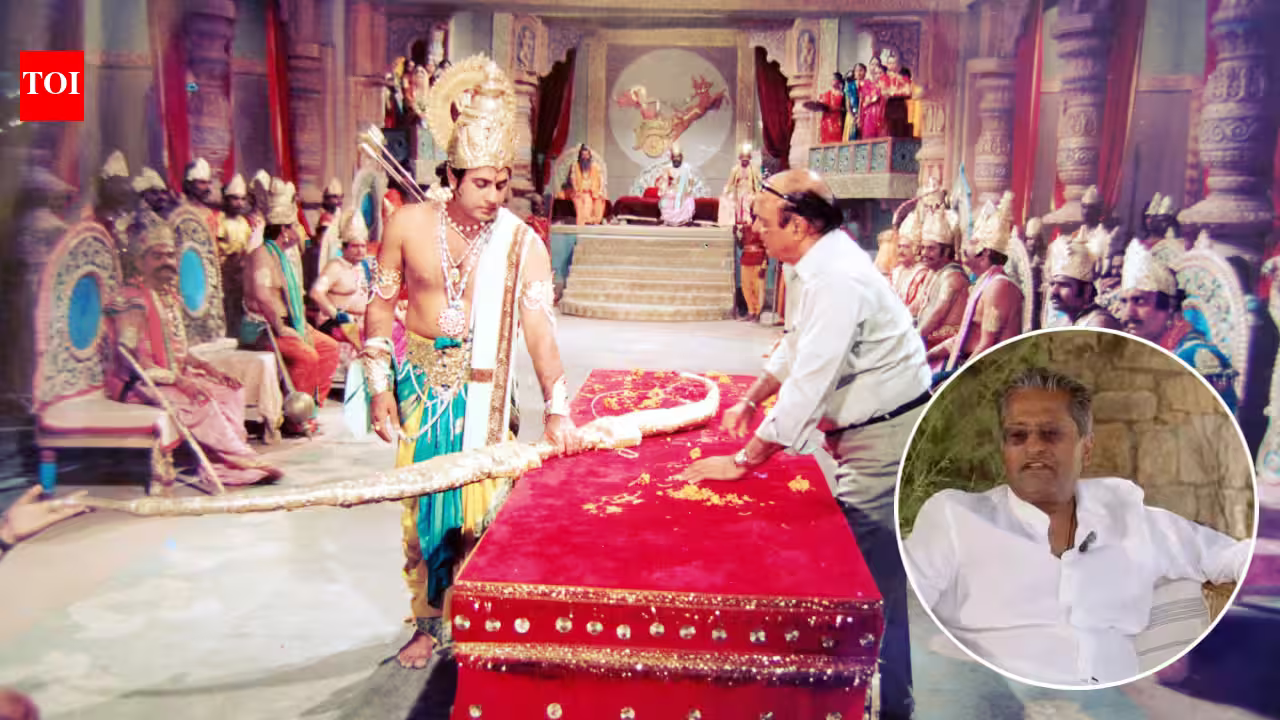
In the annals of Indian television, few stories are as culturally seismic as the production of Ramanand Sagar’s Ramayan. It was a show that literally brought the country to a standstill, turning Sunday mornings into a communal ritual that remains unmatched to this day. However, a recent revelation from former cricket administrator and business mogul Lalit Modi suggests that this monumental success story almost ended before it began—all due to a catastrophic clash of cultures in a corporate boardroom.
Lalit Modi, who spent the 1990s as a high-stakes player in the media distribution and production landscape, recently opened up about his efforts to bring international giants like Disney into the Indian market. It was during this high-flying era that he found himself acting as a bridge between the legendary filmmaker Ramanand Sagar and the executives of the Walt Disney Company. While the Ramayan would eventually become the crown jewel of Doordarshan, Modi reveals that its path to the screen was far from paved with gold.
When Wall Street Met the Visionary
The television landscape in the 90s was a vastly different beast. In those days, the national broadcaster, Doordarshan, did not function like a modern studio; it didn’t finance shows. Instead, producers had to secure their own funding and pay the network a fixed hourly rate to air their content. It was a high-risk gamble that required deep pockets and a firm belief in the product.
According to Modi, both Ramanand Sagar and BR Chopra approached him with their respective epic projects, Ramayan and Mahabharat, hoping to secure the necessary backing. Recognizing the massive untapped potential of these narratives, Modi envisioned a global platform for Indian mythology. He held a unique position as a partner to Disney, and he saw a perfect synergy: the production expertise of the Indian stalwarts paired with the global reach and capital of the mouse house.
A Cultural Collision in the Boardroom
Modi’s account of the meeting is the stuff of corporate folklore. He had spent considerable political capital within the Disney organization, convincing their executives to fly to India and consider a $1 million investment—a staggering sum at the time—in exchange for the rights to the show.
“Disney came with a big entourage and private jets,” Modi recalled during a recent podcast appearance. “And Ramanand Sagar walked into that meeting in shorts.”
For the Disney executives, who were accustomed to the rigid, buttoned-up professionalism of the global entertainment industry, the scene was baffling. In the 90s, a “pitch” was a highly choreographed, suit-and-tie affair involving elaborate slide decks and polished presentations. Ramanand Sagar, a man whose genius was rooted in the storytelling traditions of India rather than the boardrooms of Burbank, arrived as he was, presumably having just stepped off a set or out of his editing suite.
The disconnect went beyond the attire. Modi noted that the language barrier proved insurmountable; the nuances of the pitch were lost, and the executives struggled to grasp the scale of what was being proposed. Watching the president of Disney seemingly look for the nearest exit, Modi realized the deal was dead on arrival.
The Blind Spot of Global Giants
It is easy to look back with the benefit of 20/20 hindsight and label Disney’s rejection as a historic blunder. However, the cultural gulf between the two parties was vast. At the time, global studios had no frame of reference for the power of Indian mythology on the small screen. They saw a lack of professional polish; they didn’t see the millions of viewers who would soon be transfixed by Arun Govil’s portrayal of Lord Ram.
Modi expressed frustration at the time, noting that he did everything in his power to push the collaboration through. Yet, bound by his partnership, he could do little once the Disney leadership decided that the project did not fit their corporate mold. They simply couldn’t see the “why” behind the project, nor could they comprehend the cultural resonance it would eventually command.
A Legacy Written in Myth
The irony, of course, is that the Ramayan did not need the backing of a global studio to achieve its destiny. When it finally premiered on Doordarshan in 1987, it didn’t just succeed—it dominated. For 78 episodes, the show transcended the medium of television. It became a cultural touchstone that redefined the Indian living room.
Arun Govil’s portrayal of Lord Ram became so deeply ingrained in the public consciousness that actors were often treated with a reverence usually reserved for deities. The show proved that the Indian audience had an insatiable appetite for high-quality mythological storytelling, paving the way for a genre that would dominate Indian airwaves for decades to come.
Lessons from the Shorts
Lalit Modi’s anecdote serves as a poignant reminder of the fragility of great art. It highlights a common struggle in the entertainment industry: the clash between “corporate fit” and creative genius. While the Disney executives focused on the lack of a suit and the imperfection of the English language, Ramanand Sagar was focused on the story that would define a generation.
Perhaps it is fitting that the Ramayan was made without the influence of an international conglomerate. It was an authentically Indian production, born from a vision that perhaps couldn’t be quantified in a spreadsheet or a boardroom presentation.
Today, as we look back at the enduring legacy of the Ramayan, the story of that disastrous meeting feels less like a missed opportunity and more like a testament to the fact that true visionaries are rarely playing by the rules of those who hold the checkbooks. Ramanand Sagar may have been rejected by the men in suits, but he won the hearts of an entire nation. In the final tally of history, that is a far more valuable commodity than any corporate deal.
Disclaimer: This content is auto-generated for informational purposes only.
Source: Read Original News