








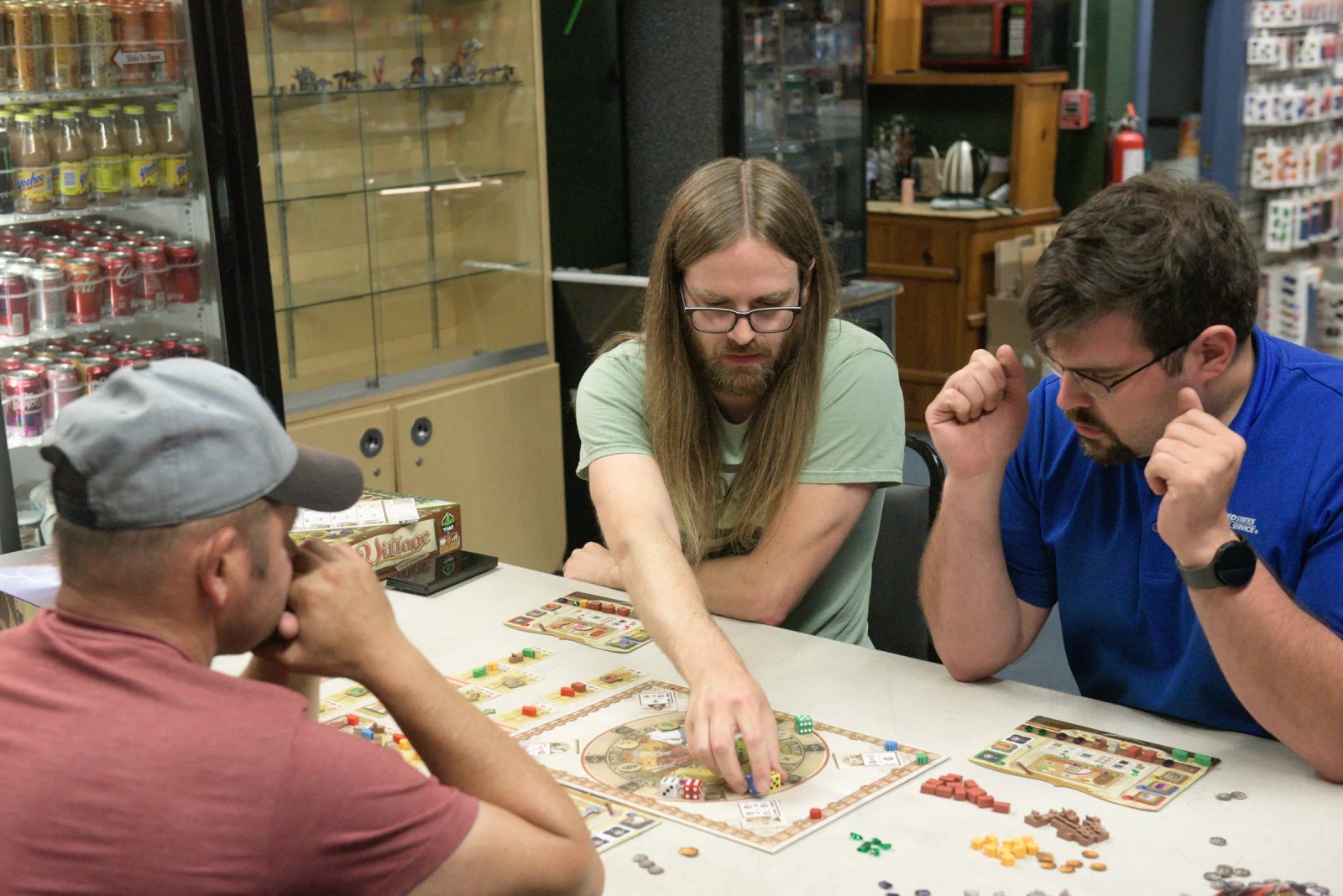
In an era dominated by digital interfaces and screen-based entertainment, a resilient community of local hobbyists is finding that the best way to connect is still face-to-face. Across the Upper Valley region of New Hampshire, specialized gaming retailers like Triple Play in Claremont and Black Moon Games in Lebanon are bucking national retail trends, proving that the tactile, social experience of board games and trading card games (TCG) remains a vital cultural anchor.
## Navigating the Post-Pandemic Landscape
The success of these independent shops represents a significant rebound from the height of the COVID-19 pandemic, a period that initially cast a shadow of doubt over the future of in-person gaming.
“My peers and I talked during the shutdowns, and there was a lot of concern that social distancing would kill our industry, because in-person interaction is the lifeblood of tabletop gaming,” said Tony Vandenberg, owner of Black Moon Games.
However, as society moved past the height of the crisis, these retailers witnessed a resurgence in demand. Store owners credit this to a broader societal movement: the “unplugging” trend. Parents, increasingly wary of the cumulative hours their children spend in front of tablets and computers, are seeking out analog alternatives that foster critical thinking and genuine human interaction. From a merchant’s perspective, the industry has successfully pivoted by positioning these physical spaces not just as retail outlets, but as “third places”—community hubs where socialization is the primary product.
## The Human Advantage Over Tech Giants
While companies like Amazon and major big-box retailers continue to dominate the logistics of e-commerce, local shop owners are leaning into the one thing algorithms cannot replicate: curation and community.
Mike Butkus, owner of Triple Play on Opera House Square, views his shop as an essential social utility. “I don’t really make money on board game night, but it is my favorite hobby,” he noted. “I didn’t make friends working at the convenience store, but I have made friends here.”
This sentiment is echoed by Vandenberg, who argues that the “customer journey” at a local game store is vastly superior to the automated recommendations of a web-based retail giant. By offering expert staff who can provide personalized game suggestions, walk customers through rule sets, and facilitate events that bridge gaps between strangers, these stores offer a high-touch service model that keeps customers returning to the physical storefront.
## Future-Proofing Through Innovation
To maintain their momentum, these entrepreneurs are investing heavily in their physical infrastructure. Butkus, for instance, is currently undertaking an ambitious expansion within the historic Dickinson Block in Claremont. His roadmap for the future includes creating a dedicated painting studio for miniature hobbyists and a specialized rental room for Dungeons and Dragons sessions.
By evolving beyond simple product retail into the realm of “experience economy” spaces, these shops are insulating themselves from the volatility of digital retail markets. Whether it is through hosting weekly tournaments, board game nights, or offering a space for creative pursuits, these independent retailers are proving that technology has not replaced the need for physical community—if anything, it has made the value of a physical “game night” significantly higher. As these businesses continue to refine their models, they serve as a testament to the idea that in a hyper-connected digital world, people are more eager than ever to sit down, roll some dice, and talk to one another.
Disclaimer: This content is auto-generated for informational purposes only.
Source: Read Original News