








A Shift in Hardware Philosophy
Meta has officially signaled a change in direction for its hardware strategy with the announcement of its new Meta VR Glasses. During the recent Connect event, CEO Mark Zuckerberg addressed the company’s previous period of scaling back VR development, noting that Meta had been waiting for a significant technological breakthrough before committing to a new product cycle. These glasses represent that pivot, moving away from the heavy, face-enclosing headsets that characterized the Quest series and toward a slim, lightweight device that prioritizes portability and comfort.
The core objective of this design is to resolve the primary barrier to virtual reality adoption: the physical burden of current equipment. By shedding the weight of the traditional visor and redistributing the hardware components, Meta aims to reach users who previously found existing headsets too cumbersome for casual or extended use. This represents a strategic transition from dedicated gaming hardware to a versatile, personal entertainment platform.
Refined Engineering and Performance
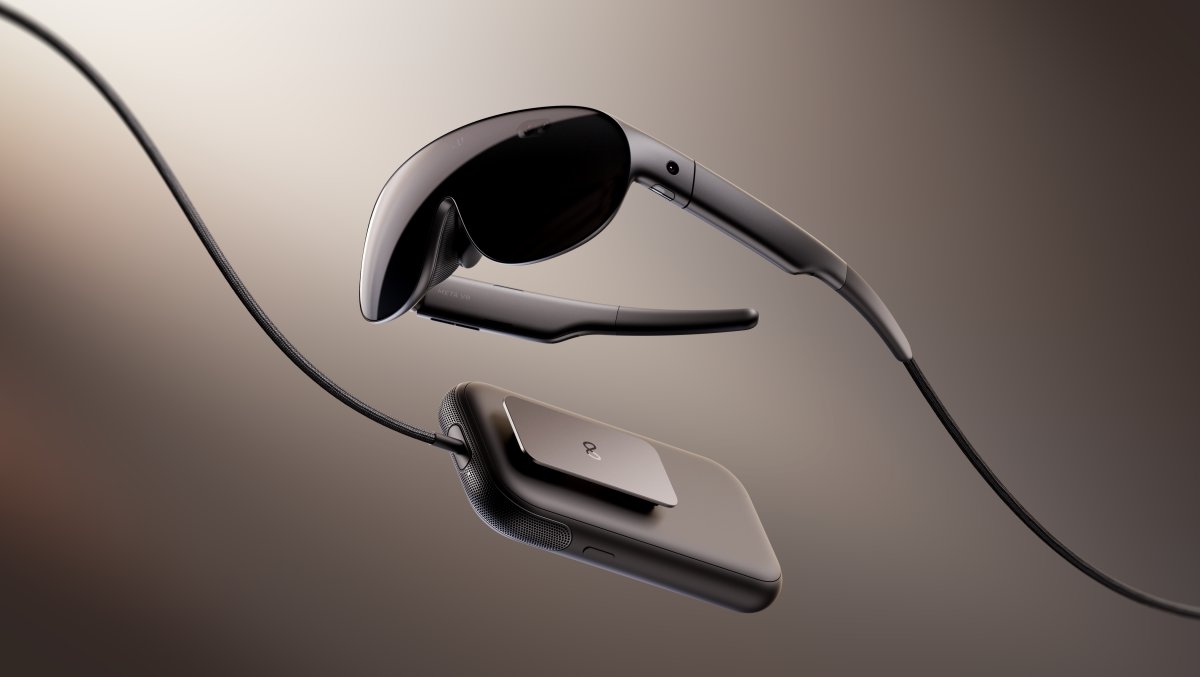
The architectural shift in the Meta VR Glasses is defined by a modular approach to computing. Unlike all-in-one headsets where the processor, battery, and sensors are contained within the head-mounted unit, these glasses utilize a connected external computing puck. This device houses the primary battery and processing unit, which the user carries in a pocket. This design choice is the primary reason the glasses are five times lighter than the Meta Quest 3, allowing for a form factor that closely resembles conventional eyewear.
Constructed from a magnesium alloy, the frames are engineered for durability without adding significant bulk. At the heart of the device is the Qualcomm Snapdragon Reality Elite processor. This chipset is purpose-built to handle high-fidelity spatial computing tasks, managing the complex sensor data required to render high-resolution visuals while maintaining low latency. By shifting the computational load to an external module, Meta has successfully reduced the heat dissipation requirements on the head-mounted portion, further contributing to the device’s comfort.
Visual Fidelity and Display Technology
The visual experience is driven by custom micro-OLED panels integrated directly into the lenses. Meta describes this system as a 5K Infinite Display, boasting a resolution density of 37 pixels per degree. This metric is critical for clarity, as it determines the sharpness of text and the reduction of the screen-door effect common in earlier VR iterations.
Beyond raw resolution, the hardware is optimized for high-dynamic-range content, featuring support for Dolby Vision. This ensures that blacks are deep and colors are vibrant, essential for the cinematic focus of the device. The inclusion of Dolby Atmos audio support further rounds out the sensory package, providing spatialized sound that moves with the user’s head movements. This combination of visual and auditory technology is intended to create a localized theater experience that is significantly more portable than traditional large-format displays.
The IMAX Integration and Cinematic Expansion
Perhaps the most distinct marketing and technical claim for the Meta VR Glasses is their status as the first IMAX-enhanced certified VR device. This certification implies that the glasses are capable of rendering the expanded aspect ratios specific to IMAX-captured films, which are often taller than the standard widescreen format used for home televisions and monitors. By unlocking this extra vertical field of view, the device attempts to replicate the scale of a giant screen in a personal setting.
Complementing this, Meta is integrating 3D content capabilities with significant industry support. Starting in November, Disney+ users will gain access to a library of 3D titles, including several entries from the Marvel Cinematic Universe. Unlike standard 2D playback, these films are designed to interact with the user’s physical environment. The glasses can overlay dynamic effects and ambient lighting that correspond to the content on screen, effectively turning the room into an extension of the movie scene. This blend of virtual elements and physical space is designed to elevate content consumption from passive observation to an active, immersive event.
Interface Innovations: AI and Gesture Control
To manage these features without the need for traditional hand controllers, Meta has integrated its AI assistant and a robust gesture-recognition system. The AI serves as the primary navigation layer, allowing users to issue voice commands for system-wide tasks, such as launching applications, adjusting playback settings, or searching for content. This creates a hands-free environment that is essential for a device intended for casual media consumption.
For users who prefer silent control or more granular interactions, the glasses utilize advanced camera-based gesture recognition. These sensors track subtle hand movements, allowing users to manipulate virtual interfaces—like selecting menu items or pausing video—through simple pinches or swipes in the air. By combining voice-activated intelligence with intuitive spatial gestures, the device removes the friction of controller pairing and physical input, aligning the user interface with the natural way humans interact with their environment.
Market Impact and Future Trajectory
The launch of the Meta VR Glasses at a price point of $1,299.99 positions them in the premium segment of the wearable technology market. By distancing itself from the entry-level gaming focus, Meta is betting that there is a substantial audience for a luxury, portable cinematic device. The success of this product will likely depend on the breadth of the content ecosystem and the long-term comfort of the device during extended viewing sessions.
This move underscores a broader industry belief that if the barrier to entry—specifically weight and visual obstruction—can be lowered, virtual displays will eventually supplement or replace physical screens for many consumers. While the technology is currently oriented toward entertainment, the underlying processing architecture and spatial sensing capabilities lay the foundation for future productivity tools and augmented reality applications. Whether this device serves as a definitive turning point for VR hardware remains to be seen, but it is clear that Meta is doubling down on the premise that the future of computing will be worn, not held.
Disclaimer: This content is auto-generated for informational purposes only.
Source: Read Original News